
Static GK – General Knowledge for Competitive Exams
Latest posts and quizzes curated for the Static GK track.
Latest Posts & Quizzes
Page 2
Important Lakes in India – Static GK & General Awareness for Competitive Exams with Memory Tricks
This article covers a complete state-wise list of important lakes in India along with their types, key features, and exam-relevant facts, making it an essential resource for UPSC, SSC, IBPS, RRB, and other government exam aspirants. It includes the largest, longest, highest, and most famous lakes in India, Ramsar sites, artificial reservoirs, memory tricks, and one-liners for quick revision. All facts are arranged in exam-ready format to help students score better in General Awareness sections.

National Animals of Countries — Complete Static GK Notes for Competitive Exams
This article covers the complete list of national animals of countries across the world — a high-frequency topic in SSC, UPSC, IBPS, Railways, Defence, and State PCS exams. Learn country-wise national animals, birds, key facts, memory tricks, and exam one-liners — all in one place.

Mountain Peaks in India – Static GK / General Awareness for Competitive Exams (with Memory Tricks)
India’s mountain peaks are a high-frequency Static GK topic in SSC, UPSC, Banking, Railways, Defence, and State PCS exams. This post gives you state-wise highest peaks, top 10 highest peaks, major mountain ranges, mnemonics, PYQ patterns, and exam-ready tables — all in one place.
Military Exercises of India – Static GK & General Awareness for Competitive Exams with Memory Tricks
This article covers a comprehensive country-wise list of major military exercises of India conducted by the Army, Navy, and Air Force, along with domestic, bilateral, and multilateral drills. It is designed for UPSC, SSC, IBPS, RRB, Insurance, Defence, and State PCS aspirants, with memory tricks, one-liners, and FAQs for quick revision. All facts including HADR operations and integrated exercises are organised in an exam-ready format to help students score better in the General Awareness section.
Dams in India – Static GK & General Awareness for Competitive Exams with Memory Tricks
This article covers a comprehensive state-wise list of dams in India along with the rivers they are built on, making it an essential resource for UPSC, SSC, IBPS, RRB, and other government exam aspirants. It includes the longest, highest, and oldest dams in India, along with memory tricks and one-liners for quick revision. All facts are organized in exam-ready format to help students score better in General Awareness sections.
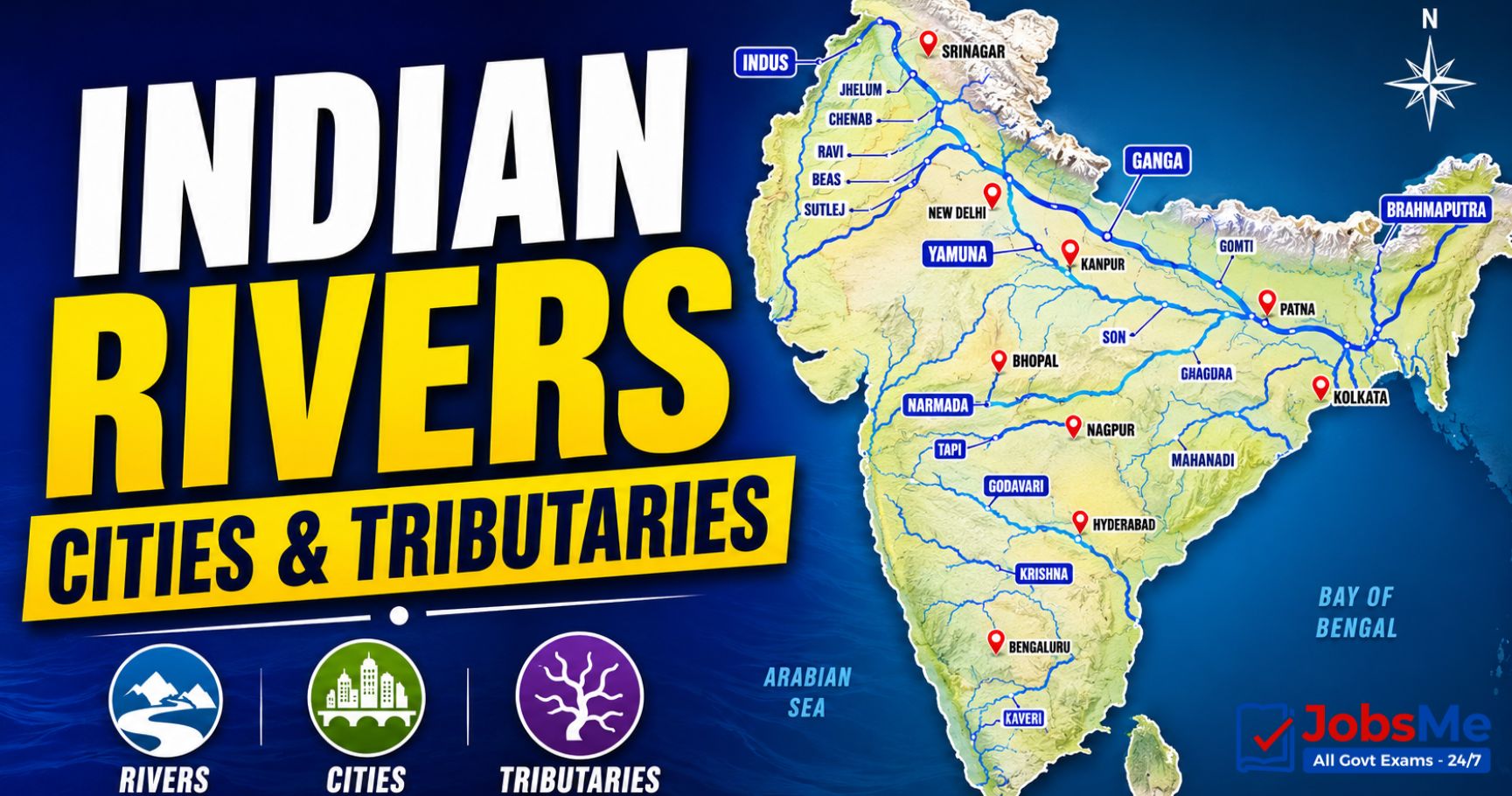
Indian Cities on the Banks of Rivers: Complete Static GK for Competitive Exams with Memory Tricks
This article covers the complete list of important Indian and world cities located on the banks of rivers — a high-frequency topic in SSC, UPSC, IBPS, Railways, and State PCS exams. Learn river-city pairs, key facts about major Indian river systems, government initiatives, and memory tricks to retain every fact quickly.

International Boundary Lines of the World and India – Static GK & General Awareness for Competitive Exams with Memory Tricks
This article presents a complete list of important international boundary lines of the world and India along with the countries they separate, their historical background, and exam-relevant facts, making it an essential resource for UPSC, SSC, IBPS, RRB, and other government exam aspirants. It includes major boundary lines like the Radcliffe Line, McMahon Line, Durand Line, 38th Parallel, 49th Parallel, Maginot Line, Hindenburg Line, LoC, LAC, and the Blue Line, along with memory tricks and one-liners for quick revision. All facts are arranged in exam-ready format to help students score better in General Awareness sections.

Borders of India with Neighbouring Countries – Static GK & General Awareness for Competitive Exams with Memory Tricks
This article provides a complete and updated list of borders of India with its neighbouring countries along with border lengths, bordering Indian states, capitals, currencies, languages, and border guarding forces, making it an essential resource for UPSC, SSC, IBPS, RRB, Defence, and other government exam aspirants. India has 9 neighbours — 7 sharing land borders (Bangladesh, China, Pakistan, Nepal, Myanmar, Bhutan, Afghanistan) and 2 sharing maritime borders (Sri Lanka and Maldives) — covering a total land border of about 15,106.7 km and a coastline of 7,516.6 km. The article includes detailed tables, memory tricks, one-liners, and FAQs to help students score better in General Awareness sections.
List of Famous Personalities and Their Nicknames – Static GK & General Awareness for Competitive Exams with Memory Tricks
This article presents a complete list of famous Indian personalities and their nicknames, covering freedom fighters, political leaders, social reformers, poets, saints, rulers, scientists, and sports personalities, along with the reasons behind each nickname. It includes iconic figures like Mahatma Gandhi (Bapu), Sardar Patel (Iron Man), Subhash Chandra Bose (Netaji), Lala Lajpat Rai (Punjab Kesari), Sachin Tendulkar (Little Master), Milkha Singh (Flying Sikh), and P. T. Usha (Payyoli Express), with memory tricks and one-liners for quick revision. All facts are arranged in exam-ready format to help UPSC, SSC, IBPS, RRB, PSU, and State PCS aspirants score better in General Awareness and Modern History sections.
Major Tribes of India – Static GK & General Awareness for Competitive Exams with Memory Tricks
This article covers a comprehensive state-wise list of major tribes of India, including Scheduled Tribes (STs), Particularly Vulnerable Tribal Groups (PVTGs), constitutional provisions, regional classifications, and key facts about famous tribes like Bhils, Gonds, Santhals, and Mundas. It is designed for UPSC, SSC, IBPS, RRB, Insurance, Defence, and State PCS aspirants, with memory tricks, one-liners, and FAQs for quick revision. All facts are organised in an exam-ready format to help students score better in the General Awareness section.
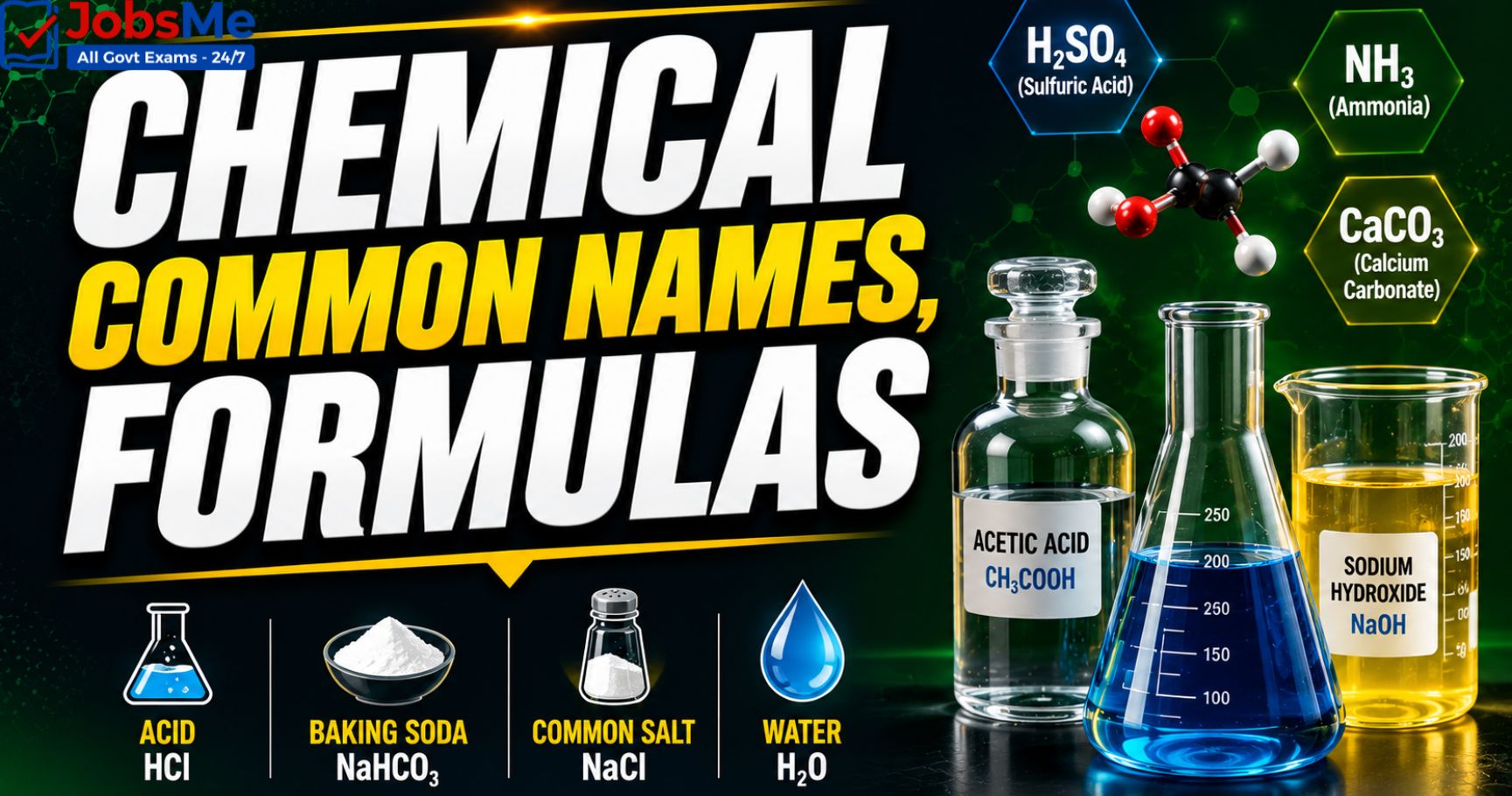
Chemical Common Names and Formulas – Static GK & General Awareness for Competitive Exams with Memory Tricks
This article presents a complete list of chemical compounds along with their common names, scientific names, chemical formulas, and uses, making it an essential resource for UPSC, SSC, IBPS, RRB, and other government exam aspirants. It includes everyday chemicals like Baking Soda, Washing Soda, Bleaching Powder, Quick Lime, Plaster of Paris, Vinegar, Epsom Salt, Heavy Water, Laughing Gas, and Vermilion, along with memory tricks and one-liners for quick revision. All facts are arranged in exam-ready format to help students score better in General Awareness sections.

Important Discoveries and Inventions – Static GK & General Awareness for Competitive Exams with Memory Tricks
This article presents a complete list of important discoveries and inventions along with the names of the inventors, discoverers, year of invention or discovery, and exam-relevant facts, making it an essential resource for UPSC, SSC, IBPS, RRB, and other government exam aspirants. It includes landmark inventions such as the Telephone (Graham Bell), Light Bulb (Edison), Aeroplane (Wright Brothers), Penicillin (Fleming), and discoveries like Gravity (Newton), Radioactivity (Curie), and Theory of Relativity (Einstein), along with memory tricks and one-liners for quick revision. All facts are arranged in exam-ready format to help students score better in General Awareness sections.
First in India – Static GK & General Awareness for Competitive Exams with Memory Tricks
This article presents a complete list of "First in India" facts across politics, defence, science and technology, sports, awards, architecture, and miscellaneous categories, making it an essential resource for UPSC, SSC, IBPS, RRB, and other government exam aspirants. It includes the first President, first Prime Minister, first Indian in space, first woman in various roles, first Olympic medal, and many other historical milestones, along with memory tricks and one-liners for quick revision. All facts are arranged in exam-ready format to help students score better in General Awareness sections.
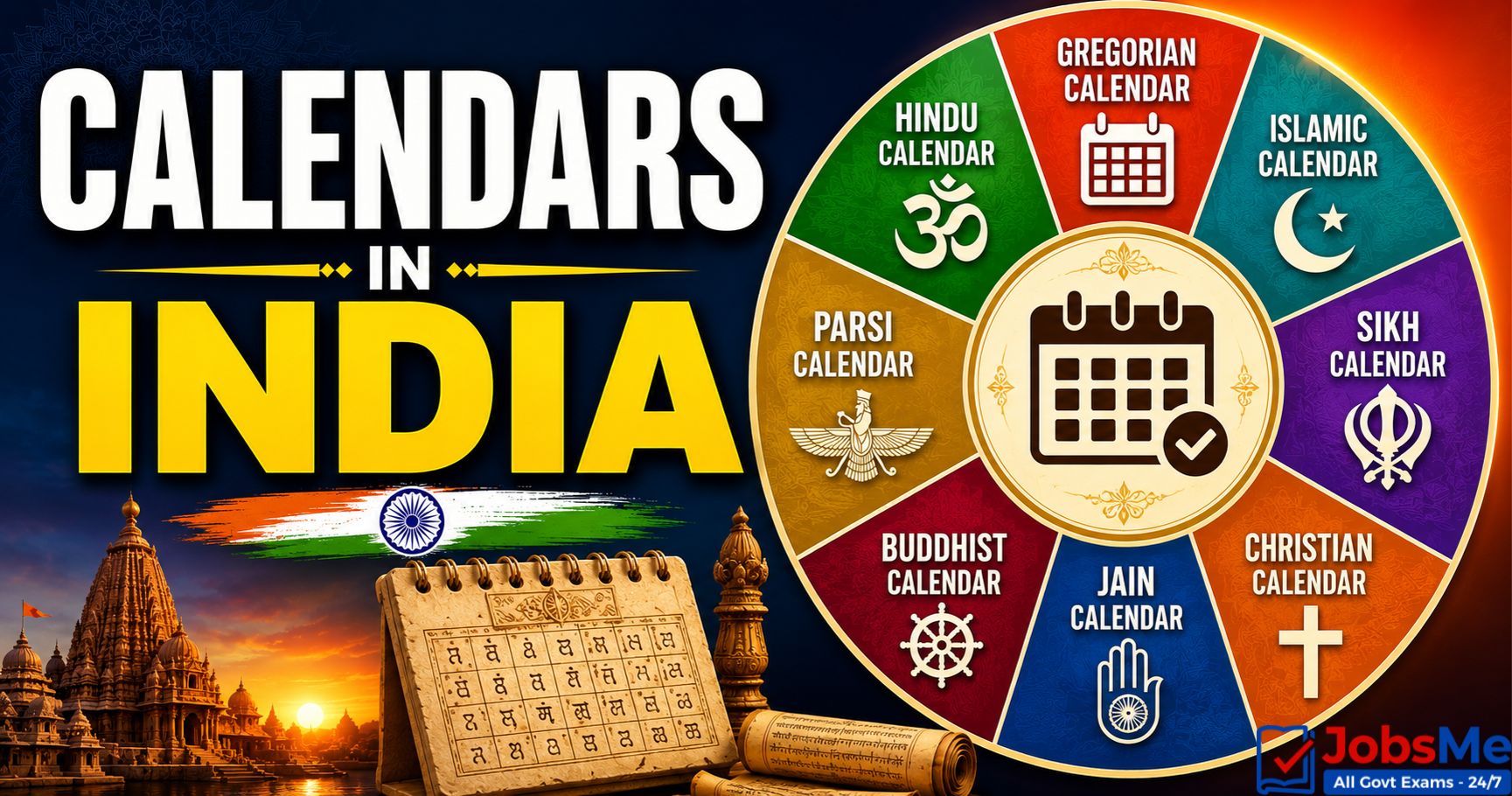
Calendars in India – Saka, Vikram, Hijri and Gregorian | Static GK for Competitive Exams with Memory Tricks
This article covers all types of calendars used in India — Saka Samvat, Vikram Samvat, Hijri, and Gregorian — with complete details, month-wise comparison tables, date conversion formulas, memory tricks, and exam-ready one-liners. Ideal for UPSC, SSC, IBPS, Railways, Defence, Insurance, and all other government exam aspirants.

Musical Instruments and Their Famous Musicians (Exponents) – Static GK & General Awareness for Competitive Exams with Memory Tricks
This article presents a complete list of famous Indian musical instruments and their renowned exponents, covering wind instruments, string instruments, percussion instruments, and keyboard instruments, along with their classical names (Sushir, Tat, Avanaddh, Ghan Vadya) and exam-relevant facts. It includes legends like Pandit Ravi Shankar (Sitar), Ustad Zakir Hussain (Tabla), Ustad Bismillah Khan (Shehnai), Pandit Hariprasad Chaurasia (Flute), Pandit Shiv Kumar Sharma (Santoor), and Ustad Amjad Ali Khan (Sarod), with memory tricks and one-liners for quick revision. All facts are arranged in exam-ready format to help UPSC, SSC, IBPS, RRB, PSU, and State PCS aspirants score better in General Awareness and Art & Culture sections.
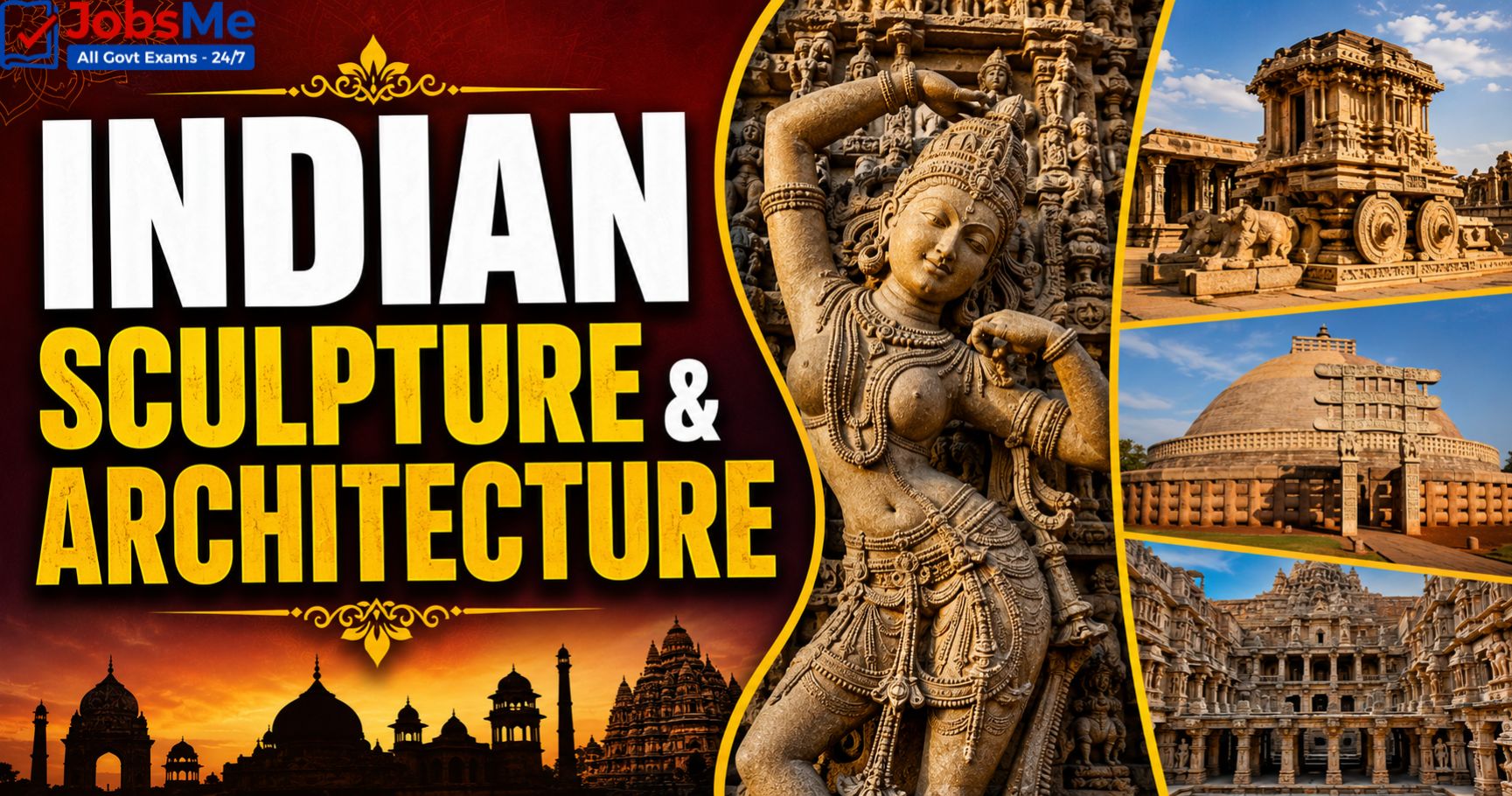
Temple Architecture and Sculpture in India – Complete Static GK Notes for Government Exams
A complete guide to Indian Temple Architecture and Sculpture covering Nagara, Dravida, and Vesara styles, key dynasties, structural components, and exam-focused facts. Ideal for UPSC, SSC, Banking, Railways, and all government exam aspirants preparing Static GK and Art & Culture.
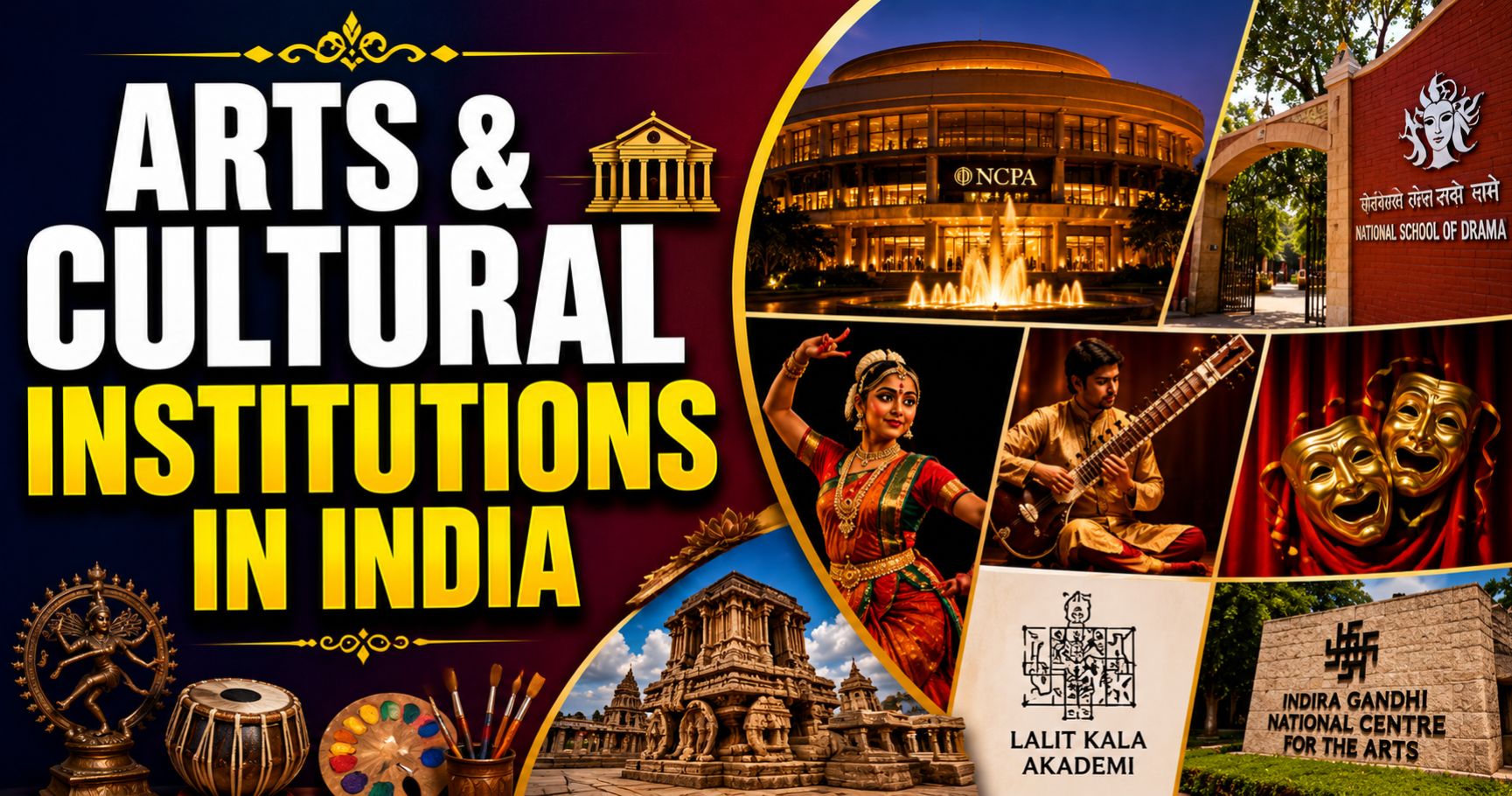
Arts and Cultural Institutions in India – Static GK Notes for Government Exams
India is home to a rich network of arts and cultural institutions that preserve, promote, and propagate the country's vast heritage. This article covers all major cultural institutions – their founding year, parent ministry, objectives, and key facts – presented in an exam-ready format with memory tricks and one-liners for UPSC, SSC, IBPS, Railways, Defence, and State PCS aspirants.

Indian Fairs and Festivals – Complete Static GK Guide for Government Exams
Indian Fairs and Festivals is one of the most frequently tested topics in UPSC, SSC, Banking, Railways, and State PCS exams. This complete Static GK guide covers all major fairs, religious festivals, regional and tribal festivals, and their key facts — with memory tricks, one-liners, and exam-ready tables.
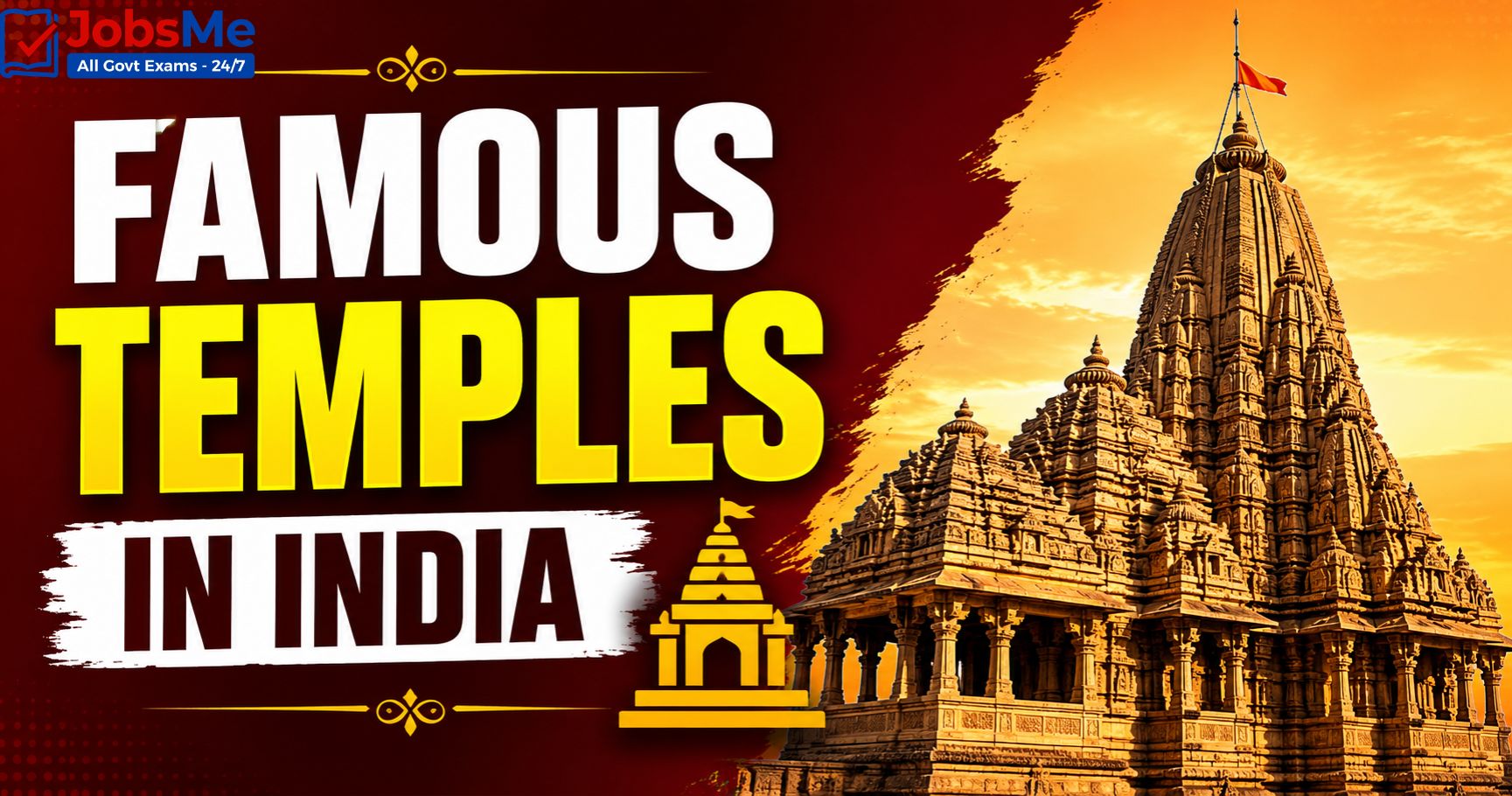
Temples in India – Complete Static GK Notes for Government Exams (UPSC, SSC, Banking, Railways)
India is home to some of the most magnificent temples in the world, each carrying deep historical, religious, and architectural significance. This article covers all important temples in India — state-wise, dynasty-wise, and deity-wise — with memory tricks and exam-ready one-liners, making it the most complete Static GK resource for UPSC, SSC, IBPS, Railways, Defence, and all other government exam aspirants.
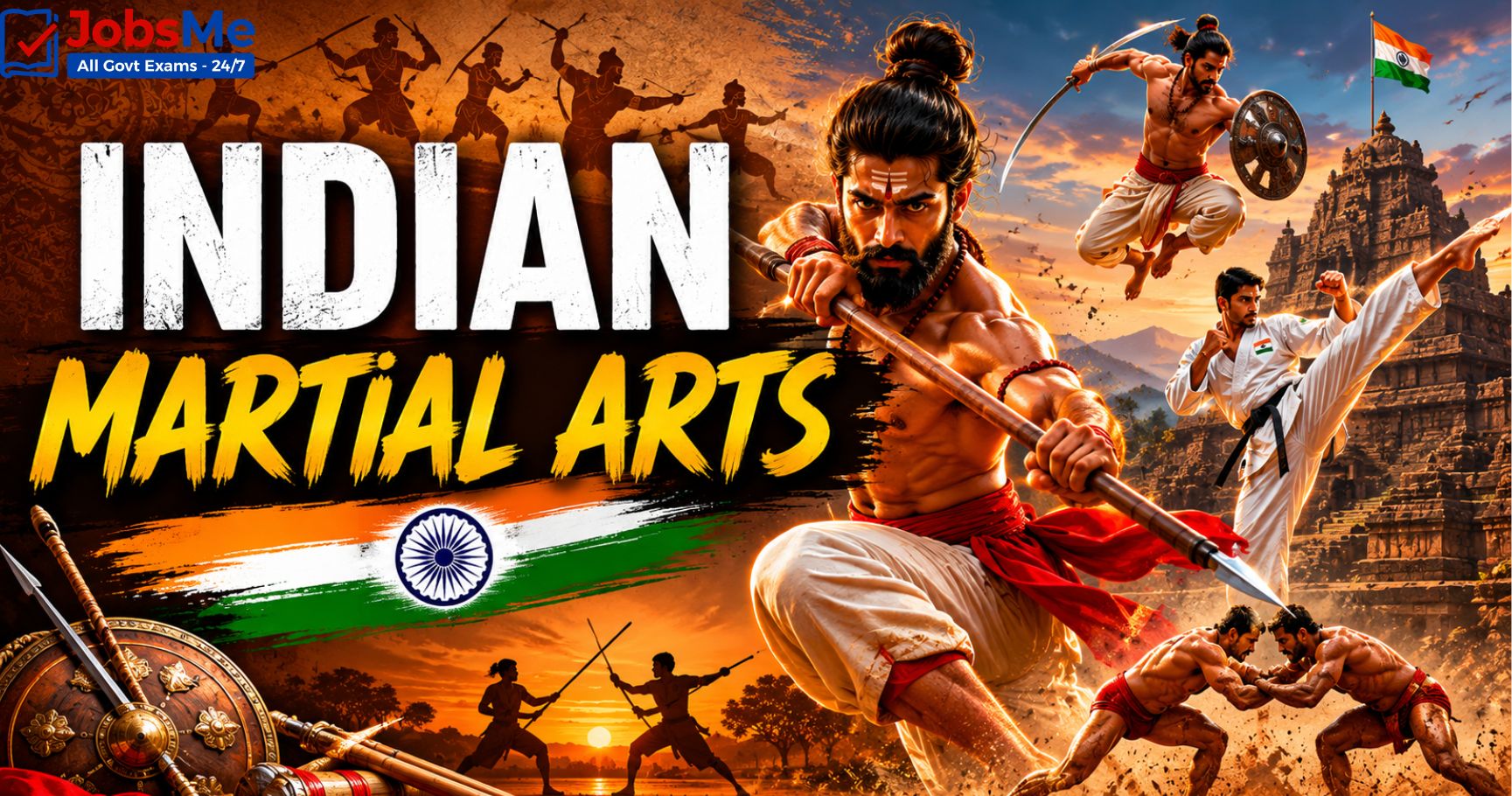
Indian Martial Arts – Complete Static GK for Government Exams
Indian Martial Arts is a high-frequency topic in UPSC Prelims, SSC GK, Banking Awareness, Railways, and Defence exams. This article covers the origin, evolution, major forms, associated states, weapons, government schemes, and exam-ready memory tricks – all in one place.
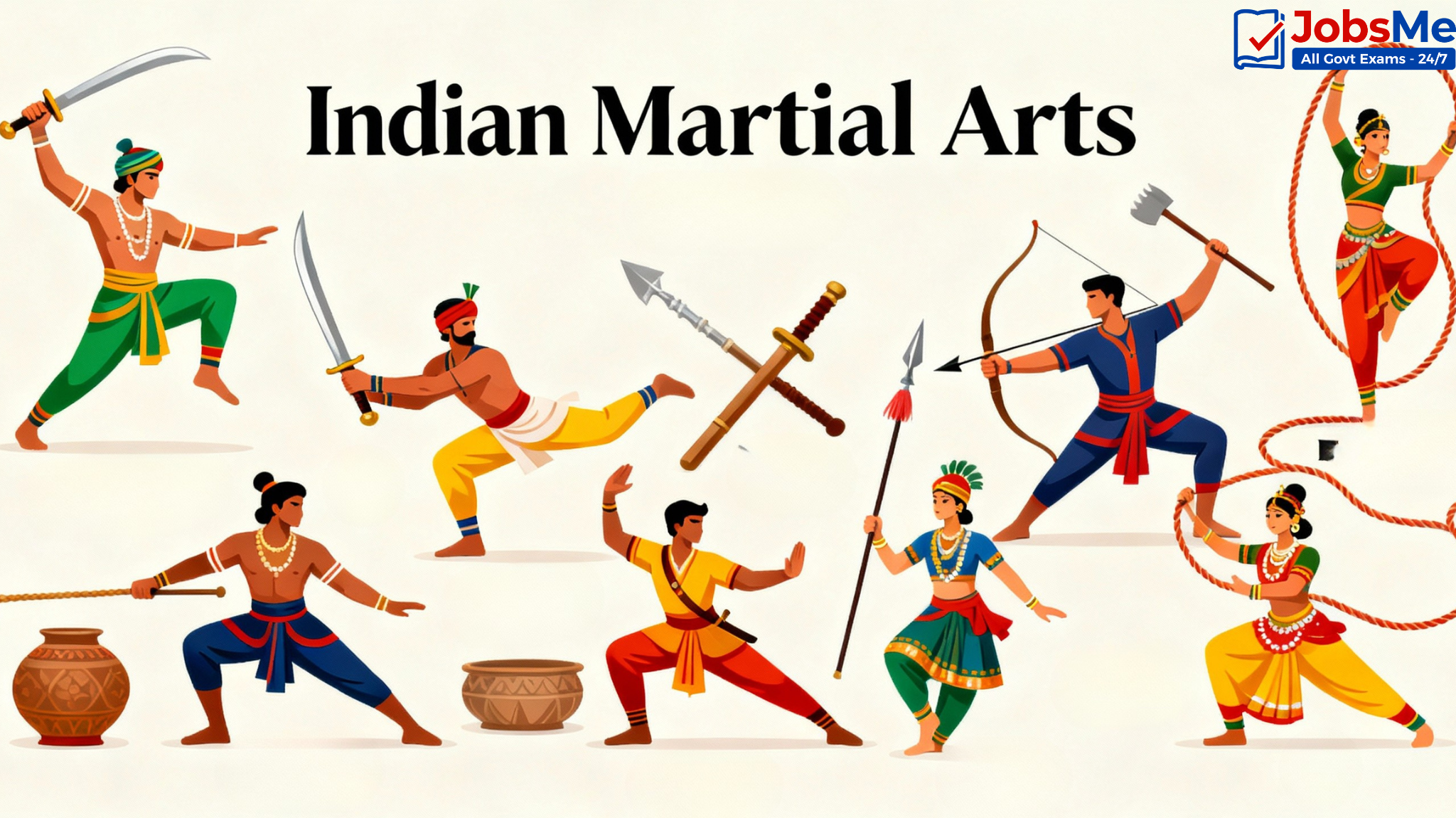
Indian Martial Arts – Complete Static GK for Government Exams
Indian martial arts are ancient combat traditions rooted in self-defence, warfare, fitness, and cultural identity. They are a frequently asked Static GK topic in UPSC, SSC, Banking, Railways, Defence, and State PSC exams, especially under Art & Culture and General Awareness.
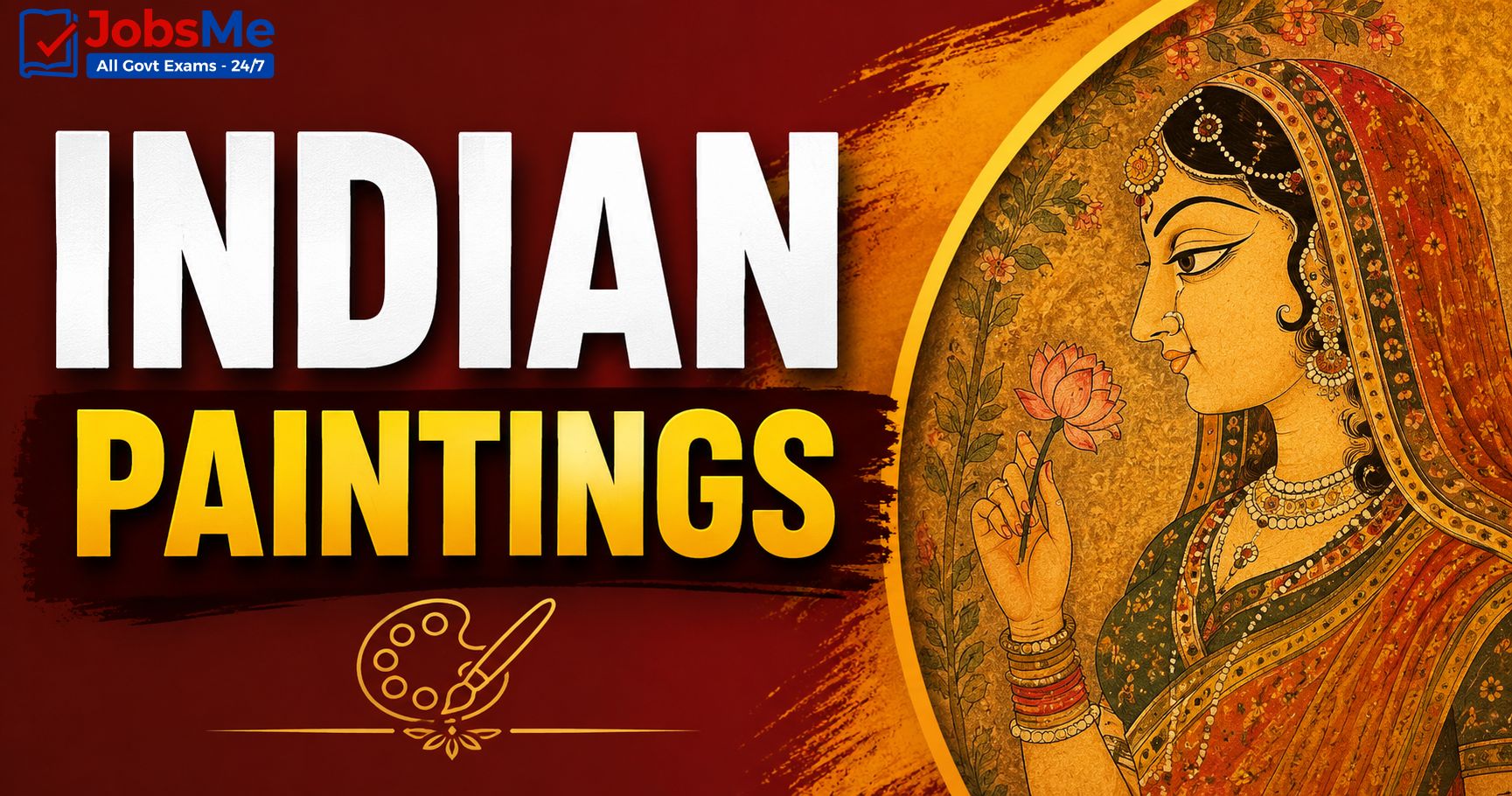
Indian Paintings – Complete Static GK for Government Exams | UPSC, SSC, Banking, Railways
Indian Paintings is a high-frequency topic in UPSC Prelims, SSC CGL/CHSL, IBPS PO, Railways, and State PCS exams. This article covers all major painting traditions — from Bhimbetka rock art to Mughal miniatures and modern Indian art — with memory tricks, PYQ patterns, and crisp one-liners for last-minute revision.
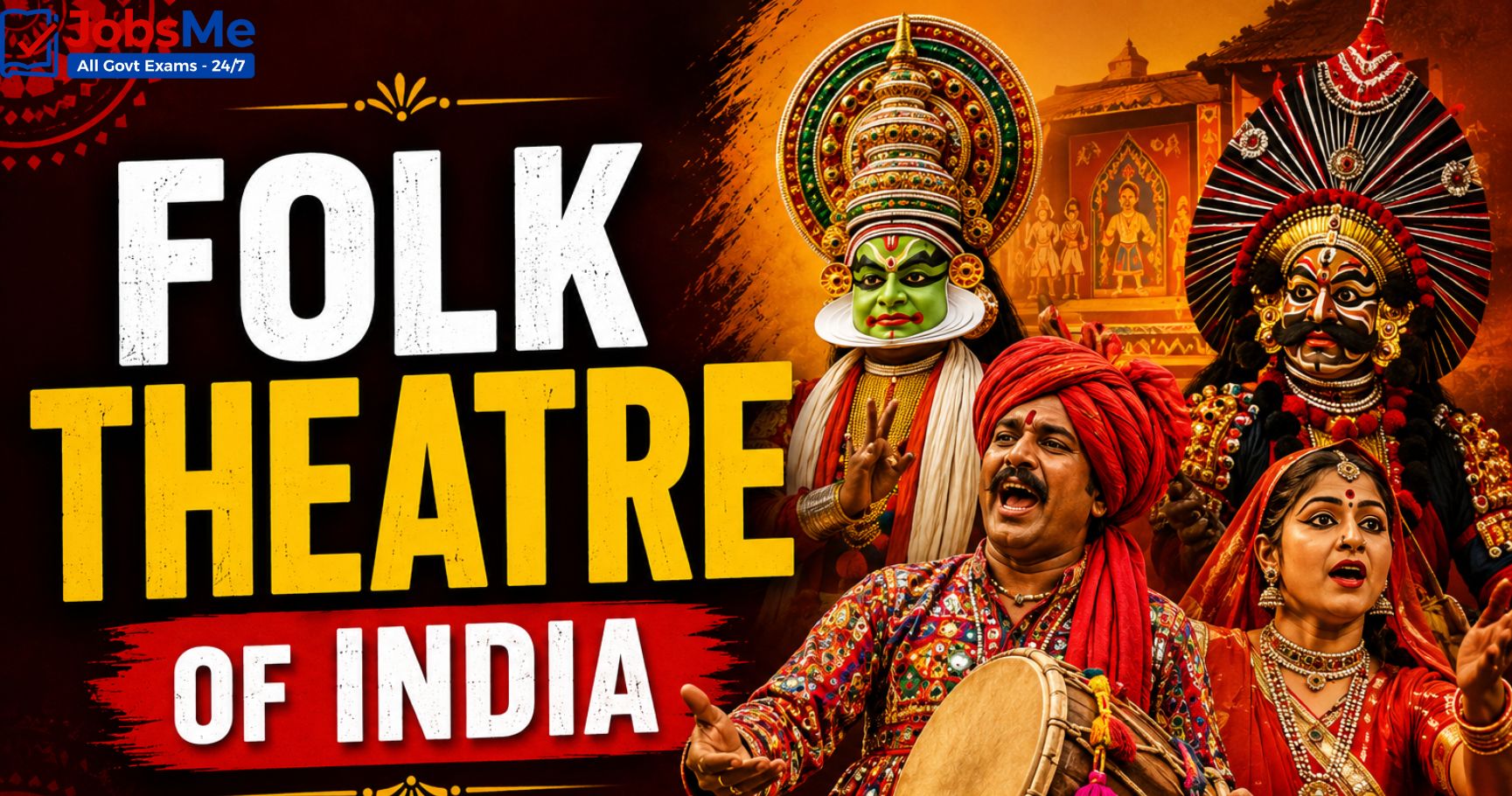
Folk Theatre of India – Complete Static GK Notes for Government Exams
A complete guide to Folk Theatre of India covering all regional forms, state-wise classification, cultural significance, and exam-relevant facts. Designed for UPSC, SSC, IBPS, Railways, Defence, and State PCS aspirants with memory tricks, one-liners, and PYQ-based notes.
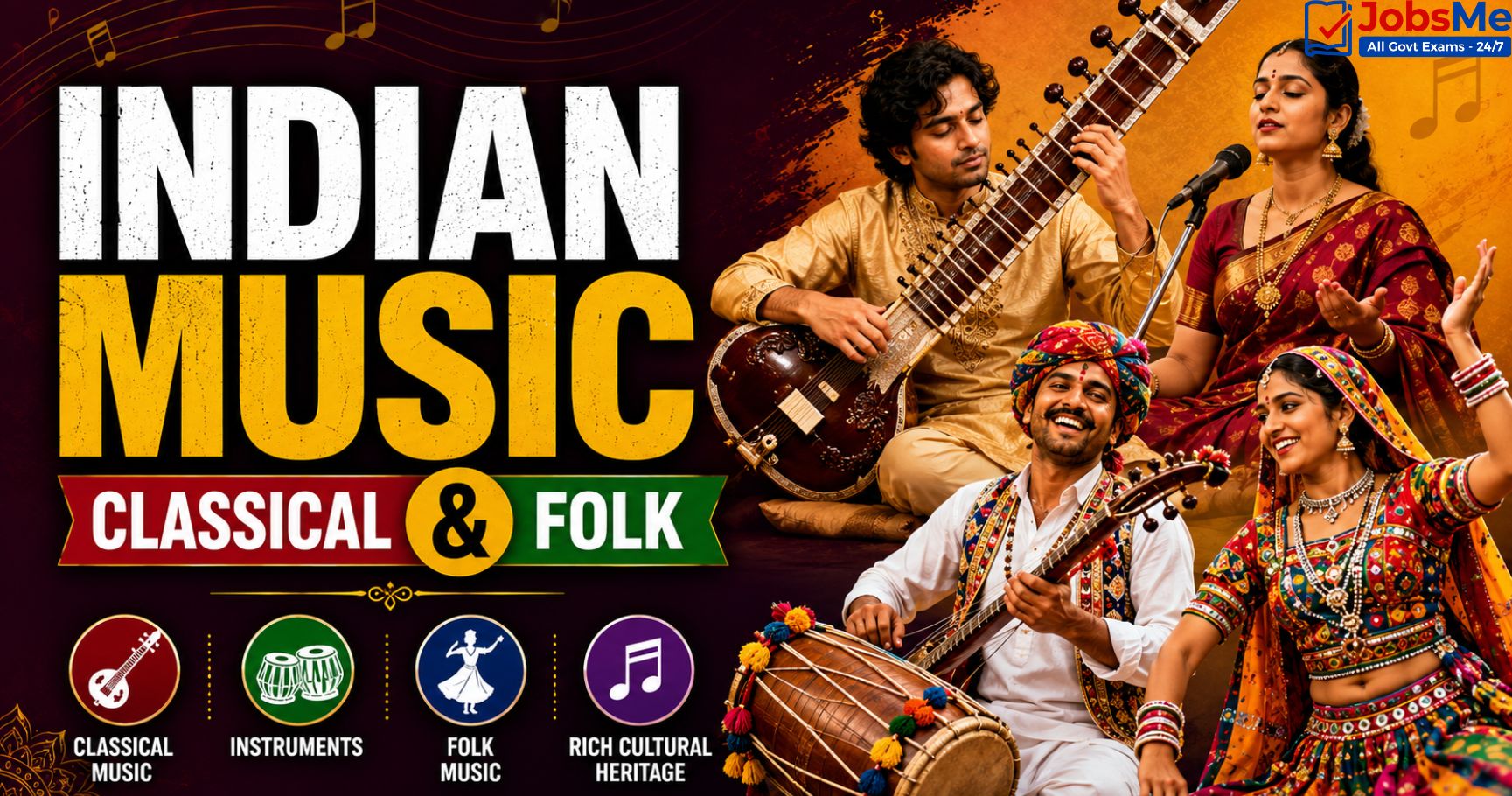
Indian Music – Classical, Folk & Fusion | Static GK for Competitive Exams with Memory Tricks
A complete Static GK guide on Indian Music covering Hindustani and Carnatic classical music, folk music state-wise, fusion forms, semiclassical genres, and modern music — with memory tricks, one-liners, and exam-ready notes for UPSC, SSC, IBPS, Railways, Defence, and all State Government exam aspirants.
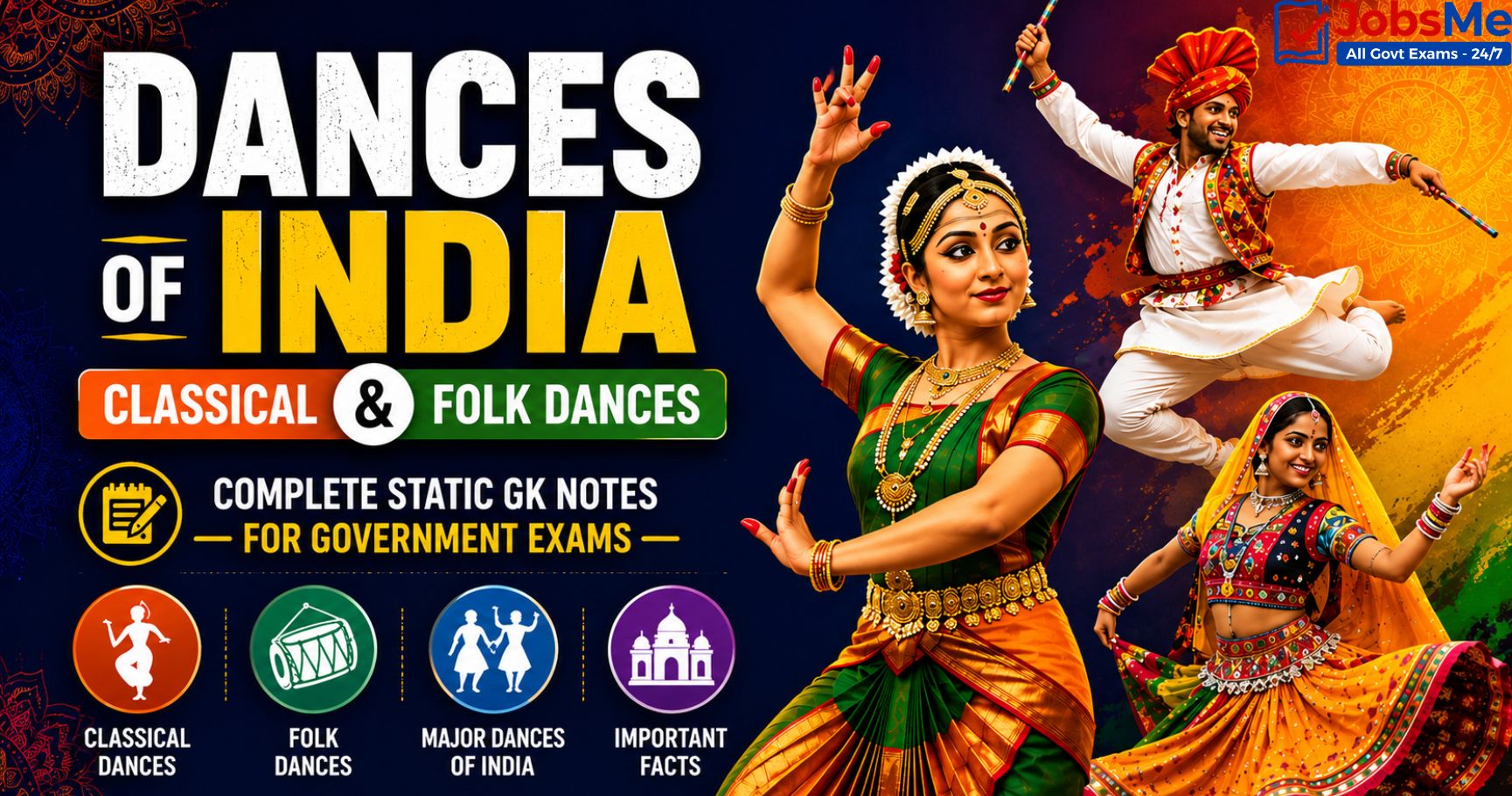
Dances of India – Classical and Folk Dances: Complete Static GK Notes for Government Exams
India has two major categories of dance forms — Classical (Shastriya Nritya) and Folk (Lok Nritya) — each rooted in the traditions, mythology, and regional culture of its origin state. This article covers all 8 classical dances, a complete state-wise list of folk dances, key features, instruments, exam-ready facts, memory tricks, and one-liners for UPSC, SSC, IBPS, Railways, Defence, and State PCS exams.
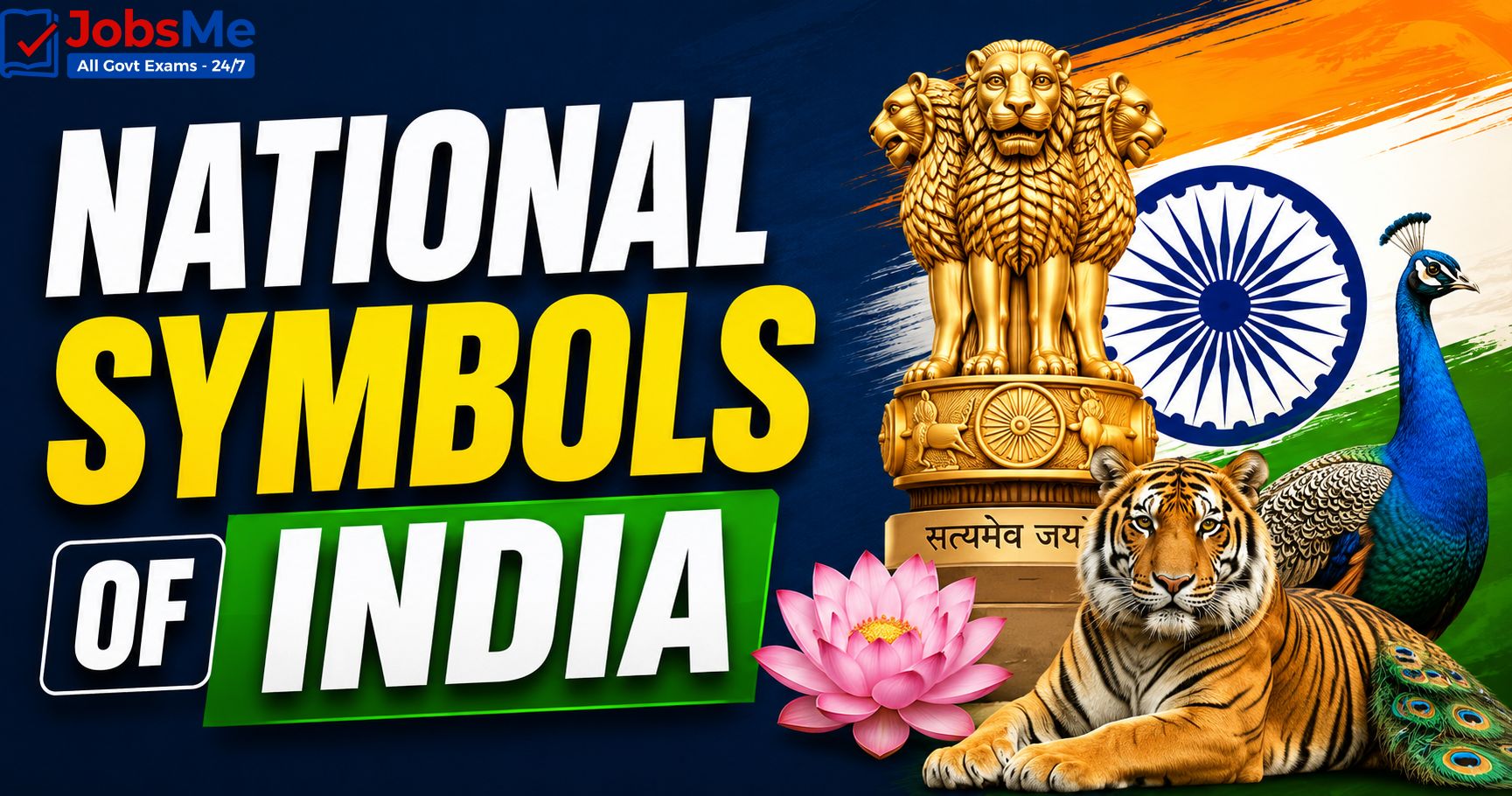
National Symbols of India – Static GK Notes for Government Exams (UPSC, SSC, Banking & More)
National Symbols of India are high‑weightage Static GK for UPSC, SSC, Banking, Insurance, Railways, Defence and other government exams, with frequent direct one‑liner questions in prelims and mains objective sections. This article covers all 17 official national symbols, their facts, adoption years and exam‑oriented one‑liners in a concise, revision‑friendly format. Aspirants can quickly memorize and revise this topic for scoring easy marks in General Awareness and Static GK sections.
 Quiz
QuizIndian Cultural Institutions – Static GK MCQ Quiz
 Quiz
QuizIndian Fairs & Festivals Static GK Quiz for SSC & Banking
 Quiz
QuizIndian Languages Static GK MCQ Quiz for SSC & Banking Exams
 Quiz
QuizTemples in India Static GK MCQ Quiz for SSC & Banking
 Quiz
QuizMusical Instruments of India Static GK MCQ | SSC Banking
 Quiz
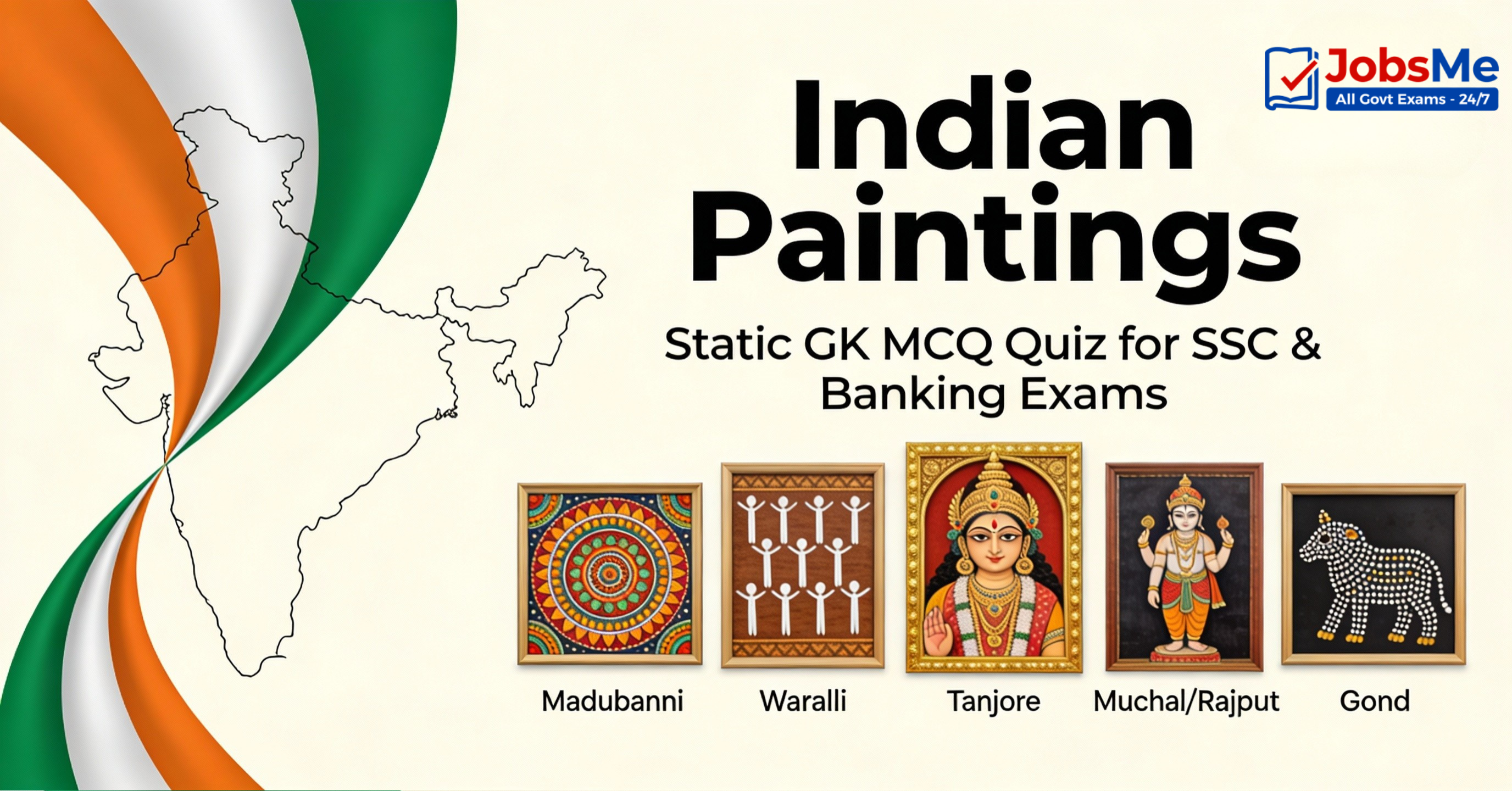
QuizIndian Paintings Static GK MCQ Quiz for SSC & Banking Exams
 Quiz
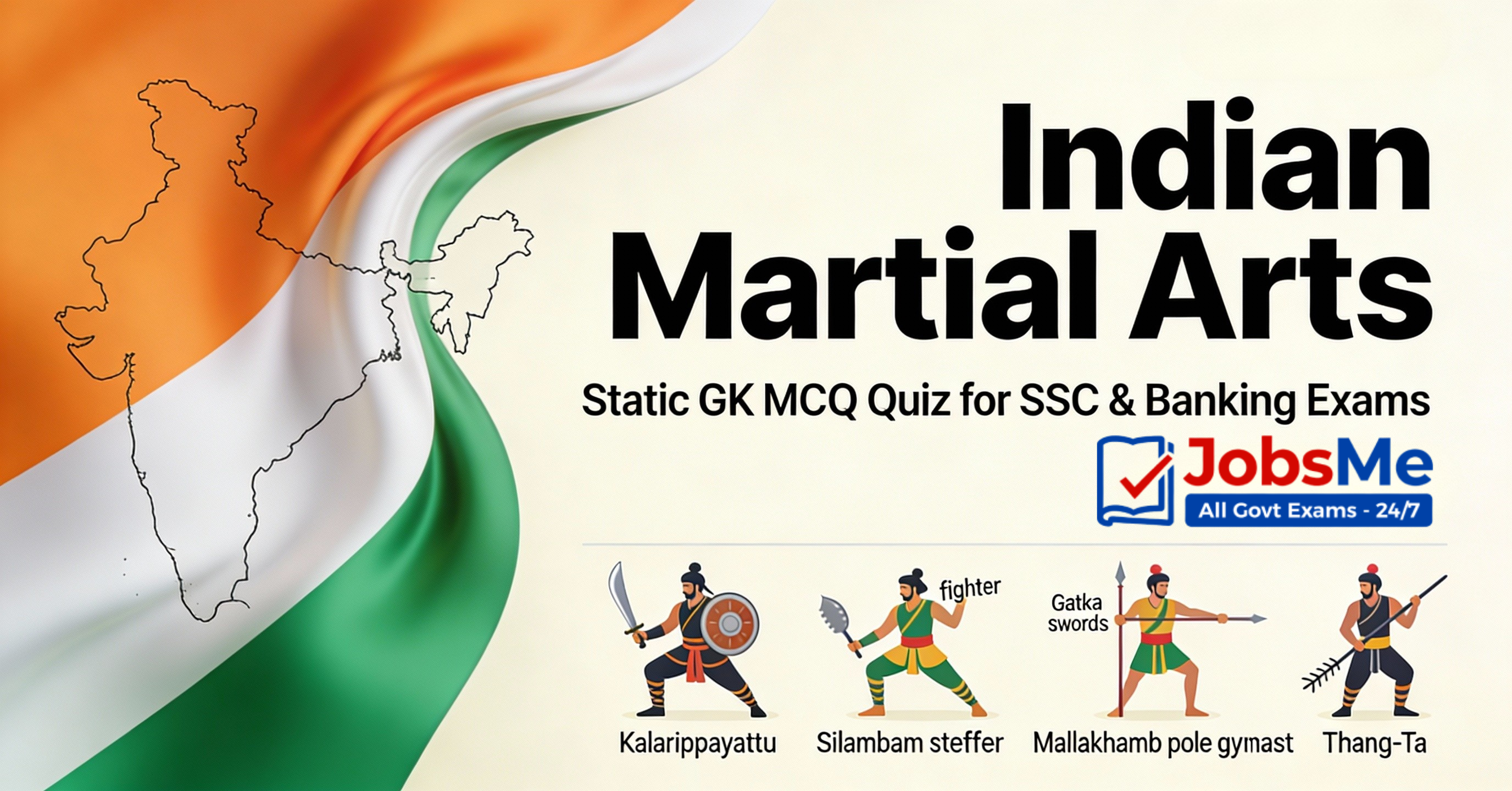
QuizIndian Martial Arts Static GK Quiz for SSC & Banking Exams
 Quiz
QuizIndian Dance Forms Static GK MCQ for SSC & Banking Exams
 Quiz
QuizStatic GK National Symbols Quiz for SSC & Banking
Introduction
JobsMe's Static GK section is your permanent, exam-ready knowledge base - a growing library of topic-wise Static General Knowledge posts and interactive quizzes covering every high-frequency subject tested in SSC, Banking, UPSC, Railways, Defence, Insurance, and State PSC examinations. Unlike current affairs, which change every day, Static GK is the fixed foundation of your General Awareness preparation - facts about Indian history, world geography, the Indian Constitution, important organisations, science fundamentals, national symbols, books and authors, and more. These facts do not expire. Master them once, and they score for you across every exam you sit.
Every Static GK topic on JobsMe comes with a free interactive quiz - attempt it, get your instant score, and if you are logged in, track how your performance improves across attempts over time. Your preparation history is stored, so you always know where you stand and what to work on next.
📖 Browse Static GK Posts → 🧩 Attempt Static GK Quizzes → 📅 Daily Current Affairs → 📆 Monthly Current Affairs →
What Is Static GK and Why Does It Matter
Static General Knowledge, often called Static GK or Static Awareness, refers to facts and information that do not change over time. The capital of France is Paris - that fact was true fifty years ago and will be true fifty years from now. The year of the Battle of Plassey, the name of the first Chairman of ISRO, the founding year of the United Nations - none of these facts change based on current events. This is what makes Static GK uniquely valuable: time invested in learning it is time that keeps paying dividends across every exam you appear for.
The difference between Static GK and Current Affairs is the difference between a permanent asset and a depreciating one. Both are essential, but they require different preparation strategies. Static GK rewards deep, structured learning and systematic revision. Current Affairs rewards consistent daily reading. Together, they form the complete General Awareness preparation that every competitive exam aspirant needs.
Static GK vs Current Affairs - How They Work Together
Many aspirants treat Static GK and Current Affairs as separate subjects. The most effective approach treats them as complementary layers of the same subject. When a new Ramsar site is declared - that is current affairs. But understanding what the Ramsar Convention is, when it was signed, and which body administers it - that is Static GK. When the RBI changes the repo rate - that is current affairs. But understanding what the repo rate is, how the monetary policy committee works, and the constitutional basis of the RBI - that is Static GK.
Aspirants who have built a strong Static GK foundation process current affairs far more efficiently, retain it more accurately, and answer exam questions with greater confidence. Visit daily current affairs and monthly current affairs alongside this section for complete GA preparation.
Topics Covered in JobsMe Static GK
JobsMe's Static GK library is organised by topic, with each topic getting a dedicated post and quiz. The following subjects are covered - spanning every category that appears in competitive exam General Awareness sections.
Indian History
Ancient Indian civilisations, important rulers and dynasties, medieval India, the Mughal Empire, colonial India, the freedom struggle, the Constituent Assembly, and post-independence milestones. Topics include Founders and Rulers of Indian Dynasties, Important Battles in Indian History, the Indian National Movement, and key personalities from Ancient and Medieval India.
World History and Geography
Major world civilisations, the World Wars, the Cold War, formation of the United Nations, decolonisation, and world geography - continents, oceans, mountain ranges, rivers, deserts, and climate zones. Topics include Countries, Capitals and Currencies of the World, World Organisations and their Headquarters, and Superlatives of the World.
Indian Geography
River systems, mountain ranges, plateaus, plains, states and capitals, national parks and wildlife sanctuaries, dams and reservoirs, important lakes, soil types, climate regions, and mineral resources of India. Topics include Superlatives of India, Indian Rivers and their Origins, and National Parks and Biosphere Reserves.
Indian Polity and Constitution
Fundamental Rights and Duties, Directive Principles of State Policy, important Constitutional Amendments, the structure of Parliament and State Legislatures, the President and Prime Minister's powers, constitutional bodies like the Election Commission and CAG, and landmark Supreme Court judgements.
Indian Economy
Five-Year Plans and NITI Aayog, important economic concepts, the banking system structure, types of banks and their functions, RBI's role and monetary policy tools, stock exchanges, and key economic institutions and their headquarters.
Science and Technology
Basic physics, chemistry, and biology concepts, important inventions and inventors, India's space programme milestones (ISRO), major scientific institutions, human body facts, disease and vaccines, and fundamental scientific principles tested in SSC and Railway exams.
Culture, Awards, and Symbols
India's national symbols (animal, bird, flower, song, emblem), important cultural institutions, classical dance forms, folk arts, major literary awards (Sahitya Akademi, Jnanpith, Booker, Nobel), Padma Awards history, and Bharat Ratna recipients.
Miscellaneous High-Frequency Topics
Books and authors, sports - stadiums, trophies and tournaments, Indian cities and their nicknames, First in India (first President, first PM, first IIT, first satellite), Largest/Longest/Highest superlatives, important committees and their purposes, and full forms of important abbreviations.
JobsMe's Interactive Static GK Quizzes - More Than Just a Test
What makes JobsMe's Static GK preparation different from every other platform is the interactive quiz experience. Each topic comes with a free quiz - but these are not static PDFs or basic self-graded exercises. They are fully interactive MCQ tests with instant scoring, detailed explanations, and - for logged-in users - a complete performance history that tracks every attempt.
Instant Score and Detailed Explanations
The moment you submit a quiz, your score appears immediately. Every question - whether you got it right or wrong - shows a full explanation of the correct answer. This means the quiz is not just a test: it is a teaching tool. You learn the material as you attempt it, particularly for questions you answered incorrectly or were uncertain about.
Performance History for Logged-In Users
When you are logged in, JobsMe stores your quiz history. Every attempt is recorded - your score, which questions you got right and wrong, and the date of the attempt. This lets you:
- Track improvement over time - see whether your scores on a particular topic are trending up
- Identify persistent weak spots - find questions you keep getting wrong across multiple attempts
- Plan revision smartly - focus your study time on the topics where your quiz history shows the biggest gaps
- Measure exam-readiness - when you are consistently scoring 80%+ on a topic across multiple attempts, you know it is mastered
No other free platform in India offers this level of personalised performance tracking built directly into topic-wise GK quizzes. Sign up for free to unlock your full quiz history.
Re-Attempt Any Quiz Any Time
Every quiz in the archive can be re-attempted as many times as you want. The recommended approach for each topic is: read the post → attempt the quiz → review explanations for wrong answers → re-attempt after 3–5 days (spaced repetition) → re-attempt again before the exam. Each re-attempt is tracked in your history, letting you see the score progression that confirms your mastery.
How to Use Static GK for Different Exams
Static GK for SSC CGL, CHSL, and MTS
SSC exams test Static GK extensively. Topics like Indian History, Geography, Polity, Science, Books and Authors, and Superlatives regularly appear in SSC General Awareness papers. Prioritise the History, Geography, and Science topics in JobsMe's Static GK section, as these are the highest-frequency categories in SSC papers.
Static GK for Banking Exams (IBPS, SBI, RBI)
Banking exams include a Financial/General Awareness section where Static GK questions focus on banking history, international financial organisations and headquarters, important economic concepts, and Indian Constitution fundamentals. Prioritise the Economy, International Organisations, and Polity topics.
Static GK for UPSC Prelims
UPSC requires the broadest Static GK coverage. History (Ancient, Medieval, Modern), Geography (Indian and World), Polity, Economy, Environment, and Science are all heavily tested. Use JobsMe's Static GK posts as a structured syllabus guide and pair them with monthly current affairs to connect static knowledge with contemporary developments.
Static GK for Railways (RRB NTPC, Group D, JE)
Railway exams test Science, History, Geography, Sports, and miscellaneous GK heavily. The Superlatives, Science basics, National Parks, and Countries-Capitals posts are particularly relevant for RRB aspirants.
Static GK for Defence Exams (NDA, CDS, AFCAT)
Defence exams test Indian History, Indian Geography, World Affairs, Science, and current events. The History of Battles, Constitutional Polity, and World Geography topics are especially important for NDA and CDS aspirants.
Static GK for State PSC Exams
State-level exams require both national static GK and state-specific knowledge. JobsMe's Static GK covers national topics comprehensively. Use the general posts for national coverage and supplement with state-specific sources for local geography, history, and governance.
Preparation Strategy - How to Master Static GK
Start with High-Frequency Topics
Not all Static GK topics are equally important for every exam. Identify the 8–10 topics that appear most frequently in your target exam's previous year papers. For SSC, this is typically Indian History, Geography, Polity, and Science. For Banking, it is Economy, International Organisations, and Polity. Start your preparation with these.
Read, Then Quiz, Then Revise
The most effective three-step approach for every Static GK topic: read the post fully → attempt the quiz immediately → review all explanations (especially for wrong answers). Wait 3–5 days without re-reading, then re-attempt the quiz. Your second-attempt score measures true retention.
Use Memory Tricks from JobsMe Posts
Every Static GK post on JobsMe includes memory tricks - mnemonics, acronyms, visual associations, and pattern-based recall techniques - specifically designed to help you remember exam-critical facts faster and longer. These are not generic tips; they are topic-specific techniques mapped to the exact facts most likely to be tested.
Connect Static GK to Current Affairs
As you read daily current affairs, constantly ask: "What Static GK concept does this connect to?" A new bilateral trade agreement connects to the WTO and international trade law. A new ISRO mission connects to India's space programme history. A new Supreme Court judgement connects to constitutional provisions. These connections deepen your understanding of both and make your exam answers richer.
Final Revision Strategy
In the last 2–3 weeks before your exam, use your quiz performance history to identify your weakest Static GK topics. Re-attempt those specific quizzes, review wrong answers, and redo the one-liners from the corresponding posts. Do not study new topics at this stage - consolidate and strengthen what you already know.
Exams Covered
UPSC Civil Services (IAS, IPS, IFS) | SSC CGL | SSC CHSL | SSC MTS | SSC CPO | IBPS PO | IBPS Clerk | SBI PO | SBI Clerk | RBI Grade B | RBI Assistant | NABARD Grade A | LIC AAO | NIACL AO | RRB NTPC | RRB Group D | RRB JE | NDA | CDS | AFCAT | CAPF | UPPSC | TNPSC | MPPSC | BPSC | KPSC | RPSC | WBCS | All State PSC Exams