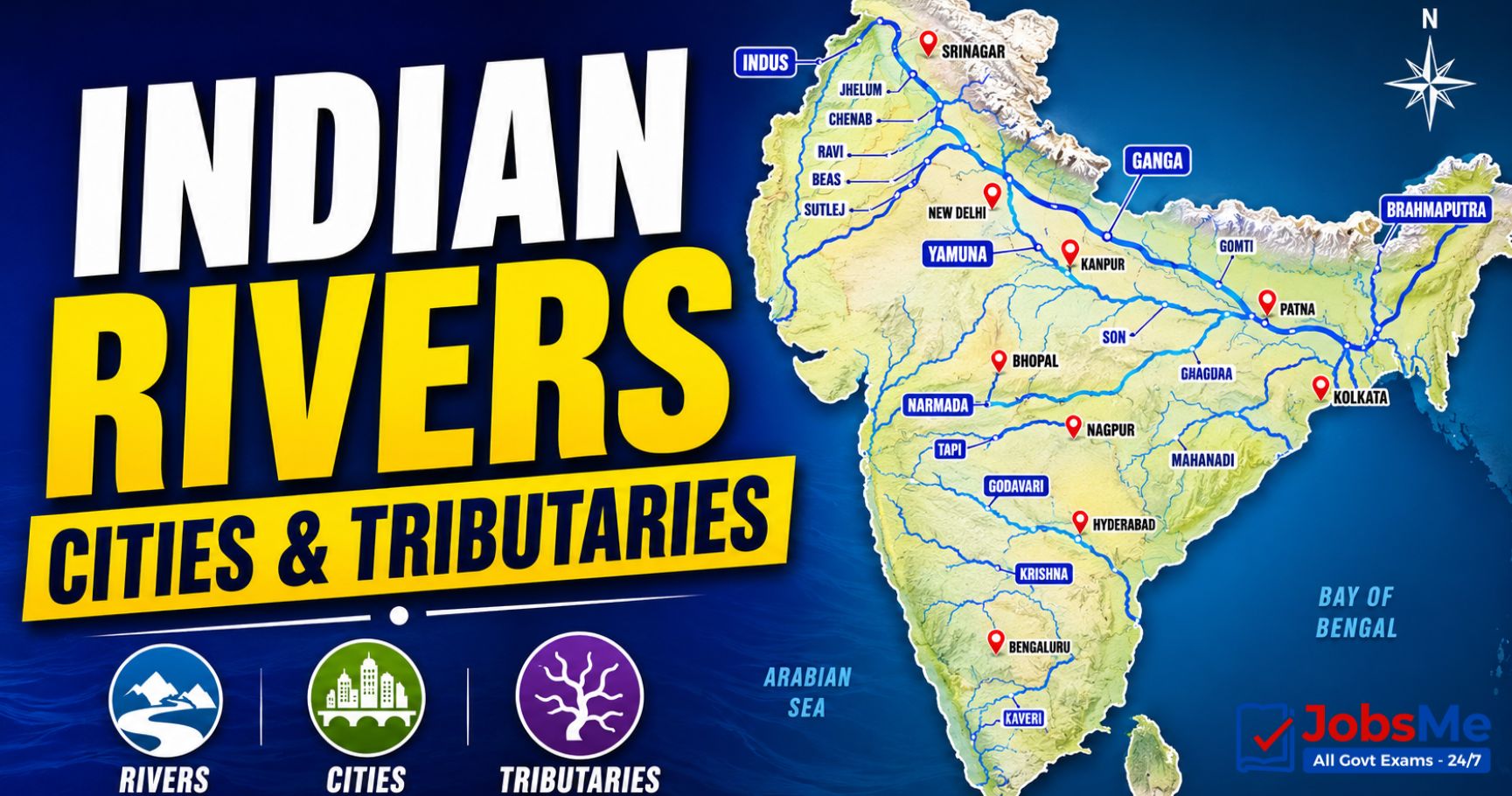
Dams in India – Static GK & General Awareness for Competitive Exams with Memory Tricks
This article covers a comprehensive state-wise list of dams in India along with the rivers they are built on, making it an essential resource for UPSC, SSC, IBPS, RRB, and other government exam aspirants. It includes the longest, highest, and oldest dams in India, along with memory tricks and one-liners for quick revision. All facts are organized in exam-ready format to help students score better in General Awareness sections.

Jump to section
Introduction
India is home to one of the largest dam networks in the world, with approximately 5,334 dams spread across its diverse river basins and terrains. From the snow-fed rivers of the Himalayas to the rain-fed rivers of the Deccan Plateau, dams play a central role in India's water management, agricultural productivity, and energy security. For students preparing for competitive exams, knowledge of dams — their names, rivers, states, and special distinctions — is a recurring and scoring topic in the General Awareness and Static GK sections.
Questions on dams in India appear regularly in UPSC Prelims, SSC CGL, IBPS PO, RRB NTPC, SBI Clerk, State PCS, and various Insurance and Defence exams. Questions typically ask about which river a dam is built on, which state it is located in, or which dam is the longest, highest, or oldest. This article brings together all key facts in a structured, exam-ready format. To explore more geography and infrastructure-based Static GK, visit the Rivers of India - Static GK guide on Jobsme.in.
Understanding India's dam infrastructure also connects directly to current affairs topics such as inter-state water disputes, hydroelectric power projects, and flood management policies — making this topic doubly important for aspirants targeting UPSC Mains and Essay papers as well.
Core Concepts: What is a Dam and Why Does It Matter?
A dam is a barrier constructed across a river or stream to hold back water and create a reservoir. Dams serve multiple critical functions in India's development landscape:
- Irrigation: Dams supply water to farmland, especially in drought-prone regions, enabling year-round crop cultivation.
- Hydroelectric Power Generation: Flowing water released through turbines generates electricity — dams like Tehri and Koyna are major power sources.
- Flood Control: Regulated water release prevents catastrophic flooding downstream during monsoon seasons.
- Drinking Water Supply: Urban and rural populations depend on dam reservoirs for clean water supply.
- Navigation: Dams regulate river depth and flow, supporting inland water transport — the most economical mode of freight movement.
- Fisheries and Recreation: Dam reservoirs support fishing industries and tourism, providing livelihoods to local communities.
- Industrial Use: Manufacturing units, thermal and nuclear power plants use large volumes of water sourced from dam reservoirs.
India's dam-building history dates back over 2,000 years, as evidenced by the Kallanai Dam on the Kaveri River in Tamil Nadu, which continues to function to this day. Understanding the multi-purpose nature of dams helps aspirants answer application-based questions in UPSC and State PCS exams.
State-Wise List of Dams in India
The following tables present a complete, exam-oriented list of major dams in India organized by state. Each entry includes the dam name, the river it is built on, and key features relevant for exams.
Andaman and Nicobar Islands
| Dam Name | River | Key Features / Exam Notes |
|---|---|---|
| Dhanikhari Dam | Dhanikhari River | Primary water supply dam for Port Blair; important for local irrigation and drinking water needs in the Union Territory. |
| Kalpong Dam | Kalpong River | Located in North Andaman; used for hydroelectric power generation; one of the few hydropower projects in the island chain. |
Andhra Pradesh and Telangana
| Dam Name | River | Key Features / Exam Notes |
|---|---|---|
| Srisailam Dam (NSRSP) | Krishna River | One of the largest hydroelectric projects in India; shared between Andhra Pradesh and Telangana; also known as Nagarjuna Sagar Related Storage Project. |
| Nagarjuna Sagar Dam | Krishna River | One of the world's largest masonry dams; located at the border of Andhra Pradesh and Telangana; vital for irrigation across both states. |
| Somasila Dam | Pennar River | Located in Andhra Pradesh; serves irrigation and drinking water purposes for Nellore and surrounding districts. |
| Nizam Sagar Dam | Manjira River | Located in Telangana; one of the oldest dams in Telangana region; built during the Nizam era for irrigation purposes. |
| Singur Dam | Manjira River | Located in Telangana; primary drinking water source for Hyderabad city; important for urban water supply. |
| Lower Manair Dam | Manair River | Located in Telangana; provides irrigation support to Karimnagar and Warangal districts. |
| Mid Manair Dam | Manair River and SRSP Flood Flow Canal | Part of the Manair dam cascade system in Telangana; regulates flood flows from Sriramsagar and provides irrigation support. |
| Upper Manair Dam | Manair River and Kudlair River | Uppermost dam in the Manair cascade; located in Telangana; used for irrigation and industrial water supply. |
| Radhanagari Dam | Bhogawati River | Classified under Telangana in some records; used for irrigation. Note: Some sources classify this under Maharashtra — verify source for exam context. |
Arunachal Pradesh
| Dam Name | River | Key Features / Exam Notes |
|---|---|---|
| Ranganadi Dam | Ranganadi River | Hydroelectric project in Arunachal Pradesh; power generated is supplied to Assam and the northeastern grid. |
Assam
| Dam Name | River | Key Features / Exam Notes |
|---|---|---|
| Pagladia Dam | Pagladia River | Long-pending multipurpose project in Assam; aimed at flood control, irrigation, and power generation in the Brahmaputra valley region. |
| Khandong Dam | Kopili River | Part of the Kopili Hydroelectric Project; located in Assam; an important power generation facility for the northeast region. |
| Umrong Dam | Umrong Nalah | Located in Assam; small dam on the Umrong Nalah tributary; used for local irrigation and water management. |
| Subansiri Lower Dam | Subansiri River | One of India's largest hydroelectric projects under construction; located on the Assam-Arunachal Pradesh border on the Subansiri River. |
| Karbi Langpi Dam | Borpani River | Located in Assam's Karbi Anglong district; part of a hydroelectric project serving the northeastern power grid. |
Chhattisgarh
| Dam Name | River | Key Features / Exam Notes |
|---|---|---|
| Dudhawa Dam (Gangrel Dam) | Mahanadi River | Located near Dhamtari in Chhattisgarh; one of the largest dams in the state; key irrigation source for central Chhattisgarh; also known as Gandhi Sagar of Chhattisgarh informally. |
| Mongra Barrage | Shivnath River | Located in Chhattisgarh; notable for being at the center of a water privatization controversy; the first river in India to be privatized (later revoked). |
| Murrum Silli Dam | Sillari River | Located in Chhattisgarh; used for irrigation purposes in the region. |
| Sondur Dam | Sondur River | Located in Chhattisgarh; multipurpose dam serving irrigation and drinking water needs. |
| Tandula Dam | Tandula River and Sukh Nala | Located in Balod district, Chhattisgarh; one of the oldest dams in the state; supplies water for irrigation and municipal use in Durg and Bhilai. |
Goa
| Dam Name | River | Key Features / Exam Notes |
|---|---|---|
| Amthane Dam | Amthane Nala | Small dam in Goa; used for local water supply and minor irrigation purposes. |
| Anjunem Dam | Gunuleni Nala | Located in Sattari taluka, North Goa; a reservoir dam providing drinking water to parts of North Goa. |
| Panchwadi Dam | Zuari River | Located in Goa; built on the Zuari, one of Goa's primary rivers; serves for irrigation and water supply. |
| Salaulim Dam | Sanguem (Salaulim River) | The largest dam in Goa; located in South Goa; primary source of drinking water for South Goa district; important for exam as Goa's most significant water project. |
Gujarat
| Dam Name | River | Key Features / Exam Notes |
|---|---|---|
| Dantiwada Dam | West Banas River | Located in Banaskantha district, Gujarat; key irrigation dam for the arid north Gujarat region; also known as Dantiwada Reservoir. |
| Dharoi Dam | Sabarmati River | Located in Mehsana district, Gujarat; multipurpose dam on the Sabarmati; provides irrigation and drinking water to central Gujarat. |
| Kadana Dam | Mahi River | Located in Mahisagar district, Gujarat; one of the major dams on the Mahi river; used for irrigation and hydroelectric power. |
| Mitti Dam | Mitti River | Located in Gujarat; serves local irrigation needs in its basin area. |
| Sardar Sarovar Dam | Narmada River | One of the largest dams in India and the world; located at Kevadiya (Ekta Nagar), Gujarat; part of the Narmada Valley Development Project; generates massive hydroelectric power and provides irrigation across Gujarat, Madhya Pradesh, Maharashtra, and Rajasthan. Among the top 5 biggest dams in India. |
| Ranghola Dam | Rangholi River | Located in Gujarat; used for local water management and irrigation. |
| Sukhi Dam | Sukhi River | Located in Vadodara district, Gujarat; irrigation dam serving the surrounding agricultural regions. |
| Ukai Dam | Tapti River | Located in Tapi district, Gujarat; largest reservoir in Gujarat by water storage; multipurpose dam for irrigation, flood control, and power generation on the Tapti River. |
Himachal Pradesh
| Dam Name | River | Key Features / Exam Notes |
|---|---|---|
| Bhakra Dam | Sutlej River | Located at the Himachal Pradesh-Punjab border near Bilaspur; one of the highest gravity dams in the world at 226 metres; part of the Bhakra-Nangal project; Jawaharlal Nehru called it a "New Temple of Resurgent India." |
| Kishau Dam | Tons River | Located in Himachal Pradesh on the Tons River (a tributary of the Yamuna); a proposed multipurpose dam for hydropower and irrigation. |
| Nathpa Jhakri Dam | Sutlej River | Located in Kinnaur/Shimla district, Himachal Pradesh; part of the Nathpa Jhakri Hydropower Project, one of India's largest hydroelectric projects on the Sutlej River. |
| Pandoh Dam | Beas River | Located in Mandi district, Himachal Pradesh; part of the Beas-Sutlej Link Project; diverts Beas water to augment the Sutlej basin for power generation. |
| Pong Dam | Beas River | Located in Kangra district, Himachal Pradesh; also known as Maharana Pratap Sagar; one of the highest earthen dams in India; the reservoir is a Ramsar Wetland site. |
| Chamera Dam | Ravi River | Located in Chamba district, Himachal Pradesh; part of the Chamera Hydroelectric Project; provides power to the northern grid. |
Haryana
| Dam Name | River | Key Features / Exam Notes |
|---|---|---|
| Ottu Barrage | Ghaggar-Hakra River | Located in Sirsa district, Haryana; regulates the flow of the Ghaggar-Hakra river for irrigation purposes in Haryana and Rajasthan. |
| Kaushalya Dam | Kaushalya River | Located in Panchkula district, Haryana; provides drinking water to Panchkula and surrounding urban areas. |
Jammu and Kashmir
| Dam Name | River | Key Features / Exam Notes |
|---|---|---|
| Salal Dam | Chenab River | Located in Reasi district, J&K; run-of-the-river hydroelectric project on the Chenab; operated by NHPC. |
| Pakal Dul Dam | Chenab River (Marusudar tributary) | Located in Kishtwar district, J&K; under construction; will be one of the highest concrete-faced rockfill dams in the world when completed. |
| Baglihar Dam | Chenab River | Located in Ramban district, J&K; run-of-the-river hydroelectric project; was at the center of a dispute with Pakistan under the Indus Waters Treaty; important for current affairs and GK. |
| Uri Hydroelectric Dam | Jhelum River | Located in Baramulla district, J&K; run-of-the-river hydroelectric project; one of the largest power projects in J&K; supplies power to the northern grid. |
| Dumkhar Hydroelectric Dam | Indus River | Located in Ladakh region; small hydroelectric project on the Indus; serves local power needs of the region. |
Jharkhand
| Dam Name | River | Key Features / Exam Notes |
|---|---|---|
| Getalsud Dam | Subarnarekha River | Located near Ranchi in Jharkhand; primary drinking water source for Ranchi city; reservoir also supports irrigation and recreation. |
| Konar Dam | Konar River | Located in Hazaribagh district, Jharkhand; part of the Damodar Valley Corporation (DVC) system; used for irrigation and flood control. |
| Maithon Dam | Barakar River | Located in Dhanbad district, Jharkhand; part of the DVC project; one of the few underground powerhouses in India; important for hydroelectric generation and flood control in the Damodar Valley. |
| Panchet Dam | Damodar River | Located in Dhanbad district, Jharkhand; another DVC project; works in tandem with Maithon Dam for flood management and power generation. |
| Tenughat Dam | Damodar River | Located in Bokaro district, Jharkhand; multipurpose dam providing water to the Bokaro Steel Plant and irrigation to surrounding areas. |
| Tilaiya Dam | Barakar River | Located in Koderma district, Jharkhand; the first dam built by the Damodar Valley Corporation (DVC) after independence; provides irrigation and power generation. |
| Chandil Dam | Swarnarekha (Subarnarekha) River | Located in Seraikela-Kharsawan district, Jharkhand; large irrigation and water supply project on the Subarnarekha River. |
| Khandoli Dam | Damodar River | Located in Giridih district, Jharkhand; small reservoir used for local water supply and irrigation. |
Karnataka
| Dam Name | River | Key Features / Exam Notes |
|---|---|---|
| Almatti Dam (Basava Sagara) | Krishna River | Located in Vijayapura district, Karnataka; part of the Upper Krishna Project; has been at the center of the Karnataka-Andhra Pradesh river water dispute. |
| Narayanpur Dam | Krishna River | Located in Yadgir district, Karnataka; downstream of Almatti; part of the Upper Krishna Project; used for irrigation in northern Karnataka. |
| Bhadra Dam | Bhadra River | Located in Chikkamagaluru district, Karnataka; the reservoir is known for its scenic beauty and is a wildlife sanctuary; supplies water to the Bhadra Reservoir Project. |
| Tungabhadra Dam | Tungabhadra River | Located near Hospet (Hosapete), Karnataka; a joint project between Karnataka and Andhra Pradesh; one of the major irrigation and power generation dams in peninsular India. |
| Krishna Raja Sagara (KRS) Dam | Kaveri River | Located in Mandya district, Karnataka; one of the largest reservoirs in India; built by Sir M. Visvesvaraya; known as the "Jewel of Karnataka"; the Brindavan Gardens at the dam are world-famous. |
| Linganamakki Dam | Sharavati River | Located in Shivamogga district, Karnataka; part of the Sharavati Hydroelectric Project; reservoir supplies the Jog Falls powerhouse, one of India's major hydroelectric stations. |
| Hidkal Dam (Raja Lakhamagowda) | Ghataprabha River | Located in Belagavi district, Karnataka; the largest earthen dam in Karnataka; important for irrigation in the Ghataprabha basin. |
| Renuka Sagara Dam | Malaprabha River | Located in Dharwad district, Karnataka; primary water source for Dharwad, Hubli, and Gadag districts. |
| Kadra Dam | Kali (Kalinadi) River | Located in Uttara Kannada district, Karnataka; part of the Kali River Hydroelectric Scheme; provides hydroelectric power to Karnataka. |
| Supa Dam | Kali (Kalinadi) River | Located in Uttara Kannada district, Karnataka; the largest dam in the Kali River cascade; provides significant hydroelectric power generation. |
| Kodasalli Dam | Kali River | Located in Uttara Kannada district, Karnataka; part of the Kali River hydroelectric cascade along with Kadra and Supa dams. |
| Chakra Dam | Chakra River | Located in Shivamogga district, Karnataka; used for irrigation and hydroelectric generation. |
| Vani Vilasa Sagara (Mari Kanive) Dam | Vedavathi River | Located in Chitradurga district, Karnataka; one of the oldest irrigation reservoirs in the Deccan; serves irrigation in the Chitradurga and Davangere regions. |
| Harangi Dam | Harangi River | Located in Kodagu district, Karnataka; provides supplementary irrigation water to the KRS reservoir system on the Kaveri. |
Kerala
| Dam Name | River | Key Features / Exam Notes |
|---|---|---|
| Idukki Dam | Periyar River | Located in Idukki district, Kerala; one of the largest arch dams in Asia; a major hydroelectric project generating power for Kerala and Tamil Nadu. |
| Mullaperiyar Dam | Periyar River | Located in Idukki district, Kerala; maintained and operated by Tamil Nadu; a 120-year-old masonry dam at the center of a long-standing Kerala-Tamil Nadu water and safety dispute; frequently appears in current affairs. |
| Malampuzha Dam | Bharathapuzha (Malampuzha) River | Located in Palakkad district, Kerala; the largest irrigation dam in Kerala; has a famous garden and park adjacent to the reservoir. |
| Parambikulam Dam | Parambikulam River | Located in Palakkad district, Kerala; part of the Parambikulam-Aliyar Project shared between Kerala and Tamil Nadu; serves irrigation in both states. |
| Solaiyar Dam | Chalakkudy River | Part of the Parambikulam-Aliyar inter-state water project; located in Kerala; supplies water to Tamil Nadu's irrigation network. |
| Peringalkuthu Dam | Chalakkudy River | Located in Thrissur district, Kerala; hydroelectric dam on the Chalakkudy River system; part of the Pallivasal-Sengulam hydroelectric complex. |
| Neyyar Dam | Neyyar River | Located in Thiruvananthapuram district, Kerala; provides drinking water and irrigation to southern Kerala; the Neyyar Wildlife Sanctuary is located around the reservoir. |
| Chimmony Dam | Chimmony River | Located in Thrissur district, Kerala; surrounded by the Chimmony Wildlife Sanctuary; used for local water supply and minor irrigation. |
| Cheruthoni Dam | Cheruthoni River | Located in Idukki district, Kerala; part of the Idukki hydroelectric project; at 138.2 metres, it is considered the smallest dam in India by height among major dams. |
| Kundala Dam | Kundala Lake (Kundala River) | Located in Munnar, Idukki district, Kerala; a scenic arch dam and one of the first arch dams built in India; surrounded by tea plantations. |
| Walayar Dam | Walayar River | Located in Palakkad district, Kerala, near the Tamil Nadu border; part of the Parambikulam-Aliyar system; serves irrigation needs. |
| Peechi Dam | Manali River | Located in Thrissur district, Kerala; provides drinking water to Thrissur city and supports irrigation; the Peechi-Vazhani Wildlife Sanctuary is in the surrounding area. |
Madhya Pradesh
| Dam Name | River | Key Features / Exam Notes |
|---|---|---|
| Bansagar Dam | Son River | Located in Shahdol district, Madhya Pradesh; multipurpose dam on the Son River; a joint project shared between Madhya Pradesh, Uttar Pradesh, and Bihar for irrigation and power. |
| Bargi Dam | Narmada River | Located near Jabalpur, Madhya Pradesh; one of the major dams on the Narmada River; part of the Narmada Valley Development Project. |
| Barna Dam | Barna River | Located in Raisen district, Madhya Pradesh; provides irrigation water to Raisen and Sehore districts. |
| Gandhi Sagar Dam | Chambal River | Located in Mandsaur/Neemuch district, Madhya Pradesh; one of the four dams on the Chambal River; provides irrigation and power generation to MP and Rajasthan; has a famous wildlife sanctuary nearby. |
| Halali Dam | Halali River | Located near Bhopal, Madhya Pradesh; primary drinking water reservoir for Bhopal city; also used for minor irrigation. |
| Indira Sagar Dam | Narmada River | Located in Khandwa district, Madhya Pradesh; the largest reservoir in India by water storage capacity; one of the top 5 biggest dams in India; part of the Narmada Valley Project. |
| Kolar Dam | Kolar River | Located in Sehore district, Madhya Pradesh; provides drinking water to Bhopal city; an important urban water supply reservoir. |
| Omkareshwar Dam | Narmada River | Located in Khandwa district, Madhya Pradesh; downstream of Indira Sagar dam; hydroelectric project on the Narmada; near the sacred Omkareshwar Jyotirlinga temple. |
| Rajghat Dam | Betwa River | Located on the Uttar Pradesh-Madhya Pradesh border; a joint irrigation project between the two states on the Betwa River. |
| Tigra Dam (Tighra) | Sank River | Located near Gwalior, Madhya Pradesh; primary drinking water and irrigation reservoir for Gwalior city. |
Manipur
| Dam Name | River | Key Features / Exam Notes |
|---|---|---|
| Khuga Dam | Khuga River | Located in Churachandpur district, Manipur; multipurpose project providing irrigation and water supply to parts of Manipur. |
| Tipaimukh Dam | Barak River | Located in Churachandpur district, Manipur; a proposed large hydroelectric and flood control project; has been a subject of controversy with Bangladesh regarding downstream impact. |
Maharashtra
| Dam Name | River | Key Features / Exam Notes |
|---|---|---|
| Koyna Dam | Koyna River | Located in Satara district, Maharashtra; the largest hydroelectric project in Maharashtra; the 1967 Koyna earthquake (6.5 magnitude) is a classic example of Reservoir Induced Seismicity (RIS), important for UPSC geography. |
| Jayakwadi Dam | Godavari River | Located in Aurangabad (Chhatrapati Sambhajinagar) district, Maharashtra; one of the largest earthen dams in Maharashtra; key irrigation source for the Marathwada region. |
| Totladoh Dam | Pench River | Located in Nagpur district, Maharashtra; part of the Pench Hydroelectric Project; provides drinking water to Nagpur city. |
| Isapur Dam | Penganga River | Located in Yavatmal district, Maharashtra; an important irrigation dam on the Penganga, a tributary of the Wardha-Wainganga system. |
| Ujani Dam (Bhima Dam) | Bhima River | Located in Solapur district, Maharashtra; one of the largest dams in the state; the Bhima River, a tributary of Krishna, is impounded here; key irrigation source for Solapur. |
| Khadakwasla Dam | Mutha River | Located near Pune, Maharashtra; the primary drinking water reservoir for Pune city; part of a series of dams (Khadakwasla-Panshet-Varasgaon-Temghar) that serve Pune. |
| Panshet Dam | Ambi River | Located in Pune district, Maharashtra; part of the Pune water supply system; a rockfill dam that feeds Khadakwasla reservoir. |
| Mula Dam | Mula River | Located in Ahmednagar district, Maharashtra; provides irrigation to the Pravara and Mula canal systems in western Maharashtra. |
| Mulshi Dam | Mula River | Located in Pune district, Maharashtra; a hydro-electric reservoir owned by Tata Power; surroundings are a popular tourism and trekking area. |
| Yeldari Dam | Purna River | Located in Parbhani district, Maharashtra; irrigation dam on the Purna River serving the Marathwada region. |
| Pawna Dam | Maval (Pavana) River | Located in Pune district, Maharashtra; a popular camping and trekking destination; serves irrigation and local water supply. |
| Bhatsa Dam | Bhatsa River | Located in Thane district, Maharashtra; one of the six lakes supplying drinking water to Mumbai; an important urban water supply dam. |
| Wilson Dam | Pravara River | Located in Ahmednagar district, Maharashtra; one of the oldest dams in Maharashtra; British-era construction on the Pravara River. |
| Tansa Dam | Tansa River | Located in Thane district, Maharashtra; one of the six reservoirs supplying water to Mumbai; an important source in the Mumbai water grid. |
| Vaitarna Dam | Vaitarna River | Located in Nashik district, Maharashtra; supplies water to Mumbai via the upper Vaitarna project; a key component of Mumbai's water supply network. |
| Girna Dam | Girna River | Located in Nashik district, Maharashtra; an important irrigation dam serving the Nashik and Jalgaon regions. |
| Kolkewadi Dam | Vashishti River | Located in Ratnagiri district, Maharashtra; part of a hydroelectric project; the reservoir feeds a powerhouse at the bottom of the escarpment. |
| Gangapur Dam | Godavari River | Located near Nashik, Maharashtra; the primary drinking water and irrigation source for Nashik city; at the origin of the Godavari River. |
Mizoram
| Dam Name | River | Key Features / Exam Notes |
|---|---|---|
| Serlui B Dam | Serlui River | Located in Mizoram; a hydroelectric project providing power to Mizoram; one of the state's significant energy infrastructure projects. |
| Tuirial Dam | Tuirial River | Located in Aizawl district, Mizoram; a long-delayed hydroelectric project that was finally commissioned; provides power to Mizoram and the northeastern grid. |
Odisha
| Dam Name | River | Key Features / Exam Notes |
|---|---|---|
| Hirakud Dam | Mahanadi River | Located in Sambalpur district, Odisha; the longest dam in India at 25.79 km; completed in 1953; one of the first major multipurpose river valley projects after independence; serves flood control, irrigation, and power generation. One of the most important dam facts for all exams. |
| Jalaput Dam | Machkund (Sileru) River | Located on the Andhra Pradesh-Odisha border; a hydroelectric project on the Machkund River; power shared between the two states. |
| Mandira Dam | Sankh River | Located in Sundargarh district, Odisha; supplies water to the Rourkela Steel Plant (RSP); an industrial water supply dam of national importance. |
| Patora Dam | Jonk River | Located in Odisha; provides irrigation support to the surrounding districts of Odisha. |
| Rengali Dam | Brahmani River | Located in Angul district, Odisha; multipurpose dam for irrigation and power; provides water to the Talcher Thermal Power Station. |
| Indravati Dam | Indravati River | Located in Kalahandi district, Odisha; part of the Indravati Hydroelectric Project; the reservoir submerged large forested areas and displaced significant tribal populations — a topic of social relevance for UPSC. |
Punjab
| Dam Name | River | Key Features / Exam Notes |
|---|---|---|
| Ranjit Sagar Dam (Thein Dam) | Ravi River | Located in Pathankot district, Punjab (near J&K border); the largest dam in Punjab; a multipurpose hydroelectric and irrigation project; also called Thein Dam; supplies power to Punjab, Himachal Pradesh, and J&K. |
Rajasthan
| Dam Name | River | Key Features / Exam Notes |
|---|---|---|
| Parbati Dam | Parbati River | Located in Dhaulpur district, Rajasthan; irrigation dam on the Parbati River, a tributary of the Chambal. |
| Jawahar Sagar Dam | Chambal River | Located in Bundi/Kota district, Rajasthan; one of the four dams on the Chambal River cascade; downstream of Rana Pratap Sagar Dam; generates hydroelectric power. |
| Jawai Bandh Dam | Jawai River | Located in Pali district, Rajasthan; the largest dam in western Rajasthan; primary water source for Jodhpur city; known as the "Lifeline of Marwar." |
| Mahi Bajaj Sagar Dam | Mahi River | Located in Banswara district, Rajasthan; a multipurpose project providing irrigation and power to Rajasthan and Gujarat; on the Mahi River shared between the two states. |
| Rana Pratap Sagar Dam | Chambal River | Located in Chittorgarh district, Rajasthan; one of the Chambal cascade dams; downstream of Gandhi Sagar; named after the legendary Rajput warrior; provides irrigation and power. |
| Jakham Dam | Jakham River | Located in Pratapgarh district, Rajasthan; an important irrigation dam for the tribal belt of southern Rajasthan. |
Sikkim
| Dam Name | River | Key Features / Exam Notes |
|---|---|---|
| Rangit Dam | Rangit River | Located in West Sikkim; a run-of-the-river hydroelectric project; the Rangit River is a major tributary of the Teesta in Sikkim. |
Tamil Nadu
| Dam Name | River | Key Features / Exam Notes |
|---|---|---|
| Kallanai Dam (Grand Anicut) | Kaveri River | Located in Thanjavur district, Tamil Nadu; the oldest dam in India and one of the oldest water-regulation structures in the world still in use; built between 100 BC and 100 AD by Chola king Karikalan; still operational for irrigation in the Kaveri delta. |
| Mettur Dam (Stanley Reservoir) | Kaveri River | Located in Salem district, Tamil Nadu; one of the largest dams in India; built during British rule; its annual opening for irrigation is a landmark event for the Cauvery delta farmers and frequently appears in current affairs. |
| Amaravathi Dam | Amaravathi River | Located in Tiruppur district, Tamil Nadu; provides irrigation to Erode and Tiruppur districts; the Amaravathi is a tributary of the Kaveri. |
| Kodaveri Dam | Bhavani River | Located on the Bhavani River, Tamil Nadu; used for irrigation in the Erode and Namakkal districts. |
| Vaigai Dam | Vaigai River | Located in Dindigul district, Tamil Nadu; primary irrigation and water supply dam for the Madurai region; the Vaigai River is the lifeline of the Madurai district. |
| Nallathangal Dam | Nallathangal Odai | Located in Tamil Nadu; a smaller irrigation dam serving local agricultural needs. |
| Orathuppalayam Dam | Noyyal River | Located in Tiruppur district, Tamil Nadu; built on the Noyyal, a tributary of the Kaveri; used for irrigation and water supply. |
| Pillur Dam | Bhavani River | Located in Nilgiris district, Tamil Nadu; part of the Pillur Hydro-Electric Scheme; provides power and water to the Coimbatore region. |
| Perunchani Dam | Paralayar River | Located in Kanyakumari district, Tamil Nadu; a small irrigation and water supply dam in the southernmost part of India. |
Uttarakhand
| Dam Name | River | Key Features / Exam Notes |
|---|---|---|
| Tehri Dam | Bhagirathi River | Located in Tehri Garhwal district, Uttarakhand; the tallest dam in India at 260.5 metres; ranks 12th among the tallest dams in the world; completed in 2006 (Phase 1); operated by THDC India Ltd.; serves hydroelectric power, irrigation, and water supply to Delhi and other cities. Among the top 5 biggest dams in India. |
| Koteshwar Dam | Bhagirathi River | Located downstream of Tehri in Tehri Garhwal district; part of the Tehri Hydroelectric Complex; a run-of-the-river complementary dam to Tehri. |
| Dhauliganga Dam | Dhauliganga River | Located in Pithoragarh district, Uttarakhand; a run-of-the-river hydroelectric project in the Kumaon Himalayas; an important power source for Uttarakhand. |
| Gusain Dam (Ichari Dam) | Tons River | Located in Dehradun district, Uttarakhand; the Tons River is the largest tributary of the Yamuna; hydroelectric project on this Yamuna tributary. |
| Lakhwar Dam | Yamuna River | Located in Dehradun/Uttarkashi district, Uttarakhand; a long-pending multipurpose project that was finally cleared; will serve six upper Yamuna basin states for irrigation, power, and water supply, including Delhi. |
Uttar Pradesh
| Dam Name | River | Key Features / Exam Notes |
|---|---|---|
| Rihand Dam (Govind Ballabh Pant Sagar) | Rihand River | Located in Sonbhadra district, Uttar Pradesh; the largest artificial lake in India by area; named after former Chief Minister Govind Ballabh Pant; the Rihand is a tributary of the Son River; associated with the Singrauli energy complex. |
West Bengal
| Dam Name | River | Key Features / Exam Notes |
|---|---|---|
| Maithon Dam | Damodar River | Part of the Damodar Valley Corporation (DVC) system; the Maithon reservoir extends across Jharkhand and West Bengal; one of the few DVC dams with an underground powerhouse. |
| Panchet Dam | Damodar River | Part of the DVC system; located on the Damodar River on the Jharkhand-West Bengal border; works in coordination with Maithon for power generation and flood control in the Damodar Valley. |
Superlatives: Longest, Highest, Oldest, and Most Important Dams in India
| Distinction | Dam Name | River | State | Key Detail |
|---|---|---|---|---|
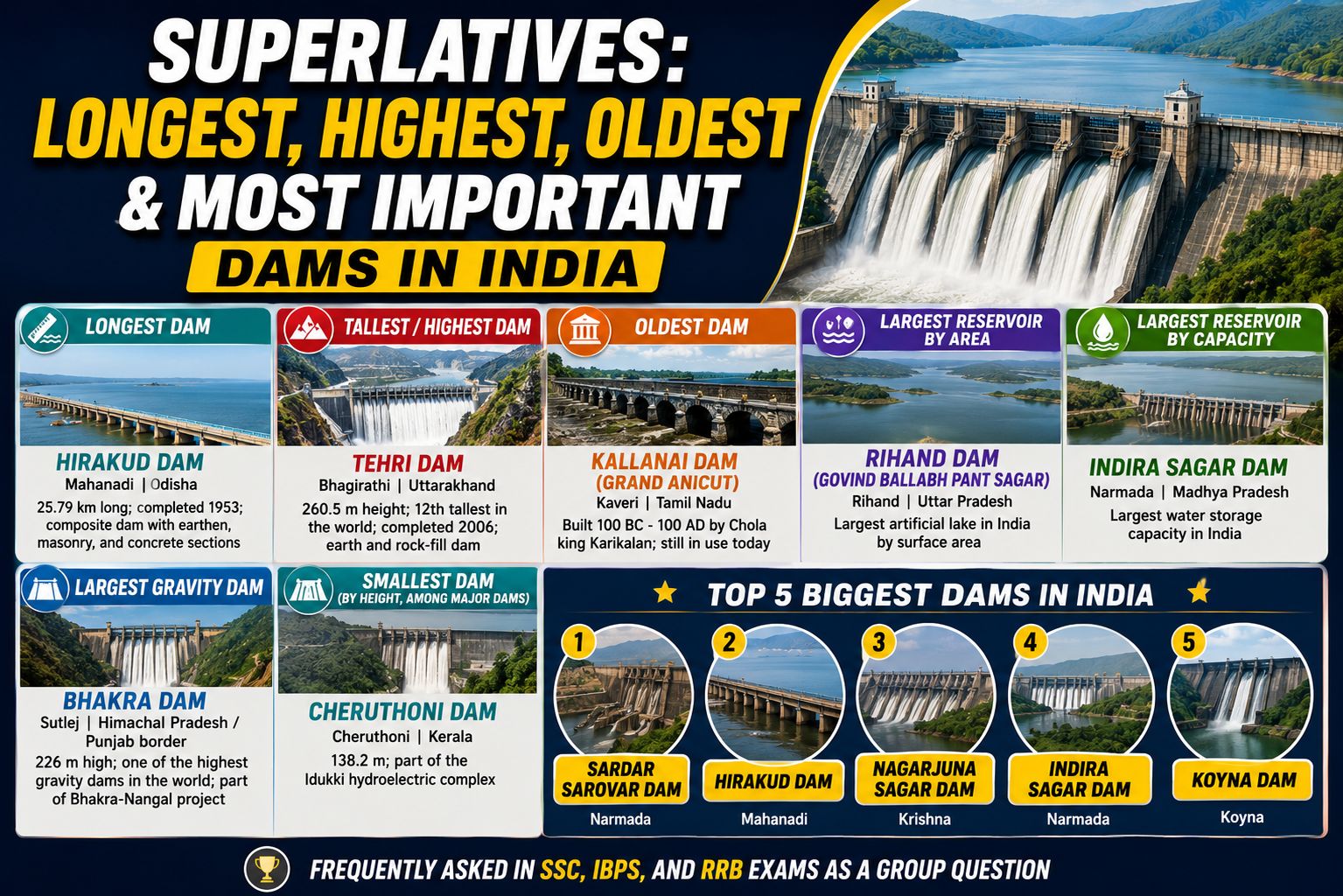
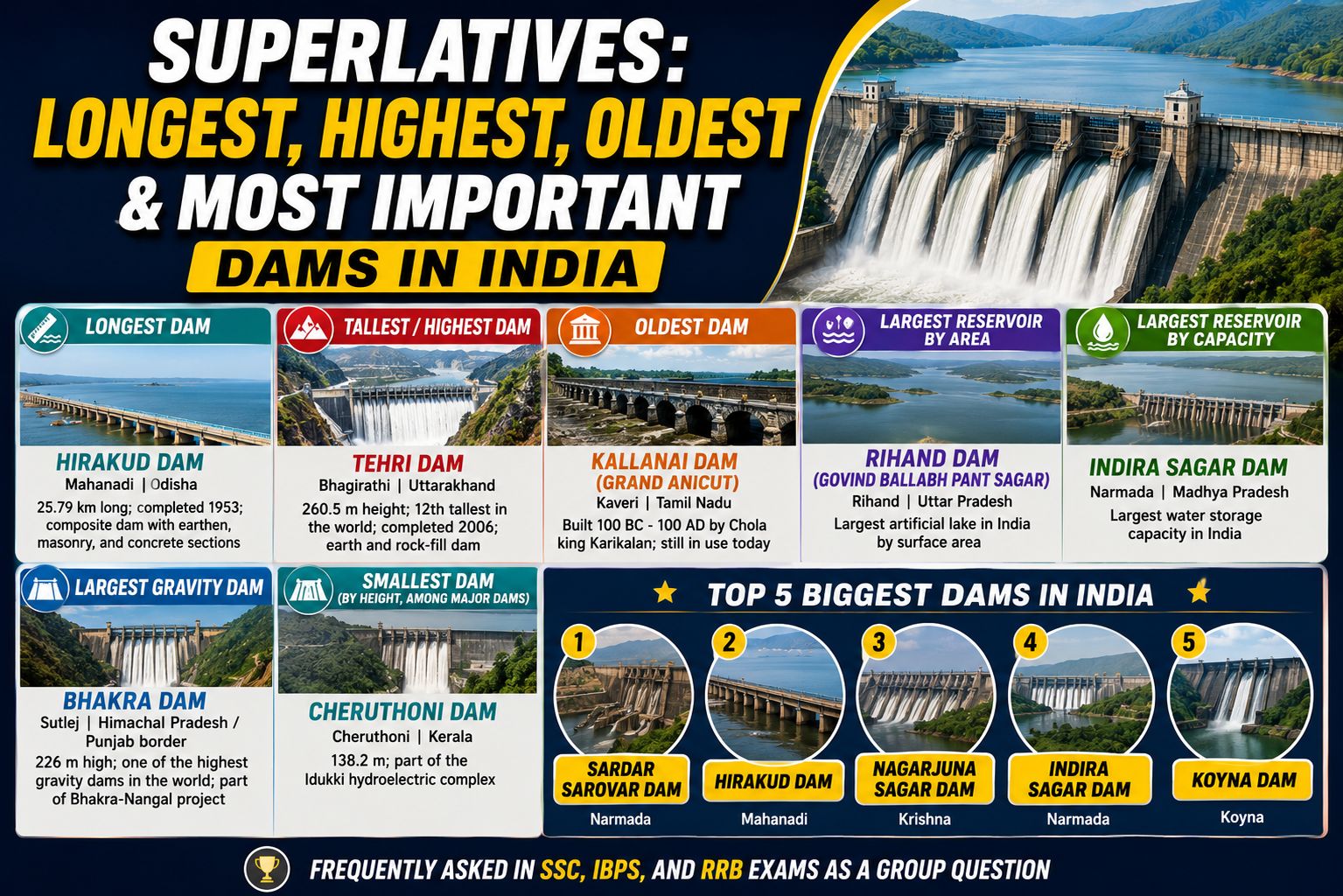
| Longest Dam | Hirakud Dam | Mahanadi | Odisha | 25.79 km long; completed 1953; composite dam with earthen, masonry, and concrete sections |
| Tallest / Highest Dam | Tehri Dam | Bhagirathi | Uttarakhand | 260.5 m height; 12th tallest in the world; completed 2006; earth and rock-fill dam |
| Oldest Dam | Kallanai Dam (Grand Anicut) | Kaveri | Tamil Nadu | Built 100 BC - 100 AD by Chola king Karikalan; still in use today |
| Largest Reservoir by Area | Rihand Dam (Govind Ballabh Pant Sagar) | Rihand | Uttar Pradesh | Largest artificial lake in India by surface area |
| Largest Reservoir by Capacity | Indira Sagar Dam | Narmada | Madhya Pradesh | Largest water storage capacity in India |
| Largest Gravity Dam | Bhakra Dam | Sutlej | Himachal Pradesh / Punjab border | 226 m high; one of the highest gravity dams in the world; part of Bhakra-Nangal project |
| Smallest Dam (by height, among major dams) | Cheruthoni Dam | Cheruthoni | Kerala | 138.2 m; part of the Idukki hydroelectric complex |
| Top 5 Biggest Dams in India | Sardar Sarovar, Hirakud, Nagarjuna Sagar, Indira Sagar, Koyna | — | Multiple states | Frequently asked in SSC, IBPS, and RRB exams as a group question |
Memory Tricks and Mnemonics for Dams in India
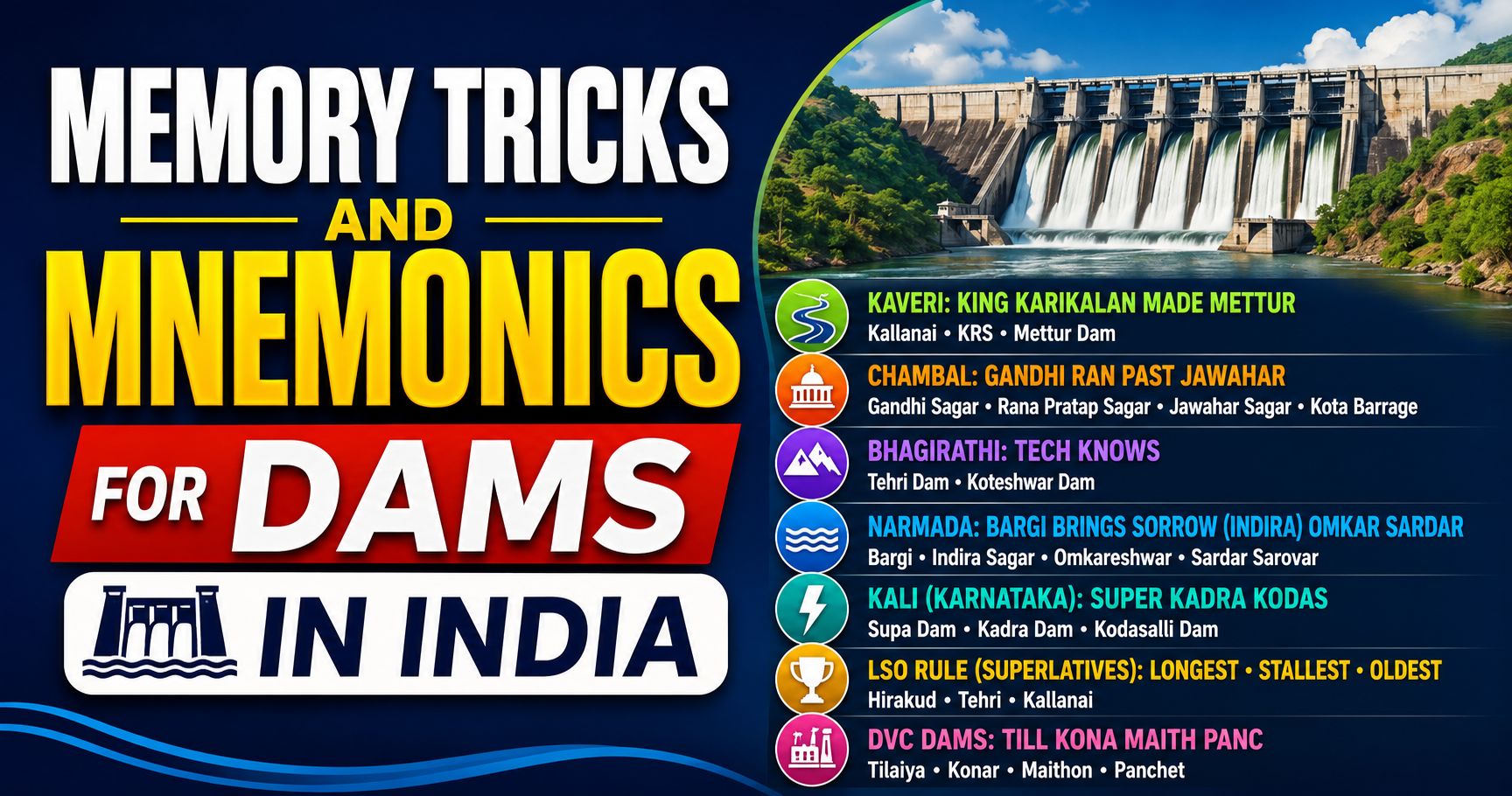
1. Remember Dams on the Kaveri River
The Kaveri supports three famous dams in South India. Use the mnemonic:
"King Karikalan Made Mettur"
- Kallanai — oldest dam, built by Chola King Karikalan
- Krishna Raja Sagara (KRS) — Karnataka
- Mettur Dam (Stanley Reservoir) — Tamil Nadu
All three are on the Kaveri River. The sequence also goes from upstream (KRS in Karnataka) to downstream (Kallanai in Tamil Nadu's delta).
2. The Chambal Cascade: "Gandhi Ran Jawahar"
The four dams on the Chambal River from upstream to downstream follow a memorable political-name pattern:
"Gandhi Ran Past Jawahar"
- Gandhi Sagar Dam (Madhya Pradesh)
- Rana Pratap Sagar Dam (Rajasthan)
- Jawahar Sagar Dam (Rajasthan)
- Kota Barrage (terminal barrage at Kota, Rajasthan)
3. Bhagirathi River Dams: "Tech Knows"
Two famous dams are on the Bhagirathi River in Uttarakhand:
"Tehri Koteshwar" = "Tech Knows"
- Tehri Dam — tallest dam in India
- Koteshwar Dam — downstream companion dam
Tip: Both are in Uttarakhand. Tehri = Tallest. Easy link between "T" and "T".
4. Narmada River Dams: "Big Boats Sail Into Ocean"
The major dams on the Narmada from upstream to downstream:
"Bargi Brings Sorrow (Indira) Omkar Sardar"
- Bargi Dam — Jabalpur, MP
- Indira Sagar Dam — largest reservoir by capacity, MP
- Omkareshwar Dam — MP (near the Jyotirlinga)
- Sardar Sarovar Dam — Gujarat (terminal dam)
5. Kali River Dams in Karnataka: "Super Kadra Kodas"
Three dams are built on the Kali (Kalinadi) River in Karnataka's Uttara Kannada district:
"Super Kadra Kodas"
- Supa Dam — largest of the three
- Kadra Dam
- Kodasalli Dam
All three are on the Kali River and form a hydroelectric cascade in Karnataka. Questions sometimes ask: "Which of these is NOT on the Kali River?" — so knowing all three is important.
6. The "LSO" Rule for Superlatives
Remember the three most asked dam superlatives using "LSO":
- Longest — Hirakud (Mahanadi, Odisha) — "L for Long, H for Hirakud, O for Odisha"
- Stallest (highest) — Tehri (Bhagirathi, Uttarakhand) — "S for Skyline, T for Tehri"
- Oldest — Kallanai (Kaveri, Tamil Nadu) — "O for Old, K for King Karikalan"
7. Damodar Valley Corporation (DVC) Dams: "Till Kona Maith Panc"
The four DVC dams in the Damodar basin are:
"Till Kona Maith Panc"
- Tilaiya — on Barakar River (first DVC dam built)
- Konar — on Konar River
- Maithon — on Barakar River (underground powerhouse)
- Panchet — on Damodar River
Maithon is special: it has one of India's few underground powerhouses — an exam favourite for SSC and IBPS.
Additional Notes
Frequently Confused Facts
- Hirakud vs. Tehri: Hirakud is the longest dam (25.79 km); Tehri is the tallest dam (260.5 m). Do not mix them up — this is one of the most commonly misanswered questions in competitive exams.
- KRS Dam vs. Mettur Dam: Both are on the Kaveri River but in different states. KRS is in Karnataka; Mettur is in Tamil Nadu.
- Ranjit Sagar Dam vs. Rana Pratap Sagar Dam: Ranjit Sagar (Thein Dam) is in Punjab on the Ravi River. Rana Pratap Sagar is in Rajasthan on the Chambal River. Both have royal names — do not confuse them.
- Nagarjuna Sagar vs. Srisailam: Both are on the Krishna River and shared between Andhra Pradesh and Telangana. Nagarjuna Sagar is known as one of the largest masonry dams; Srisailam is a major hydroelectric project.
- Mullaperiyar Dam vs. Idukki Dam: Both are in Kerala on the Periyar River, but Mullaperiyar is operated by Tamil Nadu and is the subject of an inter-state safety dispute. Idukki is an arch dam operated by Kerala State Electricity Board.
- Gandhi Sagar vs. Gangrel (Dudhawa) Dam: Gandhi Sagar is in Madhya Pradesh on the Chambal. Gangrel (Dudhawa) Dam is also in Madhya Pradesh/Chhattisgarh but on the Mahanadi. Don't confuse the rivers.
- Bansagar Dam: Built on the Son River, not on the Narmada. The Son is a tributary of the Ganga, not the Narmada — a frequently tested distinction.
Repeating PYQ Patterns
- SSC CGL/CHSL/MTS: Most frequently asks — longest, tallest, oldest dam; which dam is on which river; dam-state combinations for Karnataka and Kerala.
- IBPS PO/Clerk and SBI: Frequently asks about dam-river-state combinations in the context of irrigation projects, power projects, and water disputes; also asks about DVC dams.
- RRB NTPC/Group D: Focuses on major dams in states like Odisha, MP, Maharashtra, and Karnataka; superlatives are most frequently tested.
- UPSC Prelims: Tests contextual questions — which dam is on which river system, inter-state water sharing projects (Parambikulam-Aliyar, Bansagar, Rajghat), dam-related seismicity (Koyna), and current affairs like Mullaperiyar dispute.
- State PCS Exams: Focus heavily on dams within the state; for example, MP PCS asks about Narmada dams; Karnataka PSC asks about KRS, Almatti, Tungabhadra.
Quick Insight: Current Affairs Relevance
Dams are not merely Static GK — they surface repeatedly in current affairs. The Mullaperiyar Dam dispute between Kerala and Tamil Nadu, the Cauvery water dispute linked to Mettur Dam's opening, the Baglihar Dam issue under the Indus Waters Treaty with Pakistan, the Tipaimukh Dam controversy with Bangladesh, and ongoing debates over the Sardar Sarovar project's displacement figures all connect Static GK to live policy debates. UPSC Mains and Essay sections regularly draw on such real-world dam contexts. You can stay updated on such developments through the Daily Current Affairs section on Jobsme.in. For related infrastructure Static GK such as ports, airports, and power plants, visit the Major Ports in India guide.
One-Liners for Quick Revision
- Hirakud Dam → Longest dam in India (25.79 km) → Built on the Mahanadi River in Sambalpur, Odisha; completed 1953.
- Tehri Dam → Tallest dam in India (260.5 m) → Built on the Bhagirathi River in Tehri Garhwal, Uttarakhand; 12th tallest in the world.
- Kallanai Dam (Grand Anicut) → Oldest dam in India → Built on the Kaveri River in Thanjavur, Tamil Nadu; constructed by Chola king Karikalan (100 BC-100 AD).
- Indira Sagar Dam → Largest reservoir in India by storage capacity → Built on the Narmada River in Khandwa, Madhya Pradesh.
- Rihand Dam (Govind Ballabh Pant Sagar) → Largest artificial lake in India by area → Built on the Rihand River in Sonbhadra, Uttar Pradesh.
- Bhakra Dam → One of the highest gravity dams in the world (226 m) → Built on the Sutlej River; located at the HP-Punjab border.
- Sardar Sarovar Dam → Built on the Narmada River → Located at Kevadiya (Ekta Nagar), Gujarat; one of the top 5 biggest dams in India.
- Nagarjuna Sagar Dam → One of the largest masonry dams in the world → Built on the Krishna River; shared between Andhra Pradesh and Telangana.
- KRS Dam (Krishna Raja Sagara) → Built on the Kaveri River → Located in Mandya, Karnataka; constructed under Sir M. Visvesvaraya; Brindavan Gardens are adjacent.
- Mettur Dam (Stanley Reservoir) → Built on the Kaveri River → Located in Salem, Tamil Nadu; one of the largest dams in India; its annual opening marks the irrigation season.
- Idukki Dam → One of the largest arch dams in Asia → Built on the Periyar River in Idukki, Kerala; major hydroelectric source.
- Mullaperiyar Dam → Built on the Periyar River → Located in Kerala but operated by Tamil Nadu; 120-year-old masonry dam; subject of ongoing inter-state dispute.
- Baglihar Dam → Built on the Chenab River in J&K → Was subject to a dispute with Pakistan under the Indus Waters Treaty.
- Koyna Dam → Largest hydroelectric project in Maharashtra → Built on the Koyna River in Satara; the 1967 earthquake here is a classic case of Reservoir Induced Seismicity.
- Jayakwadi Dam → Built on the Godavari River → Located in Aurangabad (Chhatrapati Sambhajinagar), Maharashtra; one of the largest earthen dams in the state.
- Tungabhadra Dam → Built on the Tungabhadra River → Located near Hospet (Hosapete), Karnataka; joint project between Karnataka and Andhra Pradesh.
- Almatti Dam (Basava Sagara) → Built on the Krishna River → Located in Vijayapura, Karnataka; part of the Upper Krishna Project; subject of inter-state dispute.
- Gandhi Sagar Dam → Built on the Chambal River → Located in Madhya Pradesh; first in the Chambal cascade of four dams.
- Rana Pratap Sagar Dam → Built on the Chambal River → Located in Chittorgarh, Rajasthan; second in the Chambal cascade; named after Maharana Pratap.
- Jawai Bandh Dam → Built on the Jawai River → Located in Pali, Rajasthan; largest dam in western Rajasthan; lifeline of Jodhpur's water supply.
- Tilaiya Dam → Built on the Barakar River → Located in Koderma, Jharkhand; the first dam built by the Damodar Valley Corporation (DVC).
- Maithon Dam → Built on the Barakar River → Located in Dhanbad, Jharkhand; part of DVC; one of India's few dams with an underground powerhouse.
- Pong Dam (Maharana Pratap Sagar) → Built on the Beas River → Located in Kangra, Himachal Pradesh; the reservoir is a Ramsar Wetland site.
- Subansiri Lower Dam → Built on the Subansiri River → Located on the Assam-Arunachal Pradesh border; one of India's largest under-construction hydroelectric projects.
- Bansagar Dam → Built on the Son River → Located in Shahdol, Madhya Pradesh; a tri-state irrigation project (MP, UP, Bihar).
- Mandira Dam → Built on the Sankh River → Located in Sundargarh, Odisha; supplies water to the Rourkela Steel Plant.
- Gangrel Dam (Dudhawa Dam) → Built on the Mahanadi River → Located near Dhamtari, Chhattisgarh; the largest dam in Chhattisgarh.
- Salaulim Dam → Built on the Salaulim River → The largest dam in Goa; primary drinking water source for South Goa.
- Ukai Dam → Built on the Tapti River → Located in Tapi district, Gujarat; the largest reservoir in Gujarat by water storage.
- Dharoi Dam → Built on the Sabarmati River → Located in Mehsana, Gujarat; provides irrigation and drinking water to central Gujarat.
- Tipaimukh Dam → Built on the Barak River → Located in Manipur; a proposed project with controversy over downstream impact on Bangladesh.
- Linganamakki Dam → Built on the Sharavati River → Located in Shivamogga, Karnataka; reservoir feeds the Jog Falls powerhouse.
- Lakhwar Dam → Built on the Yamuna River → Located in Uttarakhand; a long-pending project for six upper Yamuna basin states including Delhi.
- Ranjit Sagar Dam (Thein Dam) → Built on the Ravi River → Located in Pathankot, Punjab; the largest dam in Punjab; power shared with HP and J&K.
- Omkareshwar Dam → Built on the Narmada River → Located in Khandwa, Madhya Pradesh; near the sacred Omkareshwar Jyotirlinga temple.
For more Static GK topics like nuclear power plants, biosphere reserves, and mountain peaks, explore the Static GK section on Jobsme.in. You can also test your knowledge with the Static GK Quiz and check out the latest exam notifications at Latest Government Job Notifications.
Free quiz • No signup required
Put this topic into practice with Indian Cultural Institutions – Static GK MCQ Quiz. It is the quickest way to reinforce what you just learned.
Frequently Asked Questions
Which is the longest dam in India?
Which is the tallest or highest dam in India?
Which is the oldest dam in India?
Which dam has the largest reservoir capacity in India?
On which river is the Bhakra Dam built?
Which dam is associated with Reservoir Induced Seismicity (RIS) in India?
Which are the dams built on the Chambal River?
Which dam is operated by Tamil Nadu but located in Kerala?
Which dam in India was the first to be built by the Damodar Valley Corporation (DVC)?
What are the top 5 biggest dams in India?

About the author