Temples in India – Complete Static GK Notes for Government Exams (UPSC, SSC, Banking, Railways)
India is home to some of the most magnificent temples in the world, each carrying deep historical, religious, and architectural significance. This article covers all important temples in India — state-wise, dynasty-wise, and deity-wise — with memory tricks and exam-ready one-liners, making it the most complete Static GK resource for UPSC, SSC, IBPS, Railways, Defence, and all other government exam aspirants.
Jump to section
- Introduction: Why Temples in India Matter for Competitive Exams
- State-Wise List of Important Temples in India
- Important Pilgrimage Circuits — Exam Must-Know
- Temples Classified by Deity
- Dynasty-Wise Important Temples — Frequently Asked in Exams
- UNESCO World Heritage Sites Among Temples in India
- Architectural Styles of Indian Temples — Quick Reference
- Superlatives — Important for Direct Questions
- Mnemonic, Memory Tricks, and Vivid Memory Aids
- Additional Notes — Tricky Facts, PYQ Patterns, and Common Confusions
- One-Liners for Rapid Revision
Introduction: Why Temples in India Matter for Competitive Exams
India is often called the "Land of Temples." With thousands of temples spread across every state, each one carries a unique story of faith, dynasty, architecture, and culture. For government exam aspirants — whether you are preparing for UPSC Prelims, SSC CGL, IBPS PO, RRB NTPC, CDS, NDA, or any State PCS exam — temples form a recurring and highly scorable topic in the Static GK and General Awareness sections.
Questions on temples typically test: the location (state/city), the deity worshipped, the dynasty or ruler who built it, the architectural style, and whether the temple is a UNESCO World Heritage Site or associated with a pilgrimage circuit like the Char Dham, Jyotirlinga, or Shakti Peetha.
This article is your single, complete reference for all important temples in India — organised by state, by deity, by dynasty, and by exam relevance — along with memory tricks, mnemonics, one-liners, and previous exam patterns to help you revise efficiently. You can also practise your knowledge with our Static GK Quizzes after reading this article.
State-Wise List of Important Temples in India
The following tables organise India's most exam-relevant temples by state. Study these carefully — location-based questions are extremely common in SSC GK, Banking Awareness, and Railways GK papers.
Tamil Nadu
| Temple | Location | Key Facts |
|---|---|---|
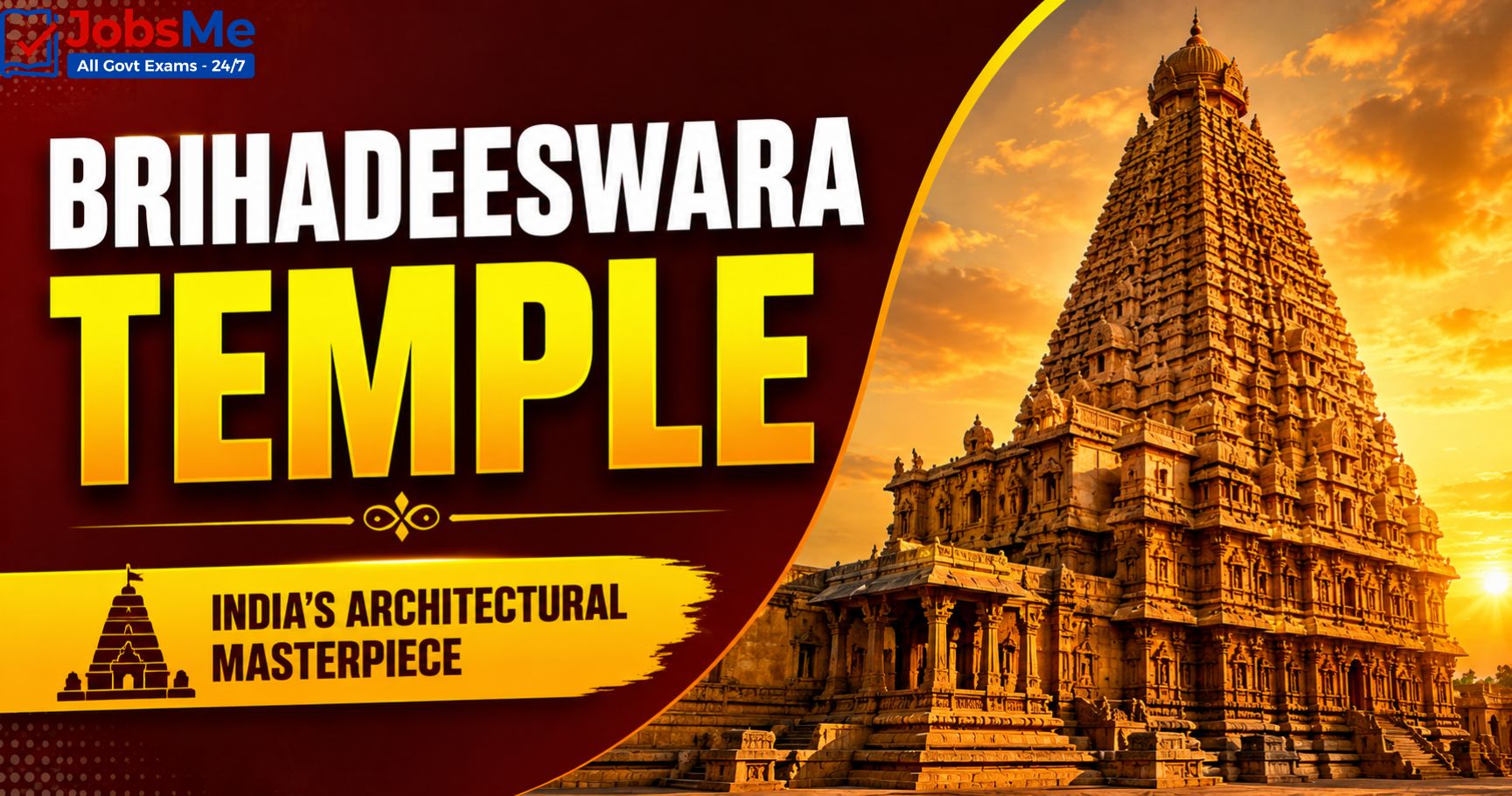
| Brihadeeswara (Brihadeshwara) Temple | Thanjavur | Built in 1010 AD by Raja Raja Chola I; entirely of granite; 216-feet vimana (tower); UNESCO World Heritage Site; best example of Chola architecture |
| Meenakshi Amman Temple | Madurai | Dedicated to Goddess Meenakshi (Parvati) and Lord Sundareswarar (Shiva); famous for 985 intricately carved pillars in the Hall of Thousand Pillars |
| Ramanathaswamy Temple | Rameshwaram Island | One of the 12 Jyotirlingas; features the longest corridor among Hindu temples (approx. 1,200 metres); one of the Char Dham sites |
| Ranganathaswamy Temple | Srirangam, Tiruchirappalli | Largest functioning Hindu temple complex in India; covers 156 acres; home to Asia's largest Gopuram (temple tower) |
| Airavateswara Temple | Darasuram | Built by Rajaraja Chola II; UNESCO World Heritage Site; known for its miniature but highly detailed architecture |
| Thillai Nataraja Temple | Chidambaram | Dedicated to Lord Shiva in his Nataraja (dancing) form; closely linked to the origin of Bharatanatyam |
| Shore Temple / Mahabalipuram (Saptaratha Temple) | Mahabalipuram | Built by the Pallava dynasty; seven monolithic structures (Seven Pagodas); UNESCO World Heritage Site; earliest example of Dravidian rock-cut architecture |
| Kanchipuram Temples | Kanchipuram | Called the "City of Thousand Temples"; sacred to both Shaivites and Vaishnavites |
Odisha
| Temple | Location | Key Facts |
|---|---|---|
| Konark Sun Temple | Konark | Built around 1250 AD by King Narasimhadeva I of the Eastern Ganga dynasty; shaped like a giant stone chariot of Sun God Surya with 12 wheels and 7 horses; also called the "Black Pagoda"; UNESCO World Heritage Site; Kalinga-style architecture |
| Jagannath Temple | Puri | One of the four Char Dham pilgrimage sites; famous for the annual Rath Yatra (Chariot Festival); deities — Jagannath, Balabhadra, and Subhadra — are made of wood and replaced every 12 years (Nabakalebara ritual) |
| Lingaraja Temple | Bhubaneswar | Dedicated to Lord Shiva (Harihara — fusion of Shiva and Vishnu); one of the largest temples in Odisha; often referred to as the "Eastern Dham" |
Uttarakhand — Char Dham Temples
The Char Dham of Uttarakhand (also called Chota Char Dham) consists of four sacred temples in the Himalayas. These are extremely important for UPSC, SSC, and Railways Static GK. You can explore more about Indian pilgrimage circuits in our Static GK Notes.
| Temple | Location | Key Facts |
|---|---|---|
| Badrinath Temple | Chamoli, Uttarakhand (on banks of Alaknanda River; altitude 3,133 m) | Dedicated to Lord Vishnu (Badrinarayan); believed to have been established by Adi Shankaracharya in the 8th century; one of the four Char Dham sites; open only for six months due to heavy winters |
| Kedarnath Temple | Rudraprayag, Uttarakhand (Garhwal Himalayas) | One of the 12 Jyotirlingas; dedicated to Lord Shiva; part of Char Dham Yatra; situated at 3,583 m altitude; badly damaged in 2013 Uttarakhand floods |
| Gangotri Temple | Uttarkashi, Uttarakhand (on banks of Bhagirathi River; altitude 3,415 m) | Dedicated to Goddess Ganga; marks the source of the Ganges River; built by Amar Singh Thapa (Gorkha general); part of Char Dham Yatra |
| Yamunotri Temple | Uttarkashi, Uttarakhand (Bandarpunch mountain range; altitude 3,291 m) | Dedicated to Goddess Yamuna; marks the origin of the Yamuna River; built by Maharaja Pratap Shah of Tehri Garhwal; Surya Kund nearby has healing properties |
Uttar Pradesh
| Temple | Location | Key Facts |
|---|---|---|
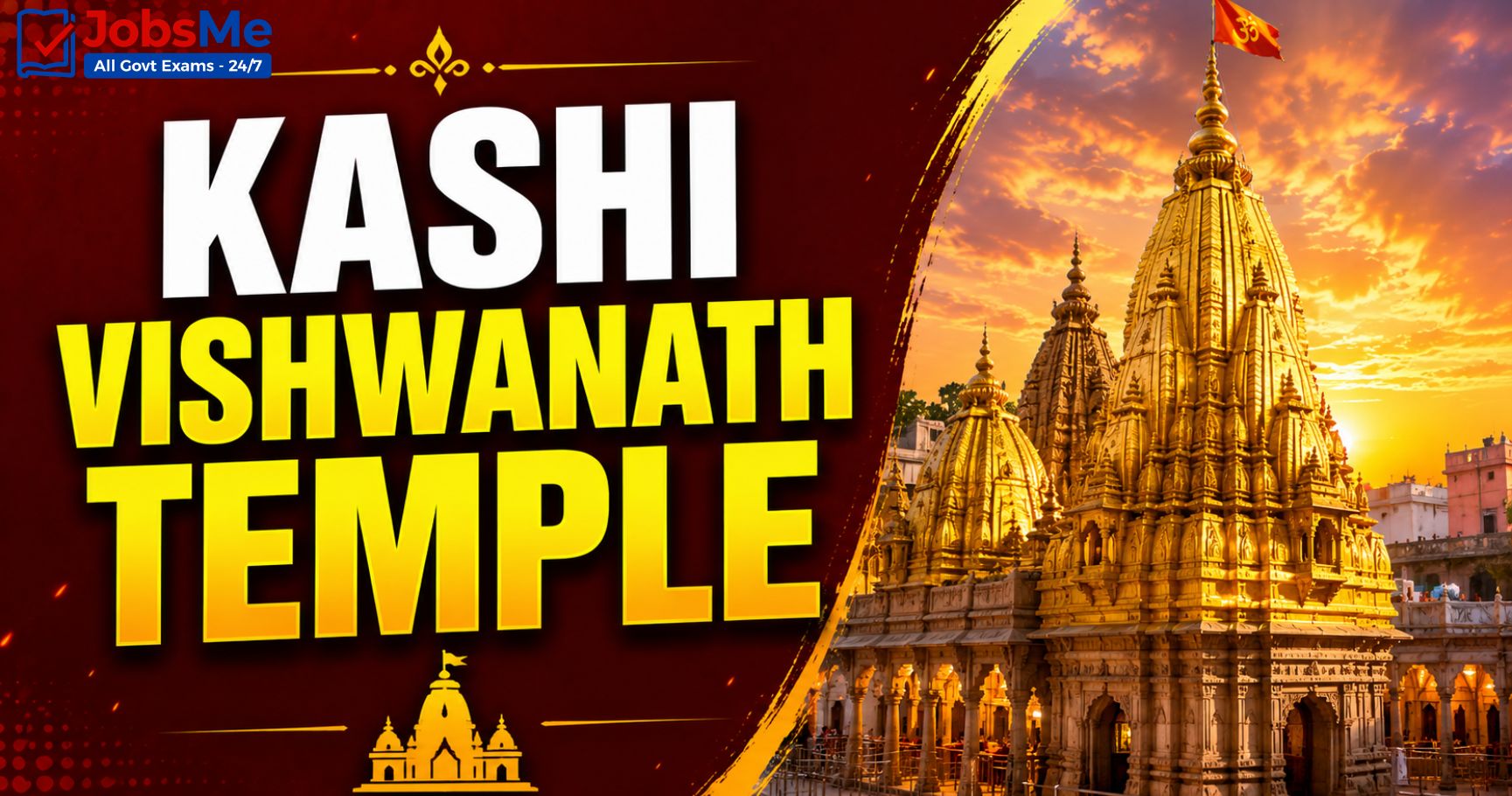
| Kashi Vishwanath Temple | Varanasi | Dedicated to Lord Shiva; one of the 12 Jyotirlingas; most sacred Shiva shrine; golden dome donated by Maharaja Ranjit Singh; rebuilt in 1780 by Ahilyabai Holkar after repeated destruction |
| ISKCON Temple | Vrindavan | Associated with the International Society for Krishna Consciousness (ISKCON); important Vaishnavite pilgrimage site |
Jammu & Kashmir
| Temple | Location | Key Facts |
|---|---|---|
| Vaishno Devi Temple | Trikuta Hills, Katra, J&K (altitude 5,200 feet) | Cave temple; dedicated to Mata Vaishno Devi (embodiment of Goddess Durga); devotees undertake a 13 km trek; one of the most visited pilgrimage sites in India |
| Amarnath Cave Temple | J&K (altitude 3,888 m) | Dedicated to Lord Shiva; famous for the naturally occurring ice Shiva Lingam that grows and shrinks with the lunar cycle; pilgrimage open only during July-August each year |
| Shankaracharya Temple | Srinagar | Dedicated to Lord Shiva; one of the oldest temples in Kashmir; situated on a hill, offering a panoramic view of Srinagar |
| Martand Sun Temple | Anantnag, J&K | Dedicated to Surya (Sun God); built during the Karkota dynasty; now in ruins; frequently asked in exams to distinguish from Konark Sun Temple |
Gujarat
| Temple | Location | Key Facts |
|---|---|---|
| Somnath Temple | Somnath (Prabhas Patan) | One of the 12 Jyotirlingas; first among all Jyotirlingas; destroyed and rebuilt multiple times; last restoration supervised by Sardar Vallabhbhai Patel in 1951 |
| Dwarkadhish Temple | Dwarka | Dedicated to Lord Krishna; one of the four Char Dham (pan-India Char Dham) sites; five-storied architecture; located where Lord Krishna is believed to have established his kingdom |
| Swaminarayan Temple | Gandhinagar | Associated with Swaminarayan sampraday; established in 1828; important centre of worship and Gujarati culture |
Rajasthan
| Temple | Location | Key Facts |
|---|---|---|
| Dilwara Jain Temples | Mount Abu | Built by Vimal Shah and Tejpal; famous for intricate white marble carvings; dedicated to Jain Tirthankaras; among the finest examples of Jain temple architecture |
| Ranakpur Temple | Pali district | Jain temple; famous for 1,444 uniquely carved marble pillars; dedicated to Adinatha (first Jain Tirthankara) |
| Brahma Temple | Pushkar | One of the very few temples in India dedicated to Lord Brahma; Pushkar is also famous for its annual Pushkar Camel Fair; frequently tested in exams as Brahma has very few dedicated temples |
| Karni Mata Temple | Bikaner district, Deshnok | Also known as the "Temple of Rats"; thousands of black rats (called "kabas") are considered sacred and worshipped here; unique belief system — frequently asked in exams |
Madhya Pradesh
| Temple | Location | Key Facts |
|---|---|---|
| Khajuraho Temples | Chhatarpur district | Built by the Chandela dynasty between the 9th and 12th centuries; originally 85 temples, only 25 survive; famous for erotic sculptures depicting human emotions and celestial beings; UNESCO World Heritage Site (1986) |
| Mahakaleshwar Temple | Ujjain | One of the 12 Jyotirlingas; dedicated to Lord Shiva; major Kumbh Mela site; Ujjain is one of seven sacred cities (Sapta Puri) in Hinduism |
| Sanchi Stupa | Sanchi, Raisen district | Buddhist monument; originally built by Emperor Ashoka in the 3rd century BCE; one of the oldest stone structures in India; UNESCO World Heritage Site |
Maharashtra
| Temple | Location | Key Facts |
|---|---|---|
| Shirdi Sai Baba Temple | Shirdi, Ahmednagar | Dedicated to Sai Baba of Shirdi; one of the most visited pilgrimage sites in India; draws millions of devotees across religions |
| Siddhivinayak Temple | Prabhadevi, Mumbai | Dedicated to Lord Ganesha; built in 1801 by Laxman Vithu and Dubai Patil; the idol is considered self-manifested (Swayambhu); one of the richest temples in India |
| Elephanta Caves | Elephanta Island, Mumbai harbour | Sculpted caves carved between the 5th and 8th centuries; attributed to the Rashtrakuta dynasty; famous for the Trimurti sculpture (Brahma, Vishnu, Shiva); UNESCO World Heritage Site |
| Ellora Caves | Aurangabad | Rock-cut cave complexes (600-1000 AD); Hindu caves by Rashtrakutas, Buddhist caves, and Jain caves by Yadava dynasty; proof of Hindu, Buddhist, and Jain coexistence; UNESCO World Heritage Site |
| Ajanta Caves | Aurangabad | 2nd-6th century AD; built by Gupta kings; rock-cut Buddhist paintings and sculptures depicting Buddha and Jataka tales; UNESCO World Heritage Site |
Karnataka
| Temple | Location | Key Facts |
|---|---|---|
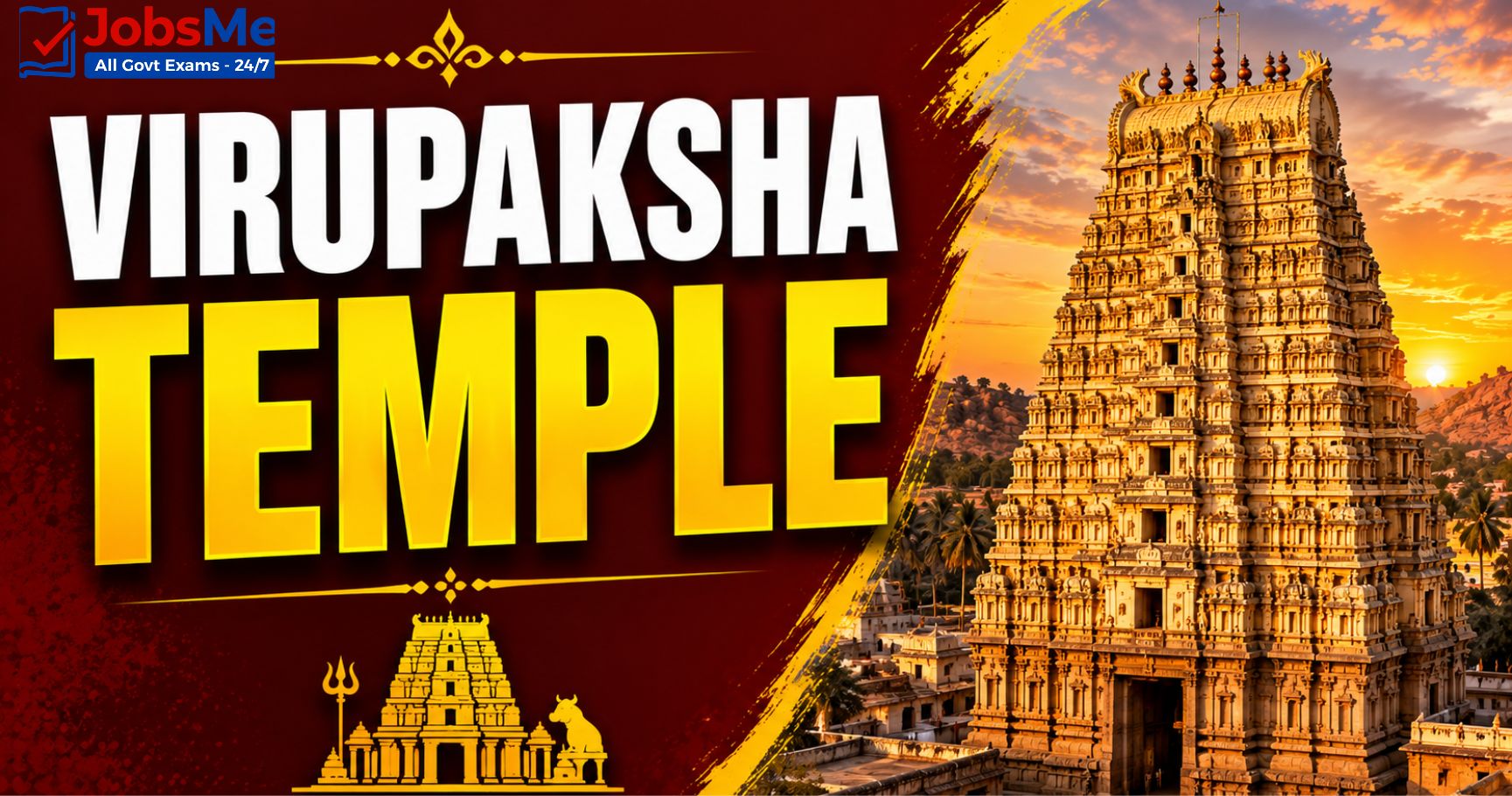
| Virupaksha Temple | Hampi | Dedicated to Lord Shiva; originally built in the 7th century; gained prominence under the Vijayanagara Empire; part of the Group of Monuments at Hampi — UNESCO World Heritage Site; one of India's oldest continually functioning temples |
| Gomateshwara Temple (Bahubali Temple) | Shravanabelagola | Jain pilgrimage site; famous for the 57-foot-tall monolithic statue of Lord Bahubali (Gomateshwara); one of the largest free-standing statues in the world; Bahubali was the son of the first Jain Tirthankara, Rishabhanatha |
| Hoysaleswara Temple | Halebid (Halebidu) | Built by the Hoysala dynasty; dedicated to Lord Shiva; known for intricate soapstone carvings covering the entire exterior |
| Chennakesava Temple | Belur | Built by Hoysala king Vishnuvardhana in 1117 AD; dedicated to Lord Vishnu (Chennakesava); exquisite example of Hoysala architecture |
Bihar
| Temple | Location | Key Facts |
|---|---|---|
| Mahabodhi Temple | Bodh Gaya | Marks the exact spot where Gautama Buddha attained enlightenment; originally built by Emperor Ashoka in the 3rd century BCE; 50-metre-tall tower; sacred Bodhi tree preserved here; UNESCO World Heritage Site; one of the most important Buddhist pilgrimage sites in the world |
Kerala
| Temple | Location | Key Facts |
|---|---|---|
| Padmanabhaswamy Temple | Thiruvananthapuram (Trivandrum) | Dedicated to Lord Padmanabhaswamy (Vishnu in reclining position on the serpent Ananta); built in Dravidian and Chera architectural style; considered the wealthiest temple in the world with a treasure vault estimated at over $22 billion |
| Sabarimala Temple | Pathanamthitta, Kerala | Dedicated to Lord Ayyappa; one of the largest annual pilgrimages in the world; located amidst the Periyar Tiger Reserve; the Mandala-Makaravilakku festival draws millions |
Assam
| Temple | Location | Key Facts |
|---|---|---|
| Kamakhya Temple | Nilachal Hills, Guwahati | One of the oldest and most important Shakti Peethas in India; dedicated to Goddess Kamakhya (a form of Shakti); marks the spot where Sati's yoni (womb) fell during Lord Shiva's Tandava; famous for the annual Ambubachi Mela celebrating the goddess's menstruation cycle; deeply associated with Tantric practices |
Punjab
| Temple | Location | Key Facts |
|---|---|---|
| Golden Temple (Harmandir Sahib) | Amritsar | Holiest Sikh shrine; the gurdwara's sanctum is covered in gold leaf; surrounded by the sacred Amrit Sarovar (Pool of Nectar); associated with Guru Arjan Dev Ji; serves langar (free community meal) to over 100,000 people daily |
| Durgiana Temple | Amritsar | Dedicated to Goddess Durga; architecture inspired by the Golden Temple; built on the Amrit Sarovar pattern |
Delhi
| Temple | Location | Key Facts |
|---|---|---|
| Akshardham Temple | New Delhi | Built by BAPS Swaminarayan Sanstha; inaugurated in 2005; world's largest Hindu temple complex (per Guinness World Records); dedicated to Swaminarayan; features pink sandstone and white marble construction |
| Lotus Temple (Bahai Temple) | New Delhi | Completed in 1986; belongs to the Bahai Faith; a place of worship open to all religions; designed in the shape of a lotus flower; designed by architect Fariborz Sahba |
| Laxminarayan Temple (Birla Mandir) | New Delhi | Dedicated to Lord Vishnu (Laxminarayan); built by the Birla family; inaugurated by Mahatma Gandhi in 1939 on the condition it would be open to all castes |
| Shri Digambar Jain Lal Mandir | Chandni Chowk, New Delhi | The oldest and most prominent Jain temple in Delhi; dedicated to Digambara Jain tradition |
Andhra Pradesh & Telangana
| Temple | Location | Key Facts |
|---|---|---|
| Tirupati Balaji Temple (Venkateswara Temple) | Tirumala Hills, Tirupati, AP | Dedicated to Lord Venkateswara (Vishnu); one of the most visited pilgrimage sites in the world (50,000+ devotees daily); features Dravidian architecture with carved gopurams; richest temple in India by income; Tirumala Tirupati Devasthanams (TTD) manages it |
Other States
| Temple | State | Key Facts |
|---|---|---|
| Kalighat Mandir | West Bengal (Kolkata) | Dedicated to Goddess Kali; one of the 51 Shakti Peethas; believed to mark where Sati's right toe fell |
| Amarkantak Temple | Chhattisgarh / MP border | Origin of Narmada River; sacred pilgrimage site; associated with Shiva, Vishnu, and Brahma together |
| Angrabadi (Angrabad) Temple | Jharkhand | Tribal religious importance; located in forests |
| Malinithan Temple | Arunachal Pradesh | Dedicated to Goddess Malini (a form of Parvati); ancient site from the Gupta period |
| Markandeshwar Temple | Haryana | Dedicated to Lord Shiva (Markandeswara); ancient pilgrimage site |
| Manikaran Temple | Kullu, Himachal Pradesh | Sacred to both Hindus and Sikhs; known for hot springs; the water here is hot enough to cook rice |
| Basilica of Bom Jesus | Goa | One of the oldest churches in India (built 1605); contains the mortal remains of St. Francis Xavier; UNESCO World Heritage Site; example of Baroque architecture |
Important Pilgrimage Circuits — Exam Must-Know
The Four Char Dhams (Pan-India — Established by Adi Shankaracharya)
| Dham | Location | Deity | Direction |
|---|---|---|---|
| Badrinath | Uttarakhand | Lord Vishnu | North |
| Dwarka (Dwarkadhish Temple) | Gujarat | Lord Krishna | West |
| Puri (Jagannath Temple) | Odisha | Lord Jagannath (Vishnu) | East |
| Rameshwaram (Ramanathaswamy Temple) | Tamil Nadu | Lord Shiva | South |
The 12 Jyotirlingas of Lord Shiva
The 12 Jyotirlingas are the most sacred shrines of Lord Shiva. Questions on their locations appear repeatedly in SSC CGL, IBPS, and UPSC Prelims. For more such exam-focussed Static GK content, check our Static GK Articles.
| Jyotirlinga | Location | State |
|---|---|---|
| Somnath | Somnath (Prabhas Patan) | Gujarat |
| Mallikarjuna | Srisailam | Andhra Pradesh |
| Mahakaleshwar | Ujjain | Madhya Pradesh |
| Omkareshwar | Mandhata Island, Narmada River | Madhya Pradesh |
| Kedarnath | Rudraprayag | Uttarakhand |
| Bhimashankar | Pune district (also near Nasik, debated) | Maharashtra |
| Kashi Vishwanath | Varanasi | Uttar Pradesh |
| Trimbakeshwar | Nasik | Maharashtra |
| Vaidyanath (Baidyanath) | Deoghar | Jharkhand |
| Nageshwar (Nagnath) | Dwarka | Gujarat |
| Ramanathaswamy | Rameshwaram | Tamil Nadu |
| Grishneshwar (Ghrishneshwar) | Aurangabad (near Ellora) | Maharashtra |
Shakti Peethas — Important Ones for Exams
The Shakti Peethas are sacred shrines associated with Goddess Shakti. According to legend, body parts of Sati (Shiva's wife) fell at these locations. There are 51 Shakti Peethas in total. The most important ones for exams are listed below:
| Shakti Peetha | Location | Body Part (Legend) |
|---|---|---|
| Kamakhya Temple | Guwahati, Assam | Yoni (womb) of Sati |
| Kalighat Temple | Kolkata, West Bengal | Right toe of Sati |
| Vaishno Devi | Katra, J&K | Associated with Trikuta Devi (embodiment of Durga) |
| Jwala Devi | Kangra, Himachal Pradesh | Tongue of Sati |
| Vindhyavasini Devi | Vindhyachal, UP | Important Shakti shrine |
Temples Classified by Deity
Major Temples Dedicated to Lord Shiva
- Kashi Vishwanath — Varanasi, UP (Jyotirlinga)
- Kedarnath — Uttarakhand (Jyotirlinga + Char Dham)
- Somnath — Gujarat (first Jyotirlinga)
- Mahakaleshwar — Ujjain, MP (Jyotirlinga)
- Brihadeeswara — Thanjavur, TN (Chola dynasty)
- Lingaraja — Bhubaneswar, Odisha
- Nataraja Temple — Chidambaram, TN (Shiva as dancer)
- Amarnath Cave — J&K (ice Shiva Lingam)
- Virupaksha — Hampi, Karnataka (Vijayanagara)
Major Temples Dedicated to Lord Vishnu
- Tirupati Balaji (Venkateswara) — Tirumala, AP (most visited)
- Padmanabhaswamy — Trivandrum, Kerala (richest temple)
- Ranganathaswamy — Srirangam, TN (largest Hindu temple complex)
- Jagannath Temple — Puri, Odisha (Char Dham)
- Badrinath — Uttarakhand (Char Dham)
- Dwarkadhish — Dwarka, Gujarat (Char Dham)
Major Temples Dedicated to Goddess / Shakti
- Kamakhya — Guwahati, Assam
- Vaishno Devi — Katra, J&K
- Kalighat — Kolkata, WB
- Meenakshi Amman — Madurai, TN
- Gangotri — Uttarkashi, Uttarakhand (Goddess Ganga)
- Yamunotri — Uttarkashi, Uttarakhand (Goddess Yamuna)
Important Buddhist, Jain, and Other Religious Sites
- Mahabodhi Temple — Bodh Gaya, Bihar (Buddha's enlightenment — UNESCO)
- Sanchi Stupa — Sanchi, MP (Emperor Ashoka — UNESCO)
- Dilwara Jain Temples — Mount Abu, Rajasthan (marble carvings)
- Ranakpur Jain Temple — Pali, Rajasthan (1,444 pillars)
- Gomateshwara (Bahubali) Temple — Shravanabelagola, Karnataka (57-ft monolithic statue)
- Golden Temple (Harmandir Sahib) — Amritsar, Punjab (Sikh)
- Akshardham Temple — Delhi (BAPS Swaminarayan)
- Lotus Temple (Bahai Temple) — Delhi (open to all faiths)
Dynasty-Wise Important Temples — Frequently Asked in Exams
| Dynasty | Temple(s) | Location | Architectural Style |
|---|---|---|---|
| Chola Dynasty | Brihadeeswara Temple, Airavateswara Temple | Thanjavur & Darasuram, Tamil Nadu | Dravidian (Chola style) |
| Pallava Dynasty | Shore Temple / Saptaratha Temple (Mahabalipuram) | Mahabalipuram, Tamil Nadu | Early Dravidian (rock-cut) |
| Chandela Dynasty | Khajuraho Temples | Chhatarpur, Madhya Pradesh | Nagara style (North Indian) |
| Vijayanagara Empire | Virupaksha Temple, Vitthala Temple | Hampi, Karnataka | Vijayanagara style |
| Hoysala Dynasty | Hoysaleswara Temple, Chennakesava Temple | Halebidu & Belur, Karnataka | Hoysala style (star-shaped base, soapstone) |
| Eastern Ganga Dynasty | Konark Sun Temple, Jagannath Temple | Odisha | Kalinga style |
| Rashtrakuta Dynasty | Elephanta Caves, Ellora Caves (Hindu portions) | Mumbai & Aurangabad, Maharashtra | Rock-cut cave architecture |
| Gupta Dynasty | Ajanta Caves (Buddhist), Dashavatara Temple | Aurangabad & Deogarh, UP | Classical Indian |
| Emperor Ashoka (Maurya) | Mahabodhi Temple, Sanchi Stupa | Bihar & Madhya Pradesh | Early Buddhist stupa architecture |
| Adi Shankaracharya | Badrinath (re-established), Kedarnath (re-established) | Uttarakhand | Himalayan temple tradition |
For detailed Static GK on Indian dynasties, see our article on Founders and Rulers of Indian Dynasties.
UNESCO World Heritage Sites Among Temples in India
| Site | Location | Year of UNESCO Inscription |
|---|---|---|
| Mahabodhi Temple Complex | Bodh Gaya, Bihar | 2002 |
| Konark Sun Temple | Konark, Odisha | 1984 |
| Khajuraho Group of Monuments | Madhya Pradesh | 1986 |
| Group of Monuments at Hampi (incl. Virupaksha) | Karnataka | 1986 |
| Brihadeeswara Temple (Great Living Chola Temples) | Thanjavur, Tamil Nadu | 1987 (extended 2004) |
| Ajanta Caves | Aurangabad, Maharashtra | 1983 |
| Ellora Caves | Aurangabad, Maharashtra | 1983 |
| Elephanta Caves | Mumbai, Maharashtra | 1987 |
| Sanchi Stupa | Sanchi, Madhya Pradesh | 1989 |
For a complete list, visit our dedicated article on UNESCO World Heritage Sites in India.
Architectural Styles of Indian Temples — Quick Reference
| Style | Region | Key Features | Example Temple |
|---|---|---|---|
| Nagara Style (North Indian) | North India | Curvilinear tower (Shikhara); no gopuram; square sanctum | Khajuraho Temples, Lingaraja Temple |
| Dravidian Style (South Indian) | South India | Tall pyramid-shaped entrance tower (Gopuram); enclosed courtyard | Brihadeeswara, Meenakshi, Tirupati |
| Vesara Style (Mixed) | Deccan | Combination of Nagara and Dravidian; star-shaped plan | Hoysaleswara Temple, Chennakesava Temple |
| Kalinga Style | Odisha | Deula (tower); Jagamohan (assembly hall); Natamandira (dance hall) | Konark Sun Temple, Jagannath Temple |
| Rock-Cut Architecture | Pan-India | Temples carved directly into rock faces | Ajanta Caves, Ellora Caves, Mahabalipuram |
Superlatives — Important for Direct Questions
- Richest Temple in India (and World): Padmanabhaswamy Temple, Thiruvananthapuram, Kerala
- Most Visited Temple in India (and World): Tirupati Balaji (Venkateswara) Temple, Andhra Pradesh
- Largest Hindu Temple Complex in India: Ranganathaswamy Temple, Srirangam, Tamil Nadu (156 acres)
- Largest Gopuram in Asia: Ranganathaswamy Temple, Srirangam (Raja Gopuram)
- Oldest Temple in India: Mundeshwari Devi Temple, Kaimur, Bihar (estimated 4th century AD)
- Tallest Temple Tower in India: Ranganathaswamy Temple, Srirangam
- Longest Temple Corridor: Ramanathaswamy Temple, Rameshwaram (~1,200 metres)
- Only Major Brahma Temple in India: Brahma Temple, Pushkar, Rajasthan
- Wealthiest Sikh Gurdwara: Golden Temple, Amritsar, Punjab
- Largest Free-Standing Monolithic Statue in India (Jain): Gomateshwara (Bahubali) Temple, Shravanabelagola, Karnataka (57 feet)
For more such superlatives, see our Superlatives of India and World Static GK article.
Mnemonic, Memory Tricks, and Vivid Memory Aids
Memory Trick: Char Dham — "BPRD" (North-West-East-South)
Trick: Badrinath (North) → Puri (East) → Rameshwaram (South) → Dwarka (West)
Sentence: "Big Pandit Reads Deeply" — going clockwise around India.
Memory Trick: The 12 Jyotirlingas — "SOMA KE BT NAG RAG"
Use the first letters of each Jyotirlinga to create a phrase:
SOmnath | MAllikarjuna | Kedarnath | E=Omkareshwar (O sounds like E in some accents) | Bhimashankar | Trimbakeshwar | NAgeshwar | Grishneshwar | Ramanathaswamy | MAhakaleshwar | Kashi Vishwanath | VAidyanath
Simpler grouping by state:
- Gujarat — 2: Somnath, Nageshwar (Na-So in Gujarat)
- Maharashtra — 3: Bhimashankar, Trimbakeshwar, Grishneshwar ("Maharashtra has 3")
- Uttar Pradesh — 1: Kashi Vishwanath (Varanasi)
- Uttarakhand — 1: Kedarnath
- Madhya Pradesh — 2: Mahakaleshwar (Ujjain), Omkareshwar
- Tamil Nadu — 1: Ramanathaswamy (Rameshwaram)
- Andhra Pradesh — 1: Mallikarjuna (Srisailam)
- Jharkhand — 1: Vaidyanath (Deoghar)
Memory Trick: State-Temple Associations (from Reliable Academy)
| Temple(s) | State | Memory Shortcut |
|---|---|---|
| Akshardham, Lotus Temple, Laxminarayan, Jain Lal Mandir | Delhi | "Akshara and Laxmi went to Delhi Jain Lal Mandir holding a Lotus" |
| Badrinath, Kedarnath, Gangotri, Yamunotri | Uttarakhand | "A Gang of Yamuna, Badri, and Kedarna went to Uttara's home" (Gang = Gangotri, Yamuna = Yamunotri, Badri = Badrinath, Kedarna = Kedarnath) |
| Somnath, Dwarkadhish | Gujarat | "Diwakar (Dwarka) wearing Some (Somnath) Gujarati Costume" |
| Konark Sun, Jagannath, Lingaraja | Odisha | "Jagannath has a Link (Linga) on Konark's Political Party of Odisha" |
| Shirdi Sai Baba, Siddhivinayak | Maharashtra | "Siddhi-Vinayak and Mahadev went to Baba's film in Maharashtra" |
| Meenakshi, Brihadeeswara, Ramanathaswamy, Nataraja | Tamil Nadu | "Meena acted with Ramnath and Nataraj in Brihadees' Tamil film" |
| Kamakhya | Assam | "Makhya Assembled (Assam) chairs" |
| Tirupati Balaji | Andhra Pradesh | "Balaji and Pradesh are preparing their exam (Andhra AP)" |
| Padmanabhaswamy, Sabarimala | Kerala | "Sabari won Padma Award for Kerala" |
| Khajuraho, Sanchi, Mahakaleshwar | Madhya Pradesh | "Sanchi's statue placed in Khajuraho by MP (Mahakal is the Madhya = middle)" |
| Golden Temple, Durgiana Temple | Punjab | "Durgina buys Gold chain for Ram in Punjab" |
| Kalighat | West Bengal | "Kali eats Bengali chicken" |
| Dilwara, Ranakpur, Brahma Temple | Rajasthan | "Ranakapoor uses Birla paint at Raja's (Rajasthan) home" |
| Vaishno Devi, Amarnath, Shankaracharya | J&K | "Shankar and Vaishno married at Amarnath in Jammu" |
| Virupaksha, Gomateshwara, Hoysaleswara, Chennakesava | Karnataka | "Gomathi bought Channa masala from Hoysala wholesale store in Karnataka (Virupaksha smiled)" |
Vivid Memory Aid: "The Big Four of Odisha"
Picture a map of Odisha with three temples standing together — Konark (a huge stone chariot with 12 wheels), Puri Jagannath (wooden idols of three siblings), and Lingaraja in Bhubaneswar (a tall Kalinga tower). All three use the Kalinga style of architecture. If a question mentions a "chariot temple" — it is always Konark.
Vivid Memory Aid: "The Tamil Nadu Mega-Temples"
Remember the five biggest Tamil Nadu temples by this phrase: "Brihad Meena Rang Nata Ram" — Brihadeeswara (Thanjavur), Meenakshi (Madurai), Ranganathaswamy (Srirangam), Nataraja (Chidambaram), Ramanathaswamy (Rameshwaram). All are Dravidian style.
Vivid Memory Aid: The "W-R-T" Rule for Char Dham of Uttarakhand
The Chota Char Dham opens in summer each year. Remember: Yamunotri → Gangotri → Kedarnath → Badrinath — this is the traditional sequence of pilgrimage (West to East, then North). Mnemonic: "YGKB" = Young Gangsters Keep Badminton"
Additional Notes — Tricky Facts, PYQ Patterns, and Common Confusions
Frequently Confused Facts
- Konark vs Martand Sun Temple: Both are Sun (Surya) temples. Konark is in Odisha (built by King Narasimhadeva I, Kalinga style, UNESCO). Martand is in Jammu & Kashmir (older, now in ruins, built during Karkota dynasty). Exams sometimes test both together.
- Char Dham vs Chota Char Dham: The pan-India Char Dham (Badrinath, Puri, Rameshwaram, Dwarka) was established by Adi Shankaracharya. The Chota Char Dham (Badrinath, Kedarnath, Gangotri, Yamunotri) is specific to Uttarakhand. Both include Badrinath — do not confuse the two circuits.
- Richest vs Most Visited: Padmanabhaswamy Temple (Kerala) is the wealthiest. Tirupati Balaji (AP) is the most visited. These are two separate superlatives — questions often try to interchange them.
- Largest Hindu Temple: Ranganathaswamy Temple in Srirangam is the largest functioning Hindu temple in India. Angkor Wat in Cambodia is the largest Hindu temple in the world.
- Only Brahma Temple: The Brahma Temple at Pushkar, Rajasthan is often described as "the only major Brahma temple in India." Brahma (the creator) is rarely worshipped because of a curse in Hindu mythology.
- Gomateshwara (Bahubali) Statue: Located in Shravanabelagola, Karnataka — not to be confused with the Jain "Bahubali" film character. This is the Jain Bahubali, son of first Tirthankara Rishabhanatha.
- Khajuraho Temples: Although famous for erotic sculptures, the Khajuraho complex is both Hindu and Jain. Only about 10% of the sculptures are erotic — the majority depict gods, apsaras, and daily life.
- Sanchi Stupa vs Mahabodhi Temple: Both are Buddhist and both are UNESCO sites. Sanchi Stupa was built by Ashoka in Madhya Pradesh; Mahabodhi Temple is in Bodh Gaya, Bihar, and marks where Buddha attained enlightenment.
- Rath Yatra: Held at Jagannath Temple, Puri. The three chariots carry Jagannath, Balabhadra (his brother), and Subhadra (his sister). Questions often ask which deity each chariot belongs to.
- Ambubachi Mela: Held at Kamakhya Temple, Assam — not a harvest festival but a celebration of the goddess's menstruation. This is unique and frequently tested.
Repeating PYQ Patterns
- Questions on which temple is a Jyotirlinga — always know all 12 with their state.
- Questions asking the builder/dynasty of Konark, Brihadeeswara, Khajuraho — very common in SSC CGL and IBPS.
- Questions on UNESCO World Heritage temples — check our full UNESCO Heritage Sites article for complete coverage.
- Questions on location of Char Dham temples — state and river are both asked.
- Questions on the Rath Yatra, Ambubachi Mela, Nabakalebara rituals are common in Railways and IBPS exams.
- Questions on which is the richest / tallest / oldest / largest temple.
Quick Insights
- The Jagannath Temple's Rath Yatra inspired the English word "Juggernaut" (from Jagannath), meaning an unstoppable force.
- The Lotus Temple in Delhi is one of only seven Bahai Houses of Worship in the world and welcomes people of all faiths.
- The Laxminarayan Temple (Birla Mandir) in Delhi was inaugurated by Mahatma Gandhi on the condition that people of all castes could enter — a significant social reform statement.
- The Amarnath Ice Lingam is a naturally occurring phenomenon. It is not man-made — it forms and dissolves on its own each year with the lunar cycle.
- Mundeshwari Devi Temple in Kaimur, Bihar is considered the oldest functional Hindu temple in India, with inscriptions dating to 389 CE (Gupta period).
- The Padmanabhaswamy Temple's Vault B is sealed with a Naga Bandham — a sacred serpent seal — and it is believed opening it forcefully will bring disaster. The Supreme Court of India has been involved in its management.
One-Liners for Rapid Revision
- Brihadeeswara Temple — Thanjavur, Tamil Nadu — built by Raja Raja Chola I in 1010 AD — UNESCO — Dravidian style.
- Konark Sun Temple — Odisha — built by King Narasimhadeva I (~1250 AD) — Stone chariot design — "Black Pagoda" — UNESCO.
- Khajuraho Temples — MP — built by Chandela dynasty (9th-12th century) — erotic sculptures — UNESCO (1986).
- Mahabodhi Temple — Bodh Gaya, Bihar — built by Emperor Ashoka — marks Buddha's enlightenment — UNESCO (2002).
- Jagannath Temple — Puri, Odisha — Char Dham — Rath Yatra festival — wooden idols replaced every 12 years.
- Padmanabhaswamy Temple — Trivandrum, Kerala — world's richest temple — Vishnu in reclining posture.
- Tirupati Balaji — Tirumala, AP — most visited pilgrimage site in the world — Dravidian gopuram.
- Ranganathaswamy Temple — Srirangam, TN — largest Hindu temple in India — 156 acres — Asia's largest gopuram.
- Kamakhya Temple — Nilachal Hills, Guwahati, Assam — Shakti Peetha — Ambubachi Mela — Tantric traditions.
- Vaishno Devi Temple — Trikuta Hills, Katra, J&K — cave temple — altitude 5,200 ft — 13 km trek.
- Amarnath Temple — J&K — 3,888 m altitude — natural ice Shiva Lingam — pilgrimage only in July-August.
- Kashi Vishwanath — Varanasi, UP — Jyotirlinga — golden dome by Maharaja Ranjit Singh — rebuilt by Ahilyabai Holkar (1780).
- Somnath Temple — Gujarat — first among 12 Jyotirlingas — destroyed and rebuilt multiple times — last restored 1951 by Sardar Patel.
- Gomateshwara Temple — Shravanabelagola, Karnataka — 57-ft monolithic Bahubali statue — Jain pilgrimage site.
- Dilwara Temples — Mount Abu, Rajasthan — Jain temples — intricate white marble carvings — built by Vimal Shah.
- Elephanta Caves — Mumbai — Rashtrakuta dynasty — Trimurti sculpture — UNESCO (1987).
- Mahabalipuram (Shore Temple) — Tamil Nadu — Pallava dynasty — Seven Pagodas — UNESCO — earliest Dravidian rock-cut style.
- Golden Temple (Harmandir Sahib) — Amritsar, Punjab — holiest Sikh gurdwara — serves langar to 100,000+ daily.
- Akshardham Temple — New Delhi — built by BAPS Swaminarayan Sanstha — Guinness record for world's largest Hindu temple complex.
- Brahma Temple — Pushkar, Rajasthan — one of very few temples dedicated to Lord Brahma — city famous for Pushkar Camel Fair.
- Karni Mata Temple — Deshnok, Bikaner, Rajasthan — "Temple of Rats" — thousands of black rats treated as sacred.
- Nataraja Temple — Chidambaram, Tamil Nadu — Shiva as Nataraja (dancer) — linked to origin of Bharatanatyam.
- Lonar Lake Crater — Maharashtra — not a temple but associated with temples at its rim; frequently confused in geography questions.
- Lotus Temple — Delhi — Bahai Faith — lotus-shaped — open to all religions — designed by Fariborz Sahba.
- Sanchi Stupa — MP — Emperor Ashoka — 3rd century BCE — oldest stone structure — UNESCO (1989).
Practice all these facts with our Static GK Quiz and track your exam readiness with Daily Current Affairs on Jobsme.in.
Free quiz • No signup required
Put this topic into practice with Indian Cultural Institutions – Static GK MCQ Quiz. It is the quickest way to reinforce what you just learned.
Frequently Asked Questions
Which is the richest temple in India?
Which is the largest Hindu temple in India?
What is the Char Dham?
How many Jyotirlingas are there in India, and which state has the most?
Which temple is associated with the Rath Yatra festival?
Which is the oldest temple in India?
Which temple is called the "Black Pagoda"?
Which Indian temples are UNESCO World Heritage Sites?
Which is the only major temple dedicated to Lord Brahma in India?
What is the Ambubachi Mela and where is it held?

About the author