Indian Martial Arts – Complete Static GK for Government Exams
Indian Martial Arts is a high-frequency topic in UPSC Prelims, SSC GK, Banking Awareness, Railways, and Defence exams. This article covers the origin, evolution, major forms, associated states, weapons, government schemes, and exam-ready memory tricks – all in one place.
Jump to section
- Introduction to Indian Martial Arts
- Origin and Historical Evolution of Indian Martial Arts
- List of Major Indian Martial Arts - State-Wise
- Detailed Notes on Key Indian Martial Arts
- Government Schemes and Initiatives for Indian Martial Arts
- Memory Tricks, Mnemonics, and Vivid Memory Aids
- Additional Notes - Exam Traps, Tricky Facts, and PYQ Patterns
- One-Liners for Rapid Revision
Introduction to Indian Martial Arts
The term Martial Arts is derived from Latin and means "Arts of Mars" - Mars being the Roman god of war. Although martial arts are often associated with East Asia, India has one of the world's richest and most diverse traditions of combat systems, many of which predate those of China and Japan.
Indian martial arts are not merely fighting techniques; they are holistic disciplines that combine physical fitness, mental discipline, spiritual growth, and cultural expression. They are deeply intertwined with classical dance, yoga, theatre, and religious rituals, making them unique among the world's combat traditions.
For government exam aspirants preparing for Static GK, questions on Indian martial arts appear frequently in UPSC Prelims (Art & Culture - GS Paper I), SSC CGL/CHSL, IBPS PO/Clerk, RRB, and Defence exams. A strong command of this topic can give you an edge in the General Awareness section.
Origin and Historical Evolution of Indian Martial Arts
Ancient Period (Pre-3rd Century CE)
- The earliest evidence of martial practices in India comes from the Indus Valley Civilisation, with seals depicting men spearing each other and statues of spear-throwers.
- The Dhanurveda section of the Yajurveda contains the earliest written references to martial arts in India.
- Indian epics - the Mahabharata and the Ramayana - contain detailed descriptions of both armed and unarmed combat involving a wide variety of weapons and fighting techniques.
- The earliest organised unarmed fighting system was Malla-Yuddha (combat wrestling), which was codified into four forms during the Vedic Period.
Classical Period (3rd - 10th Century CE)
- Elements from the Yoga Sutras and classical dance were incorporated into martial arts during the 3rd century CE.
- The Sushruta Samhita (4th century CE) identified 108 vital points (marma points) on the human body, of which 64 were considered lethal if struck correctly. This knowledge became the foundation of Varma Ati and Kalaripayattu.
- Around 630 CE, the Pallava dynasty commissioned sculptures depicting unarmed fighters disarming armed opponents.
- Martial arts were taught at educational institutions and were not limited to the warrior (Kshatriya) class.
- The Gurjara-Pratihara dynasty (7th-10th century CE) commissioned texts on martial arts and patronised their practice.
Medieval Period (11th - 15th Century CE)
- Kalaripayattu developed its present form by the 11th century during warfare between the Chera and Chola dynasties.
- The Malla Purana (c. 13th century) is the earliest known treatise on Malla-Yuddha techniques.
- The Vijayanagara Empire (14th-16th century) gave great importance to physical culture; wrestling was popular among both royalty and commoners.
Mughal Era (1526-1857 CE)
- The Mughals patronised India's native martial arts, recruiting Rajput fighters.
- The Ain-i-Akbari mentions wrestling, boxing, sword-fighting, and archery being demonstrated at the Mughal court.
- The Pehlwani wrestling style emerged by combining Malla-Yuddha with the Persian Varzesh-e Bastani tradition.
- Naga warrior-ascetics practised armed martial arts to protect Hindu pilgrims from Mughal aggression.
- Gatka is said to have been institutionalised when the 6th Sikh Guru Hargobind adopted the Kirpan for self-defence.
Maratha Period (1674-1859 CE)
- The Marathas were renowned for expertise in swords, spears, and guerrilla tactics (Shiva Sutra).
- Shivaji Maharaj was a master swordsman proficient in Mardani Khel, among other weapon arts.
- The Maratha Light Infantry, tracing its origins to 1768, is one of the oldest regiments of the Indian Army.
Modern Period (1857 - Present)
- Indian martial arts declined during British colonial rule due to the introduction of firearms and European warfare models.
- Forms like Kalaripayattu and Silambam were banned by the British but were later revived as part of the anti-colonial movement in the early 20th century.
- Post-independence, the Government of India has taken active steps to preserve and promote these art forms through dedicated schemes.
List of Major Indian Martial Arts - State-Wise
The table below is a quick-reference guide for exams. Each martial art is listed with its associated state, key weapon(s), and a one-line identifier. Keep this table handy for Static GK quizzes.
| Martial Art | Associated State / Region | Type (Armed / Unarmed) | Key Weapon(s) | Exam Identifier |
|---|---|---|---|---|
| Kalaripayattu | Kerala (also Tamil Nadu, Karnataka) | Both | Sword, shield, spear, urumi (flexible sword) | One of the oldest martial arts; basis of Karate & Kung Fu |
| Silambam | Tamil Nadu | Armed | Long bamboo staff, swords, knives | Promoted by Pandyas, Cholas, Cheras; mentioned in Silappadikaram |
| Thang-Ta (Huyen Langlon) | Manipur | Armed | Thang (sword), Ta (spear), shield, axe | Thang = sword; Ta = spear; used against British |
| Sarit Sarak | Manipur | Unarmed | Hand-to-hand combat | Unarmed component of Huyen Langlon |
| Gatka | Punjab | Armed | Stick (soti), Kirpan, Talwar, Kataar, shield | Sikh martial art; institutionalised by Guru Hargobind |
| Cheibi Gad-ga | Manipur | Armed | Soft leather stick (Cheibi), shield | Contest in a 7-metre circle; victory by points |
| Pari-Khanda | Bihar | Armed | Pari (shield), Khanda (sword) | Created by Rajputs; used in Chhau dance |
| Thoda | Himachal Pradesh | Armed | Bow and arrow | Played during Baisakhi; teams = Pashis & Saathis (Pandavas & Kauravas) |
| Kuttu Varisai | Tamil Nadu | Unarmed | Bare hands (Empty-hand Silambam) | Mentioned in Sangam literature; uses animal-based stances |
| Musti Yuddha | Varanasi, Uttar Pradesh | Unarmed | Kicks, punches, knees, elbows | Unarmed art integrating physical, mental & spiritual aspects |
| Malla Khamb (Mallakhamb) | Madhya Pradesh (also Maharashtra) | Unarmed / Gymnastic | Vertical wooden pole (Sheesham / Indian rosewood) | Acrobatics + combat on a vertical pole; Malla = wrestler, Khamb = pole |
| Malla Yuddha | Pan-India (oldest form) | Unarmed | Bare hands (wrestling) | Oldest codified fighting art; 4 forms named after Hindu gods |
| Inbuan Wrestling | Mizoram | Unarmed | Bare hands (wrestling) | Dates to 1750 AD; strict rules - no kicking, no stepping out of circle |
| Lathi Khela | Punjab, West Bengal (North India) | Armed | Lathi (cane/bamboo stick, 6-8 ft) | Practitioner = Lethel or Lathial; also used by Indian Police |
| Mardani Khel | Maharashtra (Kolhapur) | Armed | Patta (Indian sword), Vita (corded lance) | Patronised by Shivaji; distinct geographic origin from Maharashtra |
| Sqay | Kashmir (Jammu & Kashmir) | Both | Curved single-edged sword, shield | Fluid, graceful movements; wooden weapons used in practice |
| Paika Akhada | Odisha | Armed | Swords, shields (varies) | Combination of dance and combat; now practised as performing art |
| Kathi Samu | Andhra Pradesh | Armed | Various swords; stick fight called Vairi | Performed at a venue called Garidi; patronised by Vizianagaram kingdom |
| Bandesh | Rajasthan | Unarmed | Lock holds (unarmed vs armed) | Disarms an armed opponent without killing them |
| Varma Ati | Tamil Nadu | Unarmed | Finger strikes on vital points (Varma) | Targets the body's 108 vital spots (marma) |
| Pehlwani | Pan-India (North India) | Unarmed | Wrestling (Akhara) | Blend of Malla-Yuddha + Persian Varzesh-e Bastani |
| Insu Knawr | Mizoram | Armed | Round wooden rods | Played within a circle; regional game-sport |
| Kirip / Saldu (Nicobarese Wrestling) | Nicobar Islands | Unarmed | Bare hands | Popular in the Nicobarese Tribe |
Detailed Notes on Key Indian Martial Arts
1. Kalaripayattu - Kerala
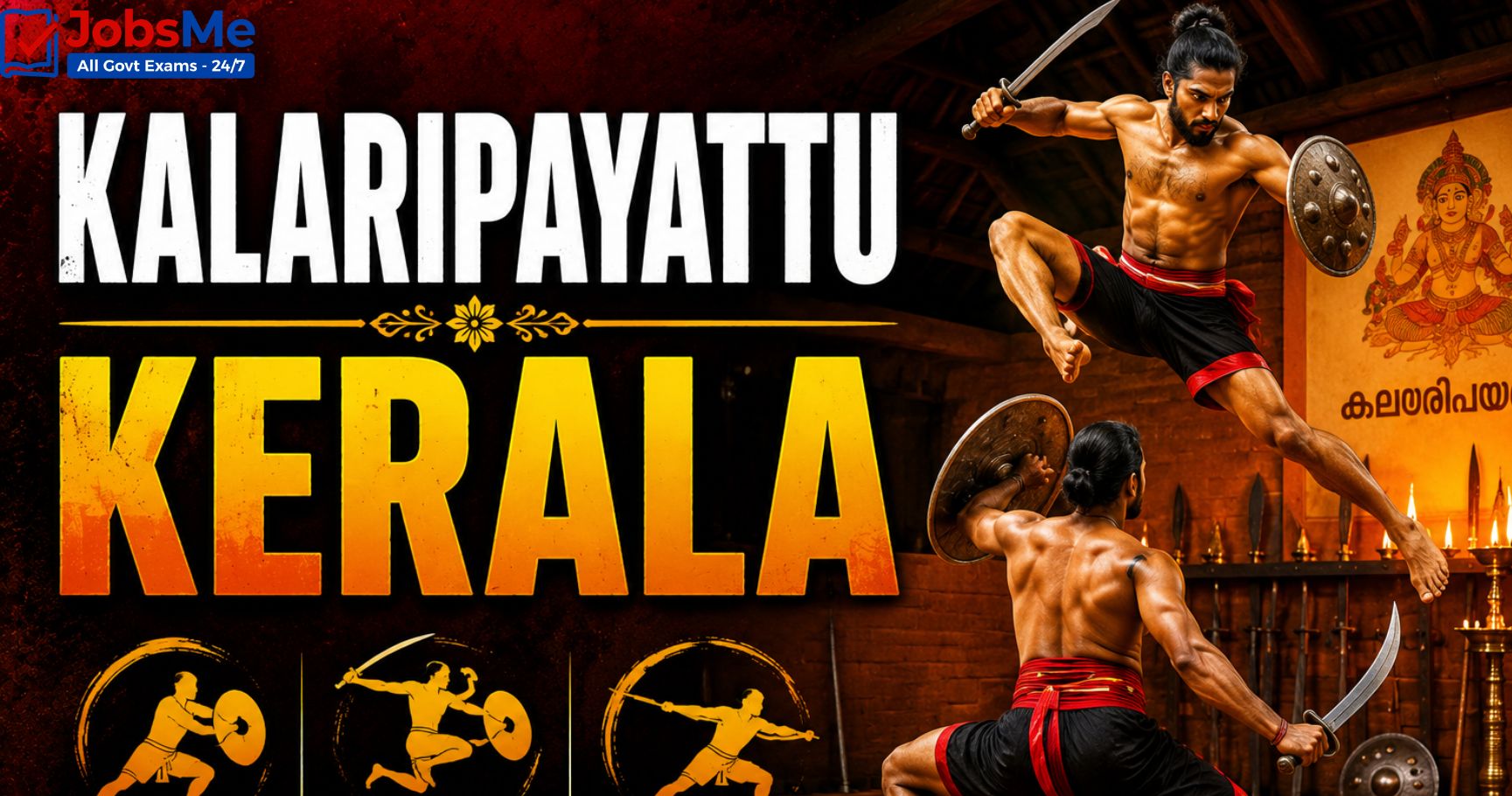
- Origin: Originated in Kerala around the 3rd century BC; developed its present form during the 11th century CE amid Chera-Chola wars.
- Meaning: "Kalari" = battlefield/training arena (a Malayalam word meaning "threshing floor"); "Payattu" = practice/exercise.
- The word Kalari first appears in Sangam literature to describe both a battlefield and a combat arena.
- Considered one of the oldest fighting systems in existence and believed to be the precursor to Karate, Kung Fu, and other Asian martial arts.
- Techniques: Uzhichil (massage), Otta fighting, Maipayattu (body exercises), Puliyankam (sword and shield), Verumkai (unarmed), Angathari (full weapon training).
- Weapons: Sword, shield, spear, dagger, mace, axe, and Urumi (a flexible whip-like sword).
- The venue of practice is called a Kalari - a specially constructed gymnasium with mud flooring.
- The Sushruta Samhita's knowledge of 108 vital points (marma points) is deeply integrated into Kalaripayattu practice.
- Women also practise Kalaripayattu, and it is still rooted in traditional rituals and ceremonies.
2. Silambam - Tamil Nadu
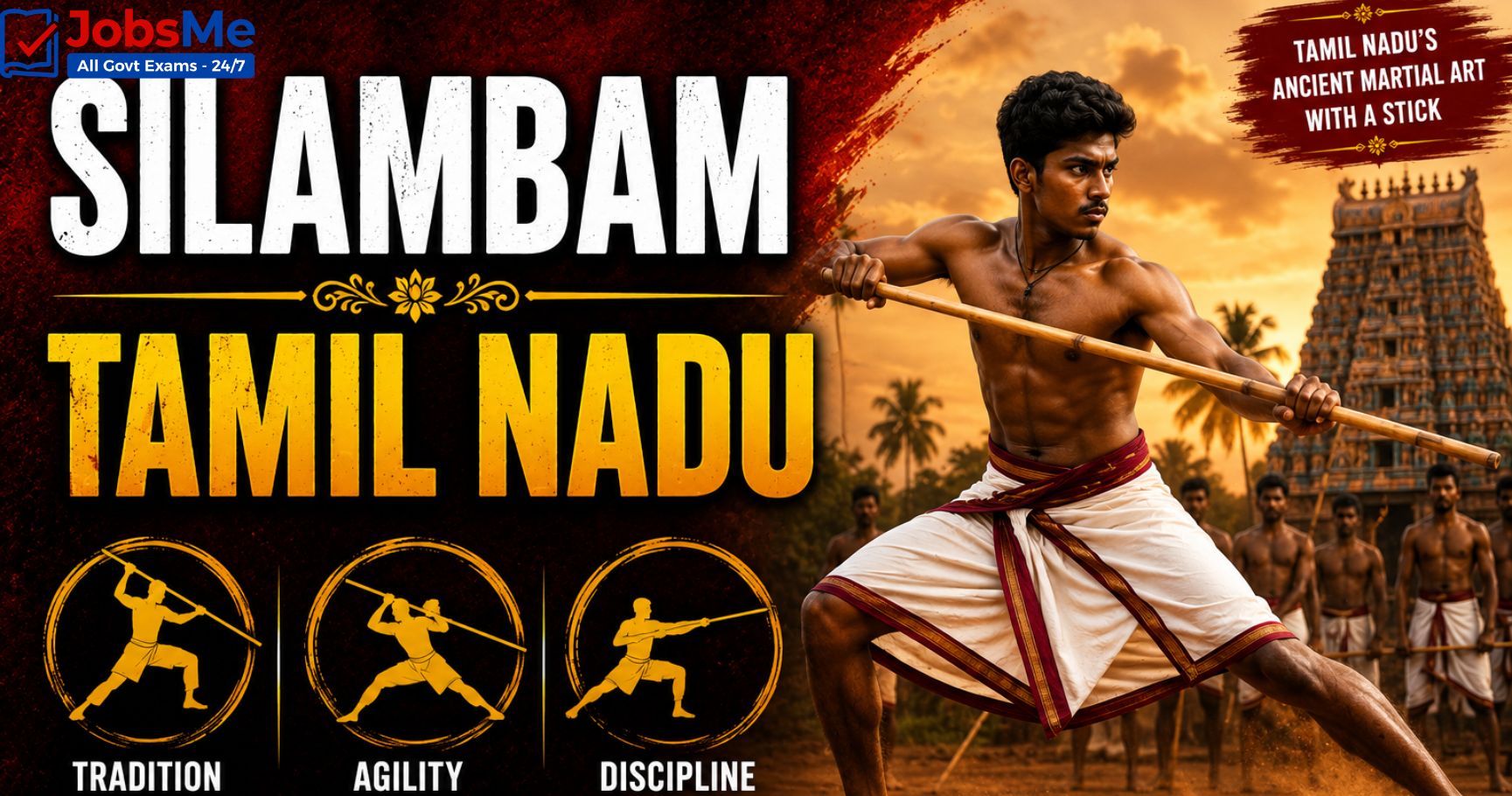
- Origin: Developed by early Dravidians from ancient Tamil Nadu; promoted by the Pandya, Chola, and Chera dynasties.
- Mentioned in 2nd century AD Tamil classic Silappadikaram. Silambam bamboo was a popular trading item with merchants from Rome, Greece, and Egypt.
- The word Silambal refers to the sound of a fast-flowing spring, rustling leaves, or chirping birds - possibly describing the "whoosh" of a swinging staff.
- Weapon: Primarily a long bamboo staff; also swords, knives, and lances. Originally practised with bamboo sticks, later with steel swords and shields.
- Techniques: Swift footwork, hand-waving, thrusts, cuts, chops, and sweeps. Animal-inspired techniques include snake, monkey, tiger, hawk, and eagle forms.
- Also traditionally practised by Tamil communities in Sri Lanka and Malaysia.
- Closely related to Kalaripayattu (Kerala) and Angampora (Sri Lanka).
- Lord Muruga (son of Lord Shiva) and sage Agasthya are said to have created this martial art.
3. Thang-Ta and Sarit Sarak (Huyen Langlon) - Manipur
- Traditional Name: Huyen Langlon - Huyen means "war," Langlon means "knowledge of art." Together: "Knowledge of War Art."
- Two Components:
- Thang-Ta - the armed combat component. Thang = sword; Ta = spear.
- Sarit Sarak - the unarmed combat component; uses hand-to-hand combat techniques.
- History dates to the 17th century, when Manipuri kings used these arts against the British.
- Banned by the British after their conquest of Manipur; revived post-independence.
- Considered one of the most lethal armed combat forms in India.
- Sword movements also carry ritualistic significance - some movements ward off evil spirits, while others indicate protection.
4. Gatka - Punjab
- A traditional martial art associated with the Sikh community of Punjab.
- Believed to have originated when the 6th Sikh Guru Hargobind adopted the Kirpan (sacred sword) for self-defence during Mughal rule.
- The 10th Guru Gobind Singh made it compulsory for all Sikhs to learn weapons for self-defence.
- Gatka is a toned-down version of the deadlier Shastar Vidya - where sharp swords are replaced by wooden sticks (soti) and shields.
- Weapons used: Sticks, Kirpan (sacred dagger), Talwar (sword), Kataar (push dagger), shield.
- Points are scored when vital spots on the body are touched; attack and defence are determined by hand and foot positions.
- It is said that Mughal Emperor Akbar practised Gatka with sword and shield.
- The Gatka Federation of India (GFI) was formed in 2008 to bring Gatka into the mainstream sports category.
- Displayed at fairs, Nagar Kirtans, and Akharas; open to people of all faiths.
5. Malla Yuddha - Pan-India (Ancient)
- The oldest known codified form of fighting in the Indian subcontinent; an unarmed combat wrestling art.
- Related to other South/Southeast Asian wrestling styles including Naban (Myanmar).
- Divided into four categories, each named after a Hindu deity:
| Category | Named After | Focus |
|---|---|---|
| Jambuvanti | Jambuvanta | Forcing opponents into submission through locks and holds |
| Hanumanti | Hanuman | Technical superiority and agility |
| Bhimaseni | Bhima | Sheer physical strength |
| Jarasandhi | Jarasandha | Limb and joint breaking |
- Famous practitioners include Gautama Buddha and Krishna Deva Raya (Vijayanagara emperor).
- Vajra-Mushti is a related art that uses a knuckle-duster-like weapon and shares training methodology with Malla-Yuddha.
6. Mallakhamb - Madhya Pradesh
- A traditional gymnastic and martial art combining acrobatics, strength training, and combat techniques.
- Name derivation: Malla = wrestler; Khamb = pole. Literally "wrestling pole."
- Practitioners perform intricate yoga-inspired postures on a stationary vertical pole made of Sheesham (Indian rosewood).
- Three variants: pole Mallakhamb, hanging Mallakhamb, and rope Mallakhamb.
- Hotspots: Madhya Pradesh and Maharashtra.
7. Mardani Khel - Maharashtra
- A weapon-based martial art from Maharashtra, particularly associated with Kolhapur.
- Known for its use of the Patta (a uniquely Indian gauntlet-sword) and Vita (a corded lance).
- Early history is difficult to trace prior to the 16th century, but it owes its development to the geographic conditions of Maharashtra's terrain.
- Famous practitioner: Chhatrapati Shivaji Maharaj, who used Mardani Khel to great effect in guerrilla warfare.
8. Lathi Khela - North India (Punjab and Bengal)
- One of the world's oldest armed martial arts; a stick-fighting tradition practised across North India.
- The lathi is a polished cane/bamboo stick typically 6 to 8 feet long, sometimes with a metal tip.
- The practitioner is known as a Lethel or Lathial.
- Still used by Indian Police for crowd control.
- Historically popular in Bihar and Bengal (now Bangladesh); now more common in Punjab and Bengal.
9. Pari-Khanda - Bihar
- Created by Rajputs of Bihar; involves fighting with a sword and shield.
- Pari = shield; Khanda = sword.
- Still practised in Bihar, Jharkhand, and parts of Odisha.
- Its steps and techniques are widely used in the Chhau dance of Bihar/Jharkhand/Odisha.
10. Thoda - Himachal Pradesh
- A blend of martial arts, sports, and culture originating in Himachal Pradesh.
- Performed during the Baisakhi festival (April); includes community prayers to Goddesses Mashoo and Durga.
- Based on archery skills; links to the epic battles of the Mahabharata.
- Two teams of approximately 500 players each: Pashis (descendants of Pandavas) and Saathis (descendants of Kauravas).
- Archers aim for the leg below the knee; striking other body parts results in negative points.
11. Sqay - Kashmir
- A traditional martial art from Kashmir, involving fluid, graceful sword movements.
- Armed: Uses a curved single-edged sword and a shield; a practitioner may hold one sword in each hand.
- Unarmed: Techniques include kicks, punches, locks, and chops.
12. Inbuan Wrestling - Mizoram
- Dates back to 1750 AD in the Dungtlang village of Mizoram.
- Characterised by strict rules: no stepping out of the circle, no kicking, no bending of the knee.
- The goal is to lift the opponent completely off their feet. Wrestlers must catch their opponent's waist belt.
13. Other Notable Forms
- Kuttu Varisai (Tamil Nadu): "Empty hand combat" - an unarmed Dravidian art using yoga, gymnastics, and animal stances (snake, eagle, tiger, elephant, monkey). Mentioned in Sangam literature.
- Musti Yuddha (Varanasi, UP): Unarmed art using punches, kicks, knee, and elbow strikes; integrates physical, mental, and spiritual training.
- Paika Akhada (Odisha): Combination of dance and combat; originally used by warrior peasant militias; now practised as a performing art with rhythmic gestures synchronised to drumbeats.
- Kathi Samu (Andhra Pradesh): Sword-fighting art patronised by the Kingdom of Vizianagaram; practised at a venue called Garidi; stick fight (Vairi) is a precursor to the sword fight; Gareja involves holding four swords, two in each hand.
- Bandesh (Rajasthan): Unarmed art using lock holds to disarm an armed opponent without killing them.
- Varma Ati (Tamil Nadu): Strikes targeted at the body's 108 vital points (Varma); deeply connected to the Siddha medical tradition.
- Cheibi Gad-ga (Manipur): Ancient sword-and-shield art modified to use a soft leather stick (Cheibi, 2-2.5 ft) and a shield (1 m diameter); contest held in a 7-metre circle.
Government Schemes and Initiatives for Indian Martial Arts
These schemes are frequently asked in Static GK and Current Affairs sections of government exams. Know the scheme names, associated art forms, and the nodal authority.
| Scheme / Initiative | Nodal Authority | Martial Arts Covered | Key Point |
|---|---|---|---|
| Indigenous Games & Martial Arts (IGMA) Scheme | Sports Authority of India (SAI) | Kalaripayattu, Silambam, Mallakhamb, Mukna, Thang-Ta, Khomlainai, Gatka, Kabaddi, Archery | Sub-scheme of the National Sports Talent Contest (NSTC) |
| Khelo India Scheme - Rural & Indigenous/Tribal Games component | Ministry of Youth Affairs & Sports | Mallakhamb, Kalaripayattu, Gatka, Thang-Ta | Promotes rural, indigenous, and tribal sports |
| National Martial Arts Academy | Ministry of Youth Affairs & Sports | All major forms | Approved as a School of Fit India by the Ministry |
Memory Tricks, Mnemonics, and Vivid Memory Aids
State-Wise Mnemonic: "Keep Some Things Going - My People Like Breathing Oxygen"
Use the first letter of each word to remember the state-art pairing:
- Keep → Kalaripayattu → Kerala
- Some → Silambam → South (Tamil Nadu)
- Things → Thang-Ta → Three letters = Manipur (M-N-P)
- Going → Gatka → Guru/Punjab
- My → Mardani Khel → Maharashtra
- People → Pari-Khanda → Patna/Bihar
- Like → Lathi → Lumbering stick (Punjab/Bengal)
- Breathing → Bandesh → By Rajasthan
- Oxygen → Odisha → Paika Akhada
Malla Yuddha - 4 Forms (JHJB Rule)
Remember the four forms of Malla Yuddha with: "Just Have Big Joints"
- Just → Jambuvanti (locks & holds)
- Have → Hanumanti (technical skill)
- Big → Bhimaseni (brute strength)
- Joints → Jarasandhi (joint/limb breaking)
Thang-Ta Weapon Trick
Thang = T-shaped sword handle (sword) | Ta = Tall spear (spear). Easy visual: a sword handle looks like a "T" (Thang), and a spear stands tall like the letter "I" or "Ta" in Hindi.
Pari-Khanda Memory Hook
"Pari from Bihar wears a Khanda" - Pari (fairy/shield) + Khanda (sword) = sword-and-shield art from Bihar, used in Chhau dance. A fairy (Pari) holding a sword (Khanda) - an easy image to remember.
Thoda - The Mahabharata Connection
"Thoda = Two Teams = Two Sides of Mahabharata" - Pashis (Pandavas) vs. Saathis (Kauravas), played during Baisakhi in Himachal Pradesh, using archery.
Inbuan Wrestling - The "No-No-No" Art
Remember Inbuan (Mizoram) by its three Nos: No stepping out, No kicking, No knee bending. The only goal: lift your opponent off the ground.
Huyen Langlon Quick Split
- Huyen = Hitting (War) → armed = Thang-Ta
- Langlon = Learning (Knowledge/Art) → unarmed = Sarit Sarak
Additional Notes - Exam Traps, Tricky Facts, and PYQ Patterns
Frequently Confused Facts
- Kalaripayattu origin year: Some sources say 3rd century BC, others say 13th century AD. The art originated around 3rd century BC but reached its present structured form by the 11th-13th century CE. UPSC 2014 Prelims correctly identifies it as an "ancient martial art and a living tradition in some parts of South India." Do not confuse it with the Kalaripayattu being a Bhakti cult or dance form (those are wrong answer options).
- Huyen Langlon vs. Thang-Ta: Huyen Langlon is the umbrella name for both Thang-Ta (armed) and Sarit Sarak (unarmed). Thang-Ta alone does NOT cover the full system.
- Mallakhamb vs. Malla Yuddha: Mallakhamb = gymnastics on a pole. Malla Yuddha = combat wrestling. Both have "Malla" (wrestler) in their name, but they are distinct art forms.
- Lathi Khela vs. Silambam: Both involve stick fighting, but Lathi Khela is from North India (Punjab/Bengal), while Silambam uses a long bamboo staff and is from Tamil Nadu.
- Pehlwani: Not purely indigenous. It is a hybrid art - Malla-Yuddha + Persian Varzesh-e Bastani. This distinction is frequently tested.
- Pari-Khanda vs. Pari-Khanda in Chhau dance: Pari-Khanda is a standalone martial art AND its movements are incorporated into the Chhau dance of Bihar. Do not confuse the art form with the dance.
- Kathi Samu practice venue: It is called Garidi - not Akhara (used for wrestling) or Kalari (used for Kalaripayattu).
Repeating PYQ Patterns
- UPSC Prelims 2014: "What is Kalaripayattu?" - Answer: An ancient martial art and a living tradition in some parts of South India.
- SSC & IBPS frequently ask: Which martial art is associated with which state?
- Weapon identification questions are common: "Thang-Ta uses which primary weapons?" (Sword and Spear)
- Questions on government schemes: "Which scheme promotes Kalaripayattu/Gatka?" → IGMA Scheme / Khelo India
- Questions on Gatka Federation of India: Formed in 2008.
Quick Insights
- The Sushruta Samhita identified 108 vital points - this knowledge underlies both Kalaripayattu and Varma Ati.
- Both Kalaripayattu and Silambam were banned by the British and revived post-independence.
- Gatka was confined to Gurudwaras and Akharas before GFI was formed in 2008.
- The Maratha Light Infantry traces its origins to 1768 - one of the oldest Indian Army regiments.
- The Ain-i-Akbari is a key historical source for martial arts during the Mughal period.
- Kalaripayattu is sometimes called the "father of all martial arts" or the "mother of Kung Fu and Karate".
One-Liners for Rapid Revision
Use these one-liners for last-minute revision before exams. They cover the most exam-relevant facts for UPSC, SSC, Banking, and Railways. For more one-liners and quizzes, visit the Static GK Quiz section.
- Kalaripayattu originated in Kerala; considered the oldest and the basis of Karate and Kung Fu.
- Silambam is the stick-fighting art of Tamil Nadu; mentioned in Silappadikaram (2nd century AD).
- Thang-Ta (sword) + Sarit Sarak (unarmed) = Huyen Langlon of Manipur.
- Gatka is associated with Sikh Gurus of Punjab; GFI formed in 2008.
- Malla Yuddha has four forms - Jambuvanti, Hanumanti, Bhimaseni, Jarasandhi.
- Mallakhamb = gymnastics on a vertical pole; associated with Madhya Pradesh; pole made of Sheesham.
- Mardani Khel is from Maharashtra; uses Patta (sword) and Vita (corded lance); linked to Shivaji.
- Pari-Khanda = sword (Khanda) and shield (Pari) art from Bihar; used in Chhau dance.
- Thoda = archery martial art from Himachal Pradesh; played during Baisakhi; Pashis vs. Saathis.
- Inbuan Wrestling = Mizoram; dates to 1750 AD; no kicking, no knee bending.
- Lathi practitioner = Lethel/Lathial; stick 6-8 ft long; also used by Indian Police.
- Sqay = sword-fighting art from Kashmir; curved single-edged sword and shield.
- Kathi Samu = sword art from Andhra Pradesh; venue = Garidi; patronised by Vizianagaram.
- Paika Akhada = dance-combat hybrid from Odisha; originally a peasant militia training system.
- Varma Ati = striking vital points (Varma); linked to Siddha medicine of Tamil Nadu.
- Musti Yuddha = unarmed combat from Varanasi (UP); uses kicks, punches, elbows, knees.
- Bandesh = unarmed lock-hold art from Rajasthan; disarms an armed opponent without killing.
- Pehlwani = Malla-Yuddha + Persian Varzesh-e Bastani; developed during the Mughal era.
- IGMA Scheme is a sub-scheme of NSTC; supervised by the Sports Authority of India.
- Khelo India Scheme currently promotes Mallakhamb, Kalaripayattu, Gatka, and Thang-Ta.
- The Sushruta Samhita (4th century CE) identified 108 vital points on the human body; 64 are lethal.
- Both Kalaripayattu and Silambam were banned during British rule; revived post-independence.
- Ain-i-Akbari records martial arts demonstrations at the Mughal court under Emperor Akbar.
- The earliest treatise on Malla-Yuddha is the Malla Purana (c. 13th century CE).
- Maratha Light Infantry traces its origins to 1768 - one of the oldest Indian Army regiments.
Free quiz • No signup required
Put this topic into practice with Indian Cultural Institutions – Static GK MCQ Quiz. It is the quickest way to reinforce what you just learned.
Frequently Asked Questions
Which is the oldest martial art in India?
What is the traditional name of Thang-Ta?
Which Indian martial art is considered the basis of Kung Fu and Karate?
What is the venue of practice called in Kalaripayattu?
Which government scheme specifically promotes Indigenous Games and Martial Arts?
What are the weapons used in Thang-Ta?
Which martial art from Bihar uses movements incorporated into the Chhau dance?
What is the significance of the Sushruta Samhita in Indian martial arts?
Which martial art is associated with the Baisakhi festival in Himachal Pradesh?
What were the two martial arts banned by the British in India, and when were they revived?

About the author