Indian Fairs and Festivals – Complete Static GK Guide for Government Exams
Indian Fairs and Festivals is one of the most frequently tested topics in UPSC, SSC, Banking, Railways, and State PCS exams. This complete Static GK guide covers all major fairs, religious festivals, regional and tribal festivals, and their key facts — with memory tricks, one-liners, and exam-ready tables.
Jump to section
- Introduction: Why Indian Fairs and Festivals Matter in Competitive Exams
- Major Fairs of India - Key Facts for Exams
- Hindu Festivals - Static GK Notes
- Islamic Festivals - Static GK Notes
- Christian Festivals - Static GK Notes
- Sikh Festivals - Static GK Notes
- Jain Festivals - Static GK Notes
- Buddhist Festivals - Static GK Notes
- Parsi (Zoroastrian) Festivals - Static GK Notes
- Sindhi Festivals - Static GK Notes
- Festivals of North-East India - State-Wise Notes
- Secular and Cultural Festivals - Quick Reference
- UNESCO-Recognised Indian Festivals and Traditions
- State-Wise Festival Quick Reference Table
- Memory Tricks and Mnemonics for Exams
- Additional Notes - Exam Traps and Frequently Confused Facts
- One-Liners for Quick Revision
Introduction: Why Indian Fairs and Festivals Matter in Competitive Exams
India is rightly called the Land of Festivals. With over 30 major festivals and hundreds of regional fairs celebrated across its 28 states and 8 Union Territories, India's festive calendar is one of the richest in the world. These celebrations are not merely occasions of joy — they reflect the country's religious diversity, agricultural cycles, community traditions, and historical heritage.
For students preparing for UPSC Prelims, SSC CGL, IBPS PO/Clerk, RRB NTPC, State PCS, Defence, and Insurance exams, Indian Fairs and Festivals is a recurring and high-scoring topic under Art and Culture, Static GK, and General Awareness. Questions are asked about the location of fairs, the religion or community associated with a festival, the river or venue involved, UNESCO recognition, and the significance of specific events.
This guide organises all essential facts in a structured, exam-ready format — covering national fairs, religious festivals (Hindu, Muslim, Christian, Sikh, Jain, Buddhist, Parsi), regional and tribal celebrations, and North-East India's unique festivals. Refer to our complete Indian Art and Culture Static GK section for a broader preparation framework.
Major Fairs of India - Key Facts for Exams
Fairs (Melas) in India are large public gatherings that combine religious rituals, trade, entertainment, and cultural exchange. They are often held at pilgrimage sites, riverbanks, or places of historical significance. Below are the most important fairs tested in competitive exams.
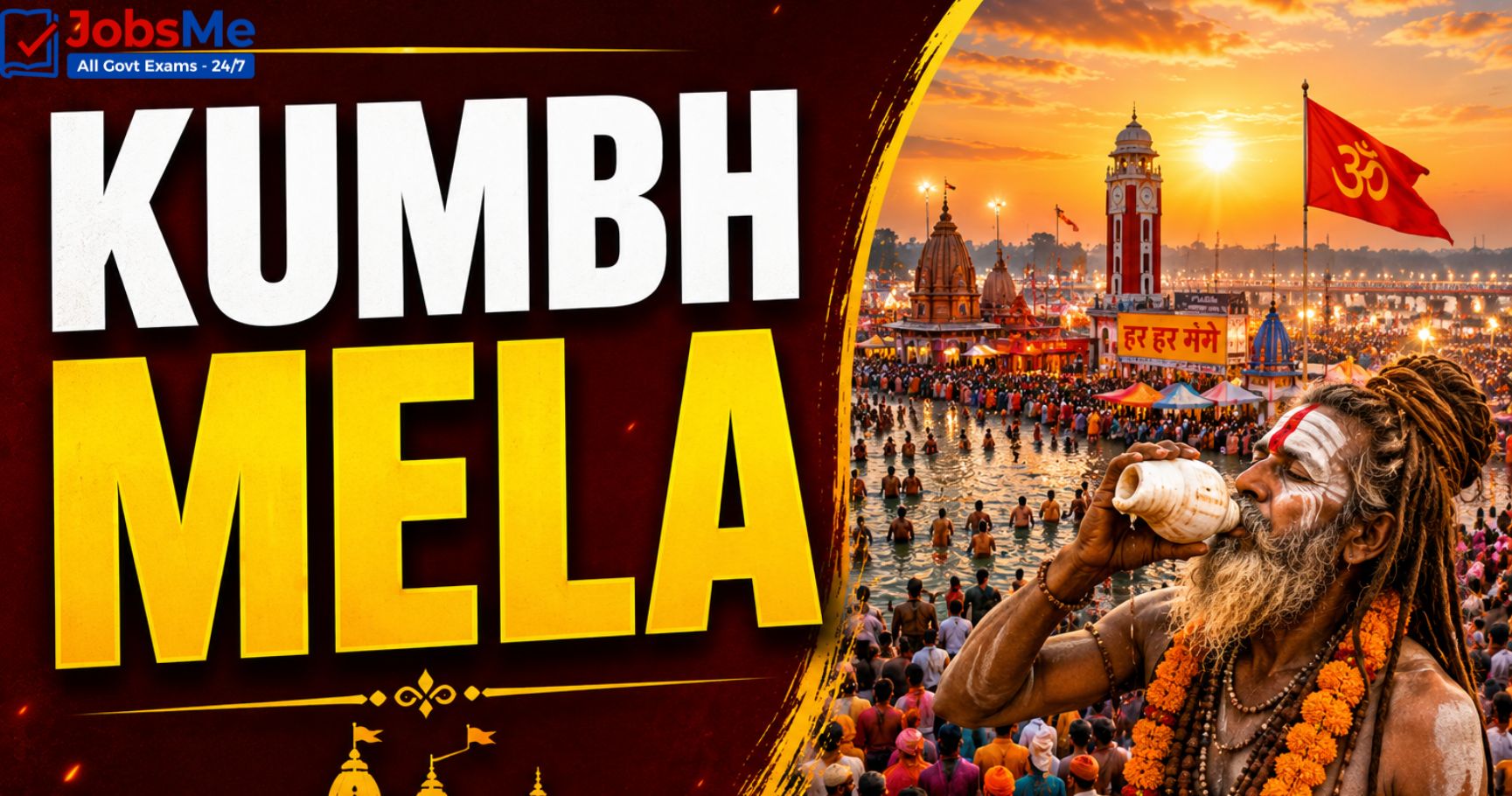
Kumbh Mela
| Feature | Details |
|---|---|
| Locations | Prayagraj (UP), Haridwar (Uttarakhand), Ujjain (MP), Nashik-Trimbak (Maharashtra) |
| Significance | Largest religious gathering in the world |
| Mythological Origin | Based on Samudra Manthan - Lord Vishnu spilled drops of amrit (nectar) at these four places |
| Rotation Cycle | Every 3 years in rotation among four locations; Maha Kumbh once every 12 years at Prayagraj |
| Timing Basis | Astrological positions of the Sun, Moon, and Jupiter |
| UNESCO Recognition | Inscribed as Intangible Cultural Heritage of Humanity (2017) |
| Special Term | Simhastha Kumbh - held at Nashik and Ujjain when Jupiter is in Leo (Simha) |
River associations:
- Prayagraj - Confluence of Ganga, Yamuna, and mythical Saraswati (Triveni Sangam)
- Haridwar - Ganga
- Nashik-Trimbak - Godavari
- Ujjain - Shipra
Pushkar Fair
- Location: Pushkar, Rajasthan
- One of the largest camel and livestock fairs in the world
- Held annually on Kartik Purnima and lasts about a week
- Features camel races, moustache competitions, turban tying competitions, and folk performances
- Attracts both domestic and international tourists
Sonepur Mela
- Location: Sonepur, Bihar - at the confluence of Ganga and Gandak rivers
- One of Asia's largest cattle fairs
- Held on Kartik Purnima (November)
- Historically, Chandragupta Maurya is said to have bought elephants and horses here
- The only fair in India known for the large-scale sale of elephants
Surajkund Crafts Mela
- Location: Surajkund, near Faridabad, Haryana
- One of the largest handicraft fairs in the world
- Held annually for a fortnight in February
- Showcases traditional handicrafts, handlooms, folk performances, and regional cuisines from across India and internationally
Gangasagar Mela
- Location: Gangasagar (Sagar Island), West Bengal - mouth of river Hooghly
- Second-largest religious gathering in India after Kumbh Mela
- Held on Makar Sankranti (January)
- Devotees take a holy dip and visit Kapil Muni Ashram
- Presence of Naga Sadhus is a distinctive feature
Jaisalmer Desert Festival
- Location: Jaisalmer, Rajasthan (Thar Desert)
- Held in February (before the full moon in the month of Magh)
- Showcases Rajasthani folk music, dance, and desert traditions
- Key attractions: turban tying, camel races, longest moustache competition
Goa Carnival
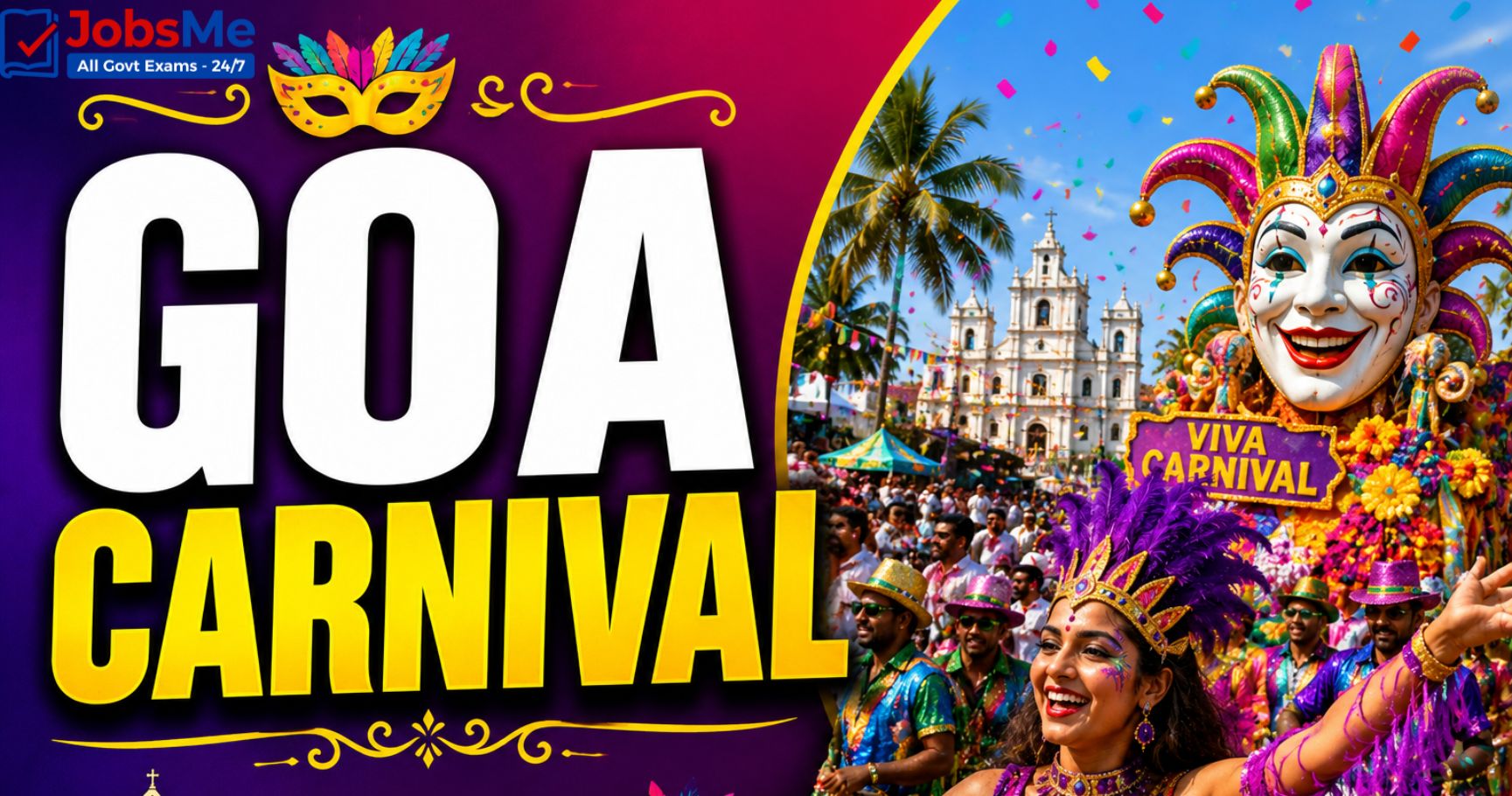
- Location: Goa
- A pre-Lenten festival introduced by the Portuguese
- Held 40 days before Lent; features colourful parades, dances, music, and cultural performances
- Led by the symbolic character King Momo
- Reflects Goa's unique Indo-Portuguese heritage
Other Important Fairs - Quick Reference Table
| Fair | Location | Key Feature |
|---|---|---|
| Chitra Vichitra Fair | Sabarkantha, Gujarat (Gujarat-Rajasthan border) | Largest tribal fair of Gujarat; Garasia and Bhil tribes; held near confluence of Sabarmati, Wakal, Aakal rivers |
| Shamlaji Mela | Shamlaji, Gujarat | Near Shamlaji Temple; Bhils and Garasias participate; ritual bathing in Meshwo river; Kartik Purnima |
| Kolayat Fair (Kapil Muni Fair) | Kolayat, Bikaner, Rajasthan | Held in honour of Sage Kapil; 52 ghats surrounding the lake; Kartik Purnima |
| Joydev Kenduli Mela | Birbhum, West Bengal | Birthplace of poet Jayadeva (composer of Gita Govinda); famous for Baul singers; Baul tradition is UNESCO Intangible Heritage |
| Baneshwar Fair | Rajasthan | Celebrated by Bhil tribe; Shiva Linga worshipped; Baneshwar = another name for Lord Shiva |
| Gangaur Festival | Rajasthan | Reunion of Lord Shiva and Goddess Gauri (Parvati); 18-day festival; celebrated by married and unmarried women |
| Tarnetar Fair | Gujarat | Celebrates the legendary marriage of Draupadi with Arjuna; attended by Koli, Rabari, Bharward, Khant, and other tribes; August-September |
| Garib Nawaz Urs | Ajmer, Rajasthan | Death anniversary of Sufi Saint Moin-ud-din Chishti; devotees offer chadars |
| Lathmaar Holi | Barsana, Mathura, Uttar Pradesh | Women beat men with sticks; men protect with shields; held before main Holi; Radharani temple is the attraction |
| Kami Mata Fair | Bikaner, Rajasthan | Held twice a year; temple known as the "rat temple" - sacred rats are believed to bless devotees |
| Ambubachi Mela | Kamakhya Temple, Guwahati, Assam | Called "Mahakumbh of the East"; associated with fertility rituals; held in June; temple closed for 3 days (Goddess Kamakhya's annual menstrual cycle) |
| Mahamastakabhisheka | Shravanabelagola, Karnataka | Jain festival; held once every 12 years; holy bathing ceremony of 57-ft statue of Siddha Bahubali (Gomateshwara) |
| Sair-e-Gul Faroshan (Phool Walon Ki Sair) | Delhi (Mehrauli) | Annual 3-day flower festival; symbol of communal harmony; procession of flower-decorated palm fans; patronised by Mughal Emperor Akbar II; reinstated by Nehru in 1962 |
Hindu Festivals - Static GK Notes
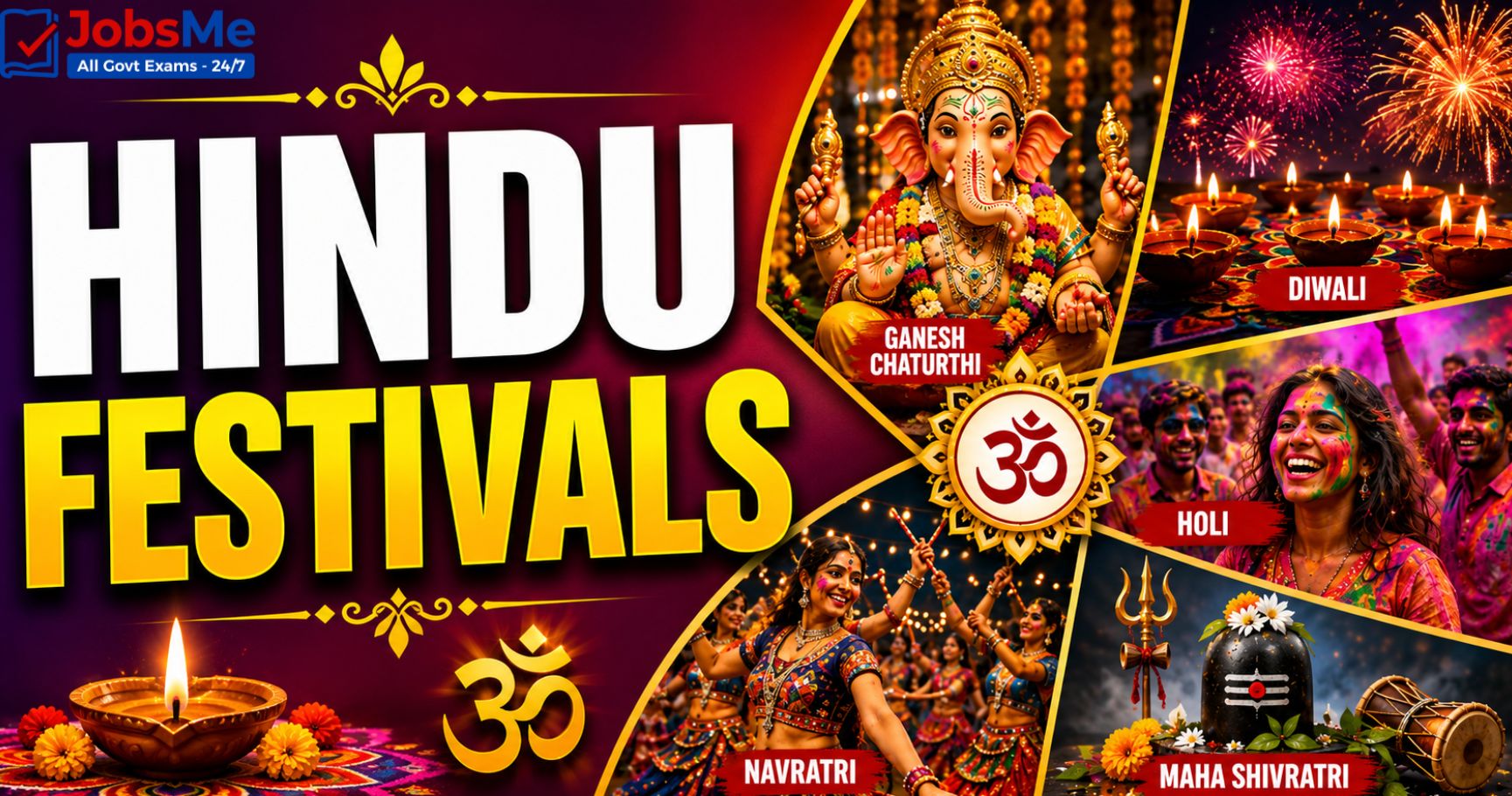
| Festival | Month / Timing | Significance | Key States / Feature |
|---|---|---|---|
| Diwali (Deepawali) | Kartik Amavasya (October-November) | Victory of light over darkness; Lord Rama's return to Ayodhya; worship of Goddess Lakshmi | Pan India; day before is Naraka Chaturdashi |
| Dev Deepawali | Kartik Purnima (15 days after Diwali) | Festival of lamps on ghats of Ganga; also called Tripura Purnima Snan | Varanasi, Uttar Pradesh |
| Holi | Phalguna (February-March) | Festival of colours; triumph of good over evil (Prahlad saved, Holika burnt); arrival of spring | Pan India; Dol Jatra in West Bengal and Assam |
| Navratri and Dussehra | Ashwin (September-October) | Nine days of Goddess Durga worship; Dussehra marks Rama's victory over Ravana (Ravana Dahan) | Pan India; grand celebrations in Mysuru, Varanasi, Delhi |
| Makar Sankranti | January 14 | Sun enters Capricorn; end of winter; ritual dips in holy rivers; kite flying | Pan India; Uttarayan (Gujarat), Pongal (Tamil Nadu), Bihu (Assam), Lohri (Punjab) |
| Chhath Puja | Kartik Shukla Shashthi (October-November) | Dedicated to Sun God (Surya); rigorous fasting; offerings at riverbanks; Thekua is the special offering | Bihar, Jharkhand, eastern UP |
| Onam | Chingam (August-September) | Harvest festival; homecoming of King Mahabali; Vallam Kali (Snake Boat Race); Nehru Trophy held at Punnamada Lake | Kerala's State Festival |
| Pongal | January (Thai month) | 4-day harvest festival; thanksgiving to Sun God; "Pongal" means "to boil" in Tamil | Tamil Nadu; 4 days: Bhogi, Thai Pongal, Mattu Pongal, Kaanum Pongal |
| Rath Yatra (Chariot Festival) | Ashadha Shukla Dwitiya (June-July) | Grand chariot procession of Lord Jagannath, Balabhadra, and Subhadra; largest Rath Yatra at Puri | Puri, Odisha; also Kang Chingba in Manipur |
| Nabakalebar Festival | Every 8 to 19 years | Replacement of idols of Lord Jagannath, Balabhadra, Subhadra, and Sudarshan with new idols made from selected neem trees; "Nabakalebar" means "new body" | Jagannath Temple, Puri, Odisha |
| Ganesh Chaturthi | Bhadrapada Shukla Chaturthi (August-September) | Birth anniversary of Lord Ganesha | Maharashtra (biggest celebrations); pan India |
| Durga Puja | Ashwin (October) | Goddess Durga's triumph over demon Mahishasura | West Bengal, Eastern India |
| Janmashtami | Bhadrapada Krishna Ashtami (August) | Birth anniversary of Lord Krishna | Pan India; grand at Mathura, Vrindavan |
Islamic Festivals - Static GK Notes
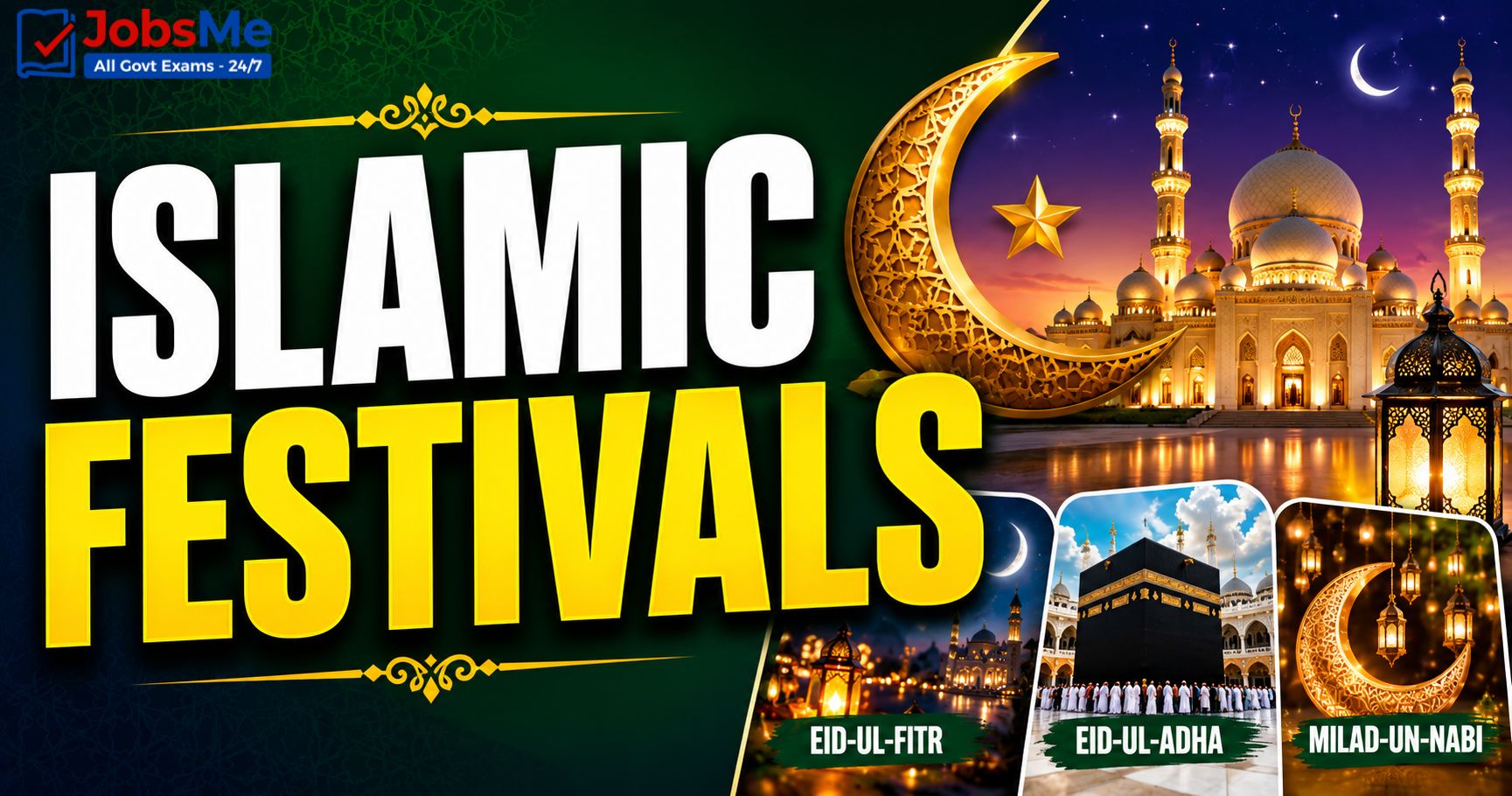
| Festival | Timing (Islamic Calendar) | Significance |
|---|---|---|
| Eid-ul-Fitr | 1st Shawwal (after Ramadan) | End of Ramadan fasting; prayers, charity (Zakat), and feasting |
| Eid-ul-Adha (Bakr-Eid) | 10th Dhu-al-Hijjah | Prophet Ibrahim's devotion; sacrifice of goat; 1/3 meat given to the poor; coincides with Hajj pilgrimage |
| Muharram | 10th Muharram (Yaum-al-Ashura) | Mourning for martyrdom of Hussain Bin Ali at Karbala (680 AD); Shia Muslims take out Tajia processions |
| Milad-un-Nabi (Barah-wafat) | 12th Rabi-al-Awwal | Birth and death anniversary of Prophet Muhammad; celebrated with reverence; "Barah" = 12, "Wafat" = death (12 days of sickness before death) |
| Shab-e-Barat | Night of 14th-15th Shaban | "Night of Emancipation"; destiny of every person believed to be determined on this night |
| Shab-e-Miraj | 27th Rajab | "Night of Ascent"; Prophet's spiritual journey; five daily prayers made obligatory on this night |
Christian Festivals - Static GK Notes

| Festival | Date / Timing | Significance |
|---|---|---|
| Christmas | 25 December | Birth anniversary of Jesus Christ; midnight mass on 24-25 December; Christmas tree, Santa Claus |
| Good Friday | April (varies) | Commemoration of crucifixion of Jesus Christ |
| Easter | First Sunday after first full moon after Vernal Equinox (post 21 March) | Resurrection of Jesus Christ; triumph of life over death; fixed at Council of Nicaea (325 AD) |
Sikh Festivals - Static GK Notes
| Festival | Date / Timing | Significance |
|---|---|---|
| Gurpurab (Guru Nanak Jayanti) | Kartik Purnima | Birth anniversary of Guru Nanak; Akhand Path, Prabhat Pheris, langar; Guru Granth Sahib procession led by Panj Pyare |
| Baisakhi (Vaisakhi) | 13-14 April | Formation of Khalsa Panth by Guru Gobind Singh; Sikh New Year; spring harvest festival |
| Hola Mohalla | Chett (month after Holi); Anandpur Sahib | Started by Guru Gobind Singh for mock battles and military exercises; also called "Sikh Olympics" |
| Maghi | 14 January | Memory of 40 Sikh martyrs (Chalis Mukte) at Muktsar; Sikhs take a dip in sacred water |
| Lohri | 13 January (day before Makar Sankranti) | Celebrates fertility and the spark of life; bonfires, sweets, puffed rice thrown into fire |
| Parkash Utsav Dasveh Patshah | 31 January | Birthday of the 10th Sikh Guru, Guru Gobind Singh; "Parkash Utsav" means birth celebration of Divine Light |
| Sodal Mela | Month of Bhadon (September) | Held in Jalandhar, Punjab; homage to Baba Sodal; ritual dip in Sodal ka Sarovar (holy tank) |
Jain Festivals - Static GK Notes
| Festival | Timing | Significance |
|---|---|---|
| Mahavir Jayanti | 13th day of Chaitra (rising moon) | Birth anniversary of Lord Mahavira (24th Tirthankara); idol bathed with milk (abhishek); processions |
| Paryushana | Bhadrapada (August-September) | 8 days (Svetambara sect); 10 days (Digambara sect); fasting, temple visits; ends with Kshamavani (Forgiveness Day); "Micchami Dukkadam" is the forgiveness greeting |
| Mahamastakabhisheka | Once every 12 years | Shravanabelagola, Karnataka; holy bathing of 57-ft Gomateshwara (Siddha Bahubali) statue |
| Gyana Panchami | 5th day of Kartika | Knowledge Day; Holy Scriptures displayed and worshipped |
| Navapad Oli | Twice yearly (March-April and September-October) | Nine-day semi-fast; one meal per day of plain food |
Buddhist Festivals - Static GK Notes
| Festival | Timing | Significance |
|---|---|---|
| Buddha Purnima (Buddha Jayanti) | April-May (Vaisakh Purnima) | Marks birth, enlightenment, and Mahaparinirvana of Gautama Buddha; called Saga Dawa (Dasa) in Sikkim; Vishakha Puja in Theravada tradition; main celebrations at Sarnath (UP) and Bodh Gaya (Bihar) |
| Hemis Gompa Festival | Ladakh (June-July) | Hemis Monastery, Ladakh; birth anniversary of Guru Rinpoche (Padmasambhava); mask dance by Lamas; victory of good over evil |
| Losar Festival | First day of Tibetan lunar calendar | Tibetan Buddhist New Year; celebrated mainly by Monpa tribe, Arunachal Pradesh; 15 consecutive days |
| Ulambana | 1st to 15th of 8th lunar month | Ancestor Day; food offerings to relieve suffering of departed souls |
| Saga Dawa | Full moon of Tibetan month Saga Dawa (May-June) | Triple Blessed Festival; Sikkim; commemorates birth, enlightenment, and death of Buddha |
| Losoong Festival | December | Sikkimese New Year; harvest celebration; Bhutia tribe; Cham Dance, Black Hat Dance; locally brewed Chaang (wine) |
Parsi (Zoroastrian) Festivals - Static GK Notes
| Festival | Timing | Significance |
|---|---|---|
| Jamshedi Navroz (Nowruz) | 1st day of Farwardin (Shehanshahi calendar) | Parsi New Year; end of winter; respect to Khorshed and Meher Yazads (sun beings); Fire Temple visits |
| Pateti Festival | Last day of Persian calendar year | Start of new year with clean slate; past transgressions symbolically burned before holy fire; greeting: "Pateti Mubarak" |
| Khordad Sal | 6th day of Farvardin (August-September) | Birth anniversary of Prophet Zoroaster; special prayers (jashan), feasts, and community reflection |
| Gahambars | Six times a year | Six seasonal festivals honouring God's six creations (sky, water, earth, vegetation, cattle, humanity) |
| Zarthost No Deeso | 11th day of 10th month (Daemah) | Remembrance of Prophet Zoroaster's death; lectures, discussions, and increased prayers at Atash Behrams |
Sindhi Festivals - Static GK Notes
- Chaliho Sahib: A 40-day fast observed in July-August. Sindhis pray to Lord Jhulelal for 40 days; concludes with a Thanksgiving Day celebration. The fast is linked to the divine intervention of Jhulelal (also called Varun Devta - God of Water) against the Muslim invader Mirkshah Badshah.
- Cheti Chand: Sindhi New Year celebrated on the 1st day of Chaitra. Commemorates the birth of Jhulelal, the patron saint of Sindhis. People carry the Baharana Sahib (lamp, sweets, fruits) to nearby rivers and take an idol of Jhulelal Devta along.
Festivals of North-East India - State-Wise Notes
Assam
| Festival | Timing | Significance |
|---|---|---|
| Rongali (Bohag) Bihu | April 14 (Assamese New Year) | Most important; spring/harvest; Bihu dance performed; cows and bulls bathed on Day 1 (Gora Bihu); Gamosa (cotton towel) exchanged; Pitha (rice dish) prepared |
| Kongali (Kati) Bihu | October | Period of scarcity; lamps lit in fields and tulsi plants; sober celebration |
| Bhogali (Magh) Bihu | January | Post-harvest feast festival; community bonfires (Meji); feasting is the highlight |
| Me-Dam-Me-Phi | Annually | Festival of Tai-Ahom community; ancestor worship; oblations to departed ancestors; originally performed at Charaideo (Ahom capital), now at Sibsagar |
| Ambubachi Mela | June | Kamakhya Temple, Guwahati; fertility rituals; "Mahakumbh of the East"; temple closed for 3 days |
| Majuli Festival | November | Organised by Assam's Dept. of Culture; held at Majuli; tribal dishes, arts, crafts, Namghar (open space) |
Nagaland
| Festival | Timing | Tribe / Significance |
|---|---|---|
| Hornbill Festival | 1-10 December | All major Naga tribes; held at Kisama Heritage Village; showcase of tribal costumes, weapons, headgears; promotes inter-tribal unity |
| Moatsu Mong Festival | First week of May (after sowing) | Ao tribe; recreation after sowing; Sangpangtu - community bonfire |
| Yemshe Festival | September | Pochuri tribe; harvest festival; catching frogs is prohibited |
| Sekrenyi Festival | February (10+ days) | Angami tribe; also called Phousanyi; purification festival; body and soul cleansing; initiation of youth into adulthood; identity marker of Angami tribe |
| Lui-Ngai-Ni Festival | Annually | Almost all Naga tribes; seed-sowing season; promotes peace, harmony, and unity |
Meghalaya, Manipur, Mizoram, Sikkim
| Festival | State | Significance |
|---|---|---|
| Wangala Festival (100 Drums Festival) | Meghalaya | Garo tribe; post-harvest thanksgiving to deity Misi Saljong; feathered headgear worn; drums, flutes played |
| Chavang Kut | Manipur | Post-harvest festival of Kuki and Mizo tribes |
| Kang Chingba (Rath Yatra of Manipur) | Manipur | Similar to Puri Rath Yatra; 10-day festival in July; begins from Sri Govindajee Temple, Imphal; chariots called Kang |
| Chapchar Kut | Mizoram | Spring festival after jungle clearing for jhum cultivation |
| Saga Dawa | Sikkim | Buddhist; Triple Blessed Festival; commemorates birth, enlightenment, and death of Buddha; May-June |
| Losoong Festival | Sikkim | Sikkimese New Year; December; Bhutia tribe; Cham Dance; locally brewed Chaang |
Arunachal Pradesh
| Festival | Tribe | Key Feature |
|---|---|---|
| Dree Festival | Apatani tribe; Ziro Valley | One of the biggest festivals; prayers to four Gods (Tamu, Metii, Medvr, Danyi-Mepin) for good harvest; cucumber distributed as symbol of good harvest |
| Losar Festival | Monpa tribe | Tibetan Buddhist New Year; 15 consecutive days; "Lama Losar" offerings |
| Murung Festival | Apatani tribe | January; socio-religious; observed when a family faces misfortune; prayers for wealth and health |
| Torgya Festival | Tawang district (Buddhist) | January; destruction of negative forces; wards off natural calamities; colourful dances |
| Khan Festival | Miji tribe | Priest ties sacred wool thread around necks of participants; unites all castes and creeds |
Tripura and Other North-Eastern States
- Kharchi Puja (Tripura): Hindu festival; celebrated over one week in July; held in Agartala; originally a royal family festival; worship of Earth and 14 other deities; thousands trek to the temple.
- Cheiraoba Festival (Manipur): Manipuri New Year in April (1st day of month Sajibu); related to domestic deity Sanamahi (Meitei tribe); celebrated across Manipur with house cleaning, new utensils, and new clothes.
Secular and Cultural Festivals - Quick Reference
| Festival | Location | Key Feature |
|---|---|---|
| Khajuraho Dance Festival | Madhya Pradesh | Instituted in 1975 by Govt. of India with MP Kala Parishad; promotes tourism; reflects spirit of Khajuraho temple architecture |
| Tyagaraja Aradhana | Thiruvaiyaru, AP and Tamil Nadu | Annual commemoration of Saint Tyagaraja's Samadhi; leading Carnatic musicians attend; Tyagaraja, Muthuswami Dikshitar, and Syama Sastri = Trinity of Carnatic Music |
| Konark Dance Festival | Odisha | Held at Sun Temple, Konark; showcase of classical dance forms |
| New Year Celebrations (Regional) | Pan India | Ugadi/Chaitra Shudhdha Paadyami (AP, Karnataka), Gudi Padwa (Maharashtra), Samvatsar Padvo (Goa), Naba Barsha/Poila Boisakh (West Bengal), Puthandu (Tamil Nadu), Vishu (Kerala) |
UNESCO-Recognised Indian Festivals and Traditions
- Kumbh Mela - Inscribed as UNESCO Intangible Cultural Heritage of Humanity (2017)
- Baul tradition (celebrated at Joydev Kenduli Mela, West Bengal) - UNESCO Intangible Cultural Heritage
- The Durga Puja festival of Kolkata was inscribed on UNESCO's Intangible Cultural Heritage list (2021)
For a broader view on UNESCO-recognised Indian heritage, see our UNESCO World Heritage Sites in India notes.
State-Wise Festival Quick Reference Table
| State | Key Festivals / Fairs |
|---|---|
| Uttar Pradesh | Kumbh Mela, Dev Deepawali, Lathmar Holi, Janmashtami, Raam Leela |
| Rajasthan | Pushkar Fair, Desert Festival, Gangaur, Teej, Baneshwar Fair, Kolayat Fair |
| Bihar | Chhath Puja, Sonepur Mela |
| West Bengal | Durga Puja, Gangasagar Mela, Joydev Kenduli Mela |
| Odisha | Rath Yatra, Nabakalebar, Konark Dance Festival |
| Kerala | Onam, Thrissur Pooram, Nehru Trophy Boat Race |
| Tamil Nadu | Pongal, Jallikattu, Thyagaraja Aradhana |
| Goa | Goa Carnival, Feast of St. Francis Xavier |
| Gujarat | Chitra Vichitra Fair, Tarnetar Fair, Shamlaji Mela, Navratri |
| Haryana | Surajkund Crafts Mela |
| Punjab / Delhi | Lohri, Baisakhi, Sodal Mela, Sair-e-Gul Faroshan (Delhi) |
| Karnataka | Mahamastakabhisheka (Shravanabelagola), Pattadakal Dance Festival |
| Assam | Bihu (Rongali, Kongali, Bhogali), Ambubachi Mela |
| Nagaland | Hornbill Festival, Moatsu, Sekrenyi |
| Sikkim | Saga Dawa, Losoong, Losar |
| Arunachal Pradesh | Dree, Losar, Torgya, Murung |
| Meghalaya | Wangala Festival |
| Manipur | Kang Chingba, Cheiraoba, Chavang Kut |
| Mizoram | Chapchar Kut |
| Tripura | Kharchi Puja |
| Madhya Pradesh | Khajuraho Dance Festival |
Memory Tricks and Mnemonics for Exams
Kumbh Mela - 4 Locations
Mnemonic: "P-H-U-N" (Prayagraj, Haridwar, Ujjain, Nashik)
Remember as: "PHU-N" - the four places where divine nectar (amrit) fell, making them FUN to remember!
- Prayagraj - Prime location (Triveni Sangam, Maha Kumbh)
- Haridwar - Holy Ganga
- Ujjain - Under Simhastha Kumbh (Jupiter in Leo)
- Nashik-Trimbak - Near Godavari
Bihu - 3 Types (Assam)
Mnemonic: "RKB" - Rongali, Kongali, Bhogali
- Rongali = Rejoice (April, spring, Assamese New Year)
- Kongali = Kartikshai (October, scarcity, no feasting)
- Bhogali = Banquet (January, post-harvest feast)
Pongal - 4 Days
Mnemonic: "B-T-M-K"
- Bhogi Pongal (Day 1)
- Thai Pongal (Day 2) - main day
- Mattu Pongal (Day 3) - cattle
- Kaanum Pongal (Day 4)
Carnatic Music Trinity
"TDS" = Tyagaraja, Dikshitar (Muthuswami), Syama Sastri - the Trinity of Carnatic Music, all associated with Tyagaraja Aradhana at Thiruvaiyaru.
Tribal Festivals - Quick Match
- Garo tribe → Wangala (100 Drums, Meghalaya)
- Ao tribe → Moatsu Mong (Nagaland)
- Pochuri tribe → Yemshe (Nagaland; frogs not caught)
- Angami tribe → Sekrenyi (Nagaland; also called Phousanyi)
- Apatani tribe → Dree Festival (Ziro Valley, Arunachal; cucumber distributed)
- Monpa tribe → Losar (Arunachal, Buddhist New Year)
- Miji tribe → Khan Festival (Arunachal; sacred wool thread)
- Meitei tribe → Cheiraoba (Manipur New Year)
Rajasthan Fairs - PDKBK
Remember: "PDKBK" = Pushkar, Desert (Jaisalmer), Kolayat, Baneshwar, Kami Mata
Islamic Calendar Facts for Exams
- Eid-ul-Fitr = 1st Shawwal (after Ramadan)
- Eid-ul-Adha = 10th Dhu-al-Hijjah
- Muharram = 1st month of Islamic calendar; Ashura on 10th day
- Milad-un-Nabi = 12th Rabi-al-Awwal (3rd month)
Additional Notes - Exam Traps and Frequently Confused Facts
- Kumbh Mela vs. Ardh Kumbh: Ardh Kumbh Mela is held every 6 years at Haridwar and Prayagraj only (not all four locations). Maha Kumbh is held every 12 years at Prayagraj only.
- Simhastha Kumbh is the specific name used only at Nashik and Ujjain when Jupiter is in Leo (Simha). Do not confuse it with Maha Kumbh.
- Sonepur Mela: Held at the confluence of Ganga and Gandak rivers — not just the Ganga. This distinction is often asked.
- Joydev Kenduli Mela: The Baul tradition has UNESCO recognition, but the Mela itself is held at the birthplace of poet Jayadeva (composer of Gita Govinda), not just any baul singer.
- Ambubachi Mela is often confused with Kumbh. Remember: it is called "Mahakumbh of the East" but is at Kamakhya Temple, Guwahati — not at a Ganga tributary.
- Nabakalebar Festival: Not held every fixed year. It is held when an extra (Adhik Masa) month occurs in the Hindu calendar in the year when Ashadha (month of Rath Yatra) falls twice — this happens after every 8 to 19 years.
- Hola Mohalla is often mistaken as just a Sikh version of Holi. It is specifically a martial and athletic event started by Guru Gobind Singh and is called "Sikh Olympics".
- Tyagaraja Aradhana: Held primarily at Thiruvaiyaru, Tamil Nadu — Tyagaraja's Samadhi place — not just any venue in Andhra Pradesh.
- Kshamavani (Forgiveness Day) at the end of Paryushana — the greeting "Micchami Dukkadam" is a distinctly Jain phrase that has appeared in previous exam papers.
- Sekrenyi vs. Moatsu: Sekrenyi = Angami tribe (February, purification); Moatsu Mong = Ao tribe (May, post-sowing recreation). Both are in Nagaland — do not mix them up.
- Yemshe Festival (Nagaland): The unique fact "catching of frogs is prohibited" is a direct exam trap. It is celebrated by the Pochuri tribe.
- Onam: The Nehru Trophy Boat Race is held at Punnamada Lake, not in the backwaters in general.
- Sair-e-Gul Faroshan (Phool Walon Ki Sair): Initially patronised by Mughal Emperor Akbar II (not Akbar I or Shah Jahan); banned by the British; reinstated by Jawaharlal Nehru in 1962.
- Mahamastakabhisheka: Held at Shravanabelagola, Karnataka (not to be confused with any festival in Maharashtra or Rajasthan). The statue is of Gomateshwara (Siddha Bahubali), not Lord Mahavira.
For more frequently tested facts, explore our Static GK hub and take our Static GK Practice Quizzes to test your knowledge on Indian Art and Culture topics.
One-Liners for Quick Revision
- Kumbh Mela is held at 4 locations - Prayagraj, Haridwar, Ujjain, Nashik - rotating every 3 years; UNESCO listed in 2017.
- Maha Kumbh Mela is held every 12 years at Prayagraj (Triveni Sangam).
- Simhastha Kumbh is the name used at Nashik and Ujjain when Jupiter is in Leo.
- Sonepur Mela - Asia's largest cattle fair - is held in Bihar at confluence of Ganga and Gandak.
- Pushkar Fair is one of the world's largest camel fairs, held on Kartik Purnima in Rajasthan.
- Surajkund Crafts Mela - held in Haryana - is one of the world's largest handicraft fairs (February).
- Gangasagar Mela - India's second-largest religious gathering - is held on Makar Sankranti in West Bengal.
- Goa Carnival is a pre-Lenten Portuguese-origin festival led by the symbolic King Momo.
- Joydev Kenduli Mela (West Bengal) is famous for Baul singers; Baul tradition = UNESCO heritage.
- Ambubachi Mela at Kamakhya Temple, Guwahati is called the "Mahakumbh of the East".
- Nabakalebar Festival involves replacement of idols at Jagannath Temple, Puri every 8-19 years.
- Hola Mohalla (Sikhs) - started by Guru Gobind Singh - is called the "Sikh Olympics".
- Bihu has three forms - Rongali (April), Kongali (October), Bhogali (January) - all in Assam.
- Pongal is a 4-day Tamil harvest festival: Bhogi, Thai Pongal, Mattu Pongal, Kaanum Pongal.
- Onam - Kerala's state festival - is linked to King Mahabali's return; Nehru Trophy Boat Race held at Punnamada Lake.
- Rath Yatra is primarily held at Puri, Odisha; features Lord Jagannath, Balabhadra, and Subhadra.
- Hornbill Festival - 10 days from 1 December - is held at Kisama Heritage Village, Nagaland.
- Sekrenyi = Angami tribe (Nagaland), purification festival, also called Phousanyi.
- Yemshe = Pochuri tribe (Nagaland), harvest festival - frogs not caught during this festival.
- Moatsu Mong = Ao tribe (Nagaland), first week of May after sowing.
- Wangala (100 Drums) Festival = Garo tribe, Meghalaya; post-harvest; deity = Misi Saljong.
- Dree Festival = Apatani tribe, Ziro Valley, Arunachal; cucumber distributed as symbol of good harvest.
- Kang Chingba = Rath Yatra of Manipur, begins from Sri Govindajee Temple, Imphal.
- Kharchi Puja = Tripura, July, worship of Earth and 14 deities, Agartala.
- Cheiraoba = Manipur New Year (April), related to deity Sanamahi (Meitei tribe).
- Mahamastakabhisheka = Jain festival at Shravanabelagola, Karnataka, once in 12 years; statue of Gomateshwara.
- Tyagaraja Aradhana = Carnatic music festival at Thiruvaiyaru, Tamil Nadu; Tyagaraja, Dikshitar, Syama Sastri = Trinity of Carnatic Music.
- Sair-e-Gul Faroshan (Phool Walon Ki Sair) = Delhi; symbol of communal harmony; reinstated by Nehru in 1962.
- Paryushana (Jain) ends with Kshamavani (Forgiveness Day); greeting = "Micchami Dukkadam".
- Muharram's 10th day = Yaum-al-Ashura; mourning for martyrdom of Hussain Bin Ali at Karbala (680 AD).
- Eid-ul-Adha = 10th Dhu-al-Hijjah; marks Prophet Ibrahim's devotion; coincides with Hajj.
- Easter date was fixed by the Council of Nicaea, 325 AD - first Sunday after first full moon after Vernal Equinox.
- Cheti Chand = Sindhi New Year (1st Chaitra); birth of Jhulelal, patron saint of Sindhis.
- Buddha Purnima marks the birth, enlightenment, and Mahaparinirvana of Gautama Buddha; called Saga Dawa in Sikkim.
- Tarnetar Fair (Gujarat) celebrates the legendary marriage of Draupadi with Arjuna from the Mahabharata.
- Lathmaar Holi is held at Barsana near Mathura; women beat men with sticks.
- Losar = Tibetan Buddhist New Year; celebrated by Monpa tribe (Arunachal) and in Sikkim and Ladakh.
- Me-Dam-Me-Phi = Tai-Ahom community, Assam; ancestor worship; origin at Charaideo, now Sibsagar.
Stay updated on recently asked festival-related questions by regularly checking Daily Current Affairs and our Current Affairs Quiz. For the latest government job notifications relevant to your exam, visit Latest Govt Jobs Notifications.
Free quiz • No signup required
Put this topic into practice with Indian Cultural Institutions – Static GK MCQ Quiz. It is the quickest way to reinforce what you just learned.
Frequently Asked Questions
Where is Kumbh Mela held and how often does it rotate?
Which is Asia's largest cattle fair and where is it held?
Which Indian festival has been recognised by UNESCO as Intangible Cultural Heritage?
What is the Hornbill Festival and when is it held?
What is the difference between Simhastha Kumbh and Maha Kumbh Mela?
What are the three forms of Bihu celebrated in Assam?
Which tribe celebrates the Dree Festival and what is its unique feature?
What is the Paryushana festival and what is its significance for Jains?
What is Hola Mohalla and why is it called the Sikh Olympics?
What is the Tyagaraja Aradhana festival and who are the Trinity of Carnatic Music?

About the author