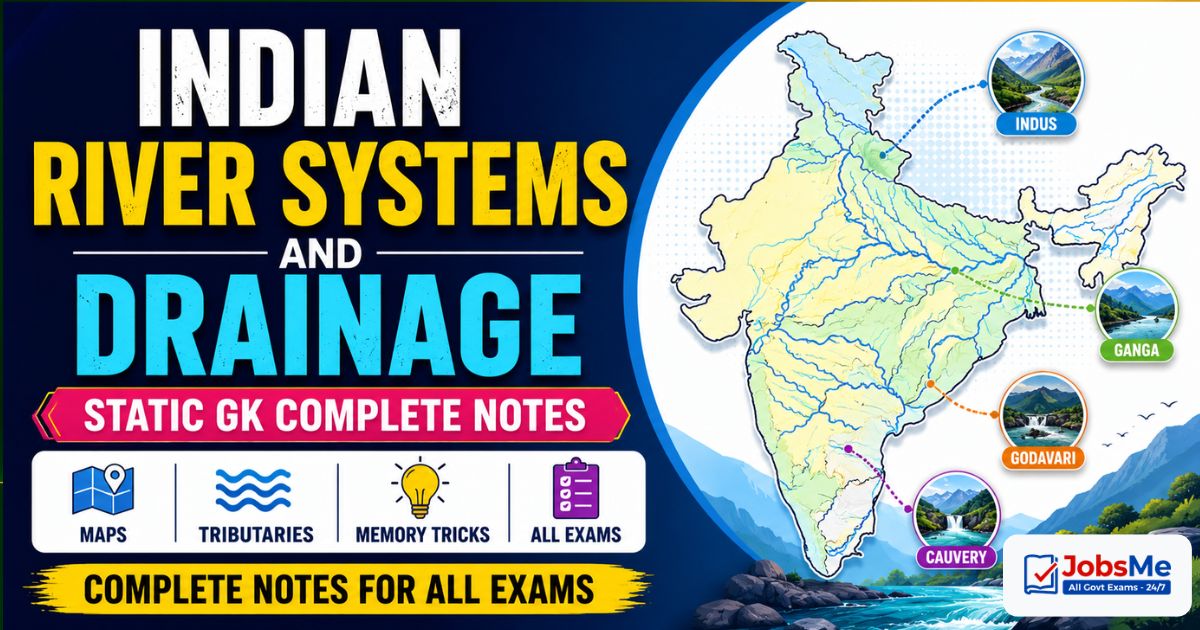
National Park vs Wildlife Sanctuary vs Biosphere Reserve – Static GK & General Awareness for Competitive Exams with Memory Tricks
This article gives a complete, exam-ready comparison of National Parks, Wildlife Sanctuaries, and Biosphere Reserves in India — covering their legal basis under the Wildlife Protection Act 1972 and UNESCO's Man and Biosphere (MAB) Programme, IUCN categories, zoning, permitted human activities, ownership, and important examples like Jim Corbett, Hemis, Kaziranga, Gir, Nilgiri, and Gulf of Kachchh. It includes the latest numbers (107 National Parks, 573 Wildlife Sanctuaries, 18 Biosphere Reserves) along with memory tricks, one-liners, and frequently asked exam questions tailored for UPSC, SSC, IBPS, RRB, PSU, Defence, Insurance, and State PCS aspirants.
Jump to section
Introduction
India is one of the 17 mega-biodiverse countries in the world, and to protect its rich flora and fauna, the government has created three major categories of protected areas — National Parks (NP), Wildlife Sanctuaries (WLS), and Biosphere Reserves (BR). While all three aim at conservation, they differ in their legal status, level of protection, permitted human activities, size, and zoning. National Parks protect entire ecosystems with the strictest rules; Wildlife Sanctuaries protect specific species with some human activity allowed; and Biosphere Reserves conserve biodiversity while also allowing sustainable human use in their outer zones.
Questions on the differences between these three protected area categories are asked almost every year in UPSC Prelims, SSC CGL, IBPS PO, RRB NTPC, SBI Clerk, State PCS, and various Insurance and Defence exams. Common questions include the legal Act under which they are notified, the IUCN category each falls under, the number of each in India, the first and largest of each type, and which protected area is associated with which flagship species. This article brings together every important fact in a structured, exam-ready format. To revise more environment and ecology topics, you can refer to the Static GK section on Jobsme.in.
This topic is also closely linked to current affairs themes such as new Tiger Reserve declarations, the addition of Indian sites to the UNESCO World Network of Biosphere Reserves, ongoing wildlife census results (tiger, elephant, rhino, snow leopard), and the periodic notification of new National Parks like Raimona (Assam). That makes this topic doubly important for aspirants preparing for both Prelims one-liners and Mains essay/answer-writing.
Core Concepts: Understanding the Three Protected Area Categories
India's protected area network is governed primarily by the Wildlife (Protection) Act, 1972, which provides for the declaration of National Parks, Wildlife Sanctuaries, Conservation Reserves, and Community Reserves. Biosphere Reserves are notified separately by the Government of India under the framework of UNESCO's Man and the Biosphere (MAB) Programme, launched in 1971. Understanding the precise definition of each will help answer factual as well as analytical questions in competitive exams.
Key Definitions
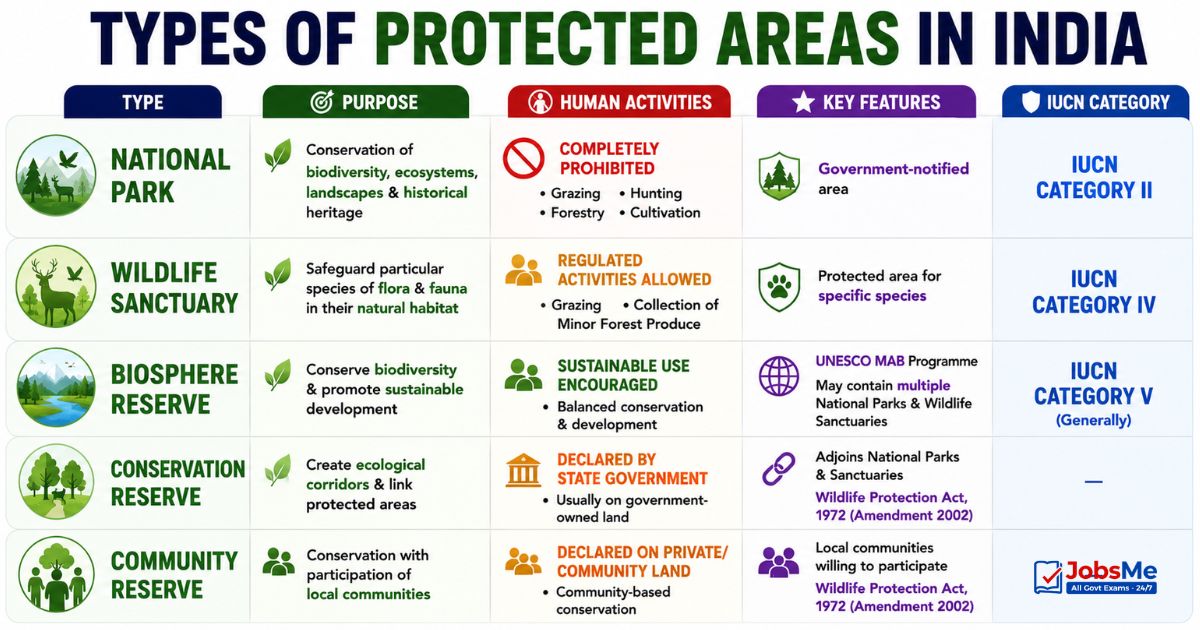
- National Park: A government-notified area dedicated to the conservation of biodiversity, ecosystems, landscapes, and historical heritage. Human activities like grazing, hunting, forestry, and cultivation are completely prohibited. Classified as IUCN Category II protected area.
- Wildlife Sanctuary: A protected area designated to safeguard particular species of flora and fauna in their natural habitat. Some regulated human activities such as grazing or collection of minor forest produce may be permitted. Classified as IUCN Category IV protected area.
- Biosphere Reserve: A large protected area nominated by the national government under UNESCO's MAB Programme to conserve biodiversity and promote sustainable development. May contain multiple National Parks and Wildlife Sanctuaries within its boundaries. Generally aligned with IUCN Category V.
- Conservation Reserve: Declared by the State Government, usually on government-owned land adjoining National Parks and Sanctuaries, to create ecological corridors. Provided under the Wildlife Protection Act, 1972 (Amendment 2002).
- Community Reserve: Declared on private or community-owned land where local communities are willing to participate in wildlife conservation. Also provided under the Wildlife Protection Act, 1972 (Amendment 2002).
Zoning of a Biosphere Reserve
A typical Biosphere Reserve is divided into three zones, which is a high-yield exam point:
- Core Zone: Strictly protected. No human activity is allowed. Usually a National Park or Wildlife Sanctuary lies inside it.
- Buffer Zone: Surrounds the core. Limited human activities like research, education, and eco-tourism are permitted.
- Transition (Manipulation) Zone: Outermost area. Human settlements, agriculture, and sustainable resource use are allowed.
Difference Between National Park, Wildlife Sanctuary, and Biosphere Reserve
The following table gives a complete side-by-side comparison of the three protected area categories — the single most exam-relevant table on this topic.
| Feature | National Park | Wildlife Sanctuary | Biosphere Reserve |
|---|---|---|---|
| Main Purpose | Protect entire ecosystems, landscapes, and historical/cultural heritage. | Protect specific species of animals and birds in their natural habitat. | Conserve biodiversity along with sustainable human development and research. |
| Legal Basis | Wildlife (Protection) Act, 1972. | Wildlife (Protection) Act, 1972. | Notified by Government of India under UNESCO's Man and Biosphere (MAB) Programme, 1971. |
| IUCN Category | Category II. | Category IV. | Category V (varies by zone). |
| Ownership | Only Government-owned. | Government or private agency. | Only Government (nominated under UNESCO MAB). |
| Size and Coverage | Medium to large; covers diverse terrain. | Varies; often smaller and species-focused. | Very large; can include multiple National Parks and Sanctuaries. |
| Human Activities | Strictly prohibited. No grazing, cultivation, or forestry. Only regulated eco-tourism and research allowed. | Limited and regulated. Grazing, collection of minor forest produce, and traditional rights may be permitted. | Allowed in Buffer and Transition zones; prohibited in the Core zone. |
| Zoning | No formal zoning, but may have core and tourism areas. | No specific zoning. | Three zones — Core, Buffer, and Transition (Manipulation). |
| Boundary Changes | Boundaries can be altered only after consultation and approval of the National Board for Wildlife (NBWL). | Boundaries cannot be altered without NBWL approval after notification, but originally more flexible than NPs. | Fixed three-zone boundaries; alterations require central government and UNESCO coordination. |
| Entry/Permission | Permission required for entry and activities. | Generally open; usually no special permission required. | Required for the Core zone; relaxed in Buffer and Transition zones. |
| Tourism | Regulated eco-tourism under strict rules. | Limited tourism allowed. | Sustainable tourism promoted in outer zones. |
| International Recognition | National-level recognition; some are also UNESCO World Heritage Sites. | National-level recognition under WPA 1972. | Internationally recognised under UNESCO's MAB Programme through the World Network of Biosphere Reserves (WNBR). |
| Numbers in India (2025-26) | 107 National Parks covering about 44,402 sq km (~1.35% of India's area). | 573 Wildlife Sanctuaries covering about 1,22,564 sq km (~3.73% of India's area). | 18 Biosphere Reserves; 12 recognised under UNESCO's MAB Programme. |
| First in India | Hailey National Park (now Jim Corbett NP), Uttarakhand, 1936. | Several sanctuaries existed pre-Independence; large network expanded after WPA 1972. | Nilgiri Biosphere Reserve (1986), Tamil Nadu-Kerala-Karnataka. |
| Largest in India | Hemis National Park (Ladakh) - about 4,400 sq km; home to the snow leopard. | Nagarjunsagar-Srisailam Tiger Reserve / Wildlife Sanctuary (Andhra Pradesh) is among the largest. | Gulf of Kachchh Biosphere Reserve (Gujarat). |
| Smallest in India | South Button Island National Park (Andaman & Nicobar Islands) - about 5 sq km. | Bor Wildlife Sanctuary (Maharashtra) is among the smallest. | Dibru-Saikhowa Biosphere Reserve (Assam). |
| Famous Examples | Jim Corbett, Kaziranga, Gir, Sundarbans, Ranthambore, Kanha, Bandhavgarh, Hemis, Nanda Devi, Valley of Flowers, Periyar. | Bharatpur (Keoladeo before NP status), Chilika, Pakke, Mudumalai, Chinnar, Indian Bustard Sanctuary, Palamau. | Nilgiri, Nanda Devi, Sundarbans, Gulf of Mannar, Manas, Great Nicobar, Pachmarhi, Khangchendzonga, Panna. |
Important National Parks in India and Their Flagship Species
The following table lists frequently asked National Parks with their state and key wildlife feature.
| National Park | State / UT | Key Features / Famous For |
|---|---|---|
| Jim Corbett National Park | Uttarakhand | India's first National Park, established in 1936 as Hailey National Park; renamed in 1957 after hunter-turned-conservationist Jim Corbett; site of the launch of Project Tiger in 1973. |
| Kaziranga National Park | Assam | UNESCO World Heritage Site; home to two-thirds of the world's One-Horned Rhinoceros; also a Tiger Reserve. |
| Gir National Park | Gujarat | Only natural habitat of the Asiatic Lion in the world. |
| Sundarbans National Park | West Bengal | Largest mangrove forest in the world; UNESCO World Heritage Site; home to the Royal Bengal Tiger; lies in the Ganga-Brahmaputra Delta. |
| Ranthambore National Park | Rajasthan | Famous for tiger sightings; located at the junction of Aravallis and Vindhyas; named after Ranthambore Fort. |
| Kanha National Park | Madhya Pradesh | Inspiration for Rudyard Kipling's "The Jungle Book"; famous for the Barasingha (Hard-ground Swamp Deer). |
| Bandhavgarh National Park | Madhya Pradesh | Highest tiger density in India; known for white tigers historically. |
| Hemis National Park | Ladakh | Largest National Park in India; only one north of the Himalayas; famous for the Snow Leopard. |
| Nanda Devi National Park | Uttarakhand | UNESCO World Heritage Site (along with Valley of Flowers); high-altitude Himalayan ecosystem. |
| Valley of Flowers National Park | Uttarakhand | UNESCO World Heritage Site; known for endemic alpine flowers and rare species like the Asiatic Black Bear and Blue Sheep. |
| Periyar National Park | Kerala | Both a National Park and Tiger Reserve; famous for elephants and boat safaris on Periyar Lake. |
| Manas National Park | Assam | UNESCO World Heritage Site; biosphere reserve; home to Wild Water Buffalo, Pygmy Hog, Golden Langur, and Hispid Hare. |
| Keoladeo (Bharatpur) National Park | Rajasthan | UNESCO World Heritage Site; man-made wetland; paradise for migratory birds including Siberian Cranes. |
| Dachigam National Park | Jammu & Kashmir | Only home of the Hangul (Kashmir Stag), India's state animal of J&K. |
| Namdapha National Park | Arunachal Pradesh | Only park in the world to host four big cats — Tiger, Leopard, Snow Leopard, and Clouded Leopard. |
| Desert National Park | Rajasthan | Located in the Thar Desert; famous for the critically endangered Great Indian Bustard. |
| Khangchendzonga National Park | Sikkim | India's first "Mixed" UNESCO World Heritage Site; includes Mt. Khangchendzonga, the world's third-highest peak. |
| Silent Valley National Park | Kerala | Part of Nilgiri Biosphere Reserve; saved from a hydroelectric project after a strong environmental movement in the 1980s. |
| Simlipal National Park | Odisha | Tiger Reserve and Biosphere Reserve; second National Park in Odisha (after Bhitarkanika); famous for mugger crocodiles. |
| Raimona National Park | Assam | Among India's newest national parks; located in the Bodoland Territorial Region. |
| Papikonda National Park | Andhra Pradesh | Spread across the Eastern Ghats; rich in tropical forests and tribal heritage. |
| Dibru-Saikhowa National Park | Assam | Also a Biosphere Reserve; famous for feral horses and rare birds. |
| Pin Valley National Park | Himachal Pradesh | Part of the Cold Desert Biosphere Reserve; cold desert habitat; home to the Snow Leopard and Himalayan Ibex. |
| South Button Island National Park | Andaman & Nicobar Islands | Smallest National Park in India (~5 sq km); rich marine biodiversity. |
Important Wildlife Sanctuaries in India
The following table covers Wildlife Sanctuaries that appear frequently in competitive exams.
| Wildlife Sanctuary | State / UT | Key Features |
|---|---|---|
| Bharatpur Bird Sanctuary (Keoladeo) | Rajasthan | Originally a Wildlife Sanctuary; later upgraded to National Park; major site for migratory birds. |
| Periyar Wildlife Sanctuary | Kerala | Famous for elephants and boat safaris on the Periyar reservoir; also a Tiger Reserve. |
| Mudumalai Wildlife Sanctuary | Tamil Nadu | Part of the Nilgiri Biosphere Reserve; rich in elephants, tigers, and gaur. |
| Sariska Wildlife Sanctuary | Rajasthan | Tiger Reserve; first reserve in the world to successfully relocate tigers. |
| Chinnar Wildlife Sanctuary | Kerala | Home to the endangered Grizzled Giant Squirrel; rain-shadow ecosystem. |
| Pakke Wildlife Sanctuary | Arunachal Pradesh | Famous for the conservation of Hornbills. |
| Chilika Wildlife Sanctuary | Odisha | Includes the largest brackish-water coastal lagoon in India; Ramsar site; famous for Irrawaddy dolphins. |
| Indian Bustard / Great Indian Bustard Sanctuary | Maharashtra | Dedicated to the critically endangered Great Indian Bustard. |
| Nagarjunsagar-Srisailam Wildlife Sanctuary | Andhra Pradesh / Telangana | One of the largest Tiger Reserves in India; spans the Krishna river basin. |
| Palamau Wildlife Sanctuary | Jharkhand | Part of Palamau Tiger Reserve; among the first nine Tiger Reserves notified under Project Tiger (1973). |
| National Chambal (Gharial) Sanctuary | MP / Rajasthan / UP | Tri-state sanctuary for the Gharial, Gangetic Dolphin, and Mugger Crocodile. |
| Dandeli Wildlife Sanctuary | Karnataka | Part of the Anshi-Dandeli Tiger Reserve; rich in Western Ghats biodiversity. |
List of 18 Biosphere Reserves in India
The following table gives the complete list of all 18 notified Biosphere Reserves in India, along with their year, location, and UNESCO recognition status. This is among the most frequently asked tables in UPSC, SSC, and Banking exams.
| Biosphere Reserve | Year | State / Location | Key Features & UNESCO Status |
|---|---|---|---|
| Nilgiri Biosphere Reserve | 1986 | Tamil Nadu, Kerala, Karnataka | First Biosphere Reserve of India; UNESCO-recognised (2000); covers Mudumalai, Bandipur, Nagarhole, Mukurthi, and Silent Valley National Parks. |
| Nanda Devi Biosphere Reserve | 1988 | Uttarakhand | UNESCO-recognised (2004); includes Nanda Devi NP and Valley of Flowers NP. |
| Nokrek Biosphere Reserve | 1988 | Meghalaya | UNESCO-recognised (2009); home to Red Panda and Hoolock Gibbon. |
| Manas Biosphere Reserve | 1989 | Assam | Includes Manas NP; famous for Wild Water Buffalo, Pygmy Hog, and Golden Langur. |
| Sundarbans Biosphere Reserve | 1989 | West Bengal | UNESCO-recognised (2001); covers the world's largest mangrove ecosystem; Royal Bengal Tiger habitat. |
| Gulf of Mannar Biosphere Reserve | 1989 | Tamil Nadu | UNESCO-recognised (2001); India's first marine biosphere reserve; home to Dugong. |
| Great Nicobar Biosphere Reserve | 1989 | Andaman & Nicobar Islands | UNESCO-recognised (2013); includes Campbell Bay NP and Galathea NP. |
| Similipal Biosphere Reserve | 1994 | Odisha | UNESCO-recognised (2009); Tiger Reserve; rich in Sal forests. |
| Dibru-Saikhowa Biosphere Reserve | 1997 | Assam | Smallest Biosphere Reserve in India; famous for feral horses. |
| Dihang-Dibang Biosphere Reserve | 1998 | Arunachal Pradesh | One of the largest BRs; rich in alpine and temperate forests. |
| Pachmarhi Biosphere Reserve | 1999 | Madhya Pradesh | UNESCO-recognised (2009); part of Satpura range; includes Satpura NP, Bori and Pachmarhi WLS. |
| Khangchendzonga Biosphere Reserve | 2000 | Sikkim | UNESCO-recognised (2018); includes Mt. Khangchendzonga and Khangchendzonga NP. |
| Agasthyamala Biosphere Reserve | 2001 | Kerala, Tamil Nadu | UNESCO-recognised (2016); part of the Southern Western Ghats; rich endemic flora. |
| Achanakmar-Amarkantak Biosphere Reserve | 2005 | Madhya Pradesh, Chhattisgarh | UNESCO-recognised (2012); source region of the Narmada and Sone rivers. |
| Kachchh (Gulf of Kachchh) Biosphere Reserve | 2008 | Gujarat | Largest Biosphere Reserve in India; famous for the Indian Wild Ass (Khur). |
| Cold Desert Biosphere Reserve | 2009 | Himachal Pradesh | Cold desert ecosystem; includes Pin Valley NP, Chandratal, Sarchu, and Kibber WLS. |
| Seshachalam Biosphere Reserve | 2010 | Andhra Pradesh | Located in Eastern Ghats; famous for Red Sanders trees and the Tirupati pilgrimage region. |
| Panna Biosphere Reserve | 2011 | Madhya Pradesh | UNESCO-recognised (2020); Tiger Reserve; success story of tiger reintroduction. |
Community Reserve vs Conservation Reserve
The Wildlife Protection Act, 1972 (Amendment 2002) added two new categories of protected areas — Conservation Reserves and Community Reserves. The following table highlights how they differ.
| Feature | Conservation Reserve | Community Reserve |
|---|---|---|
| Definition | Protected area declared on government-owned land usually adjacent to existing National Parks or Sanctuaries to create ecological corridors. | Protected area declared on private or community-owned land with the active participation of local communities. |
| Ownership | Government land. | Private or community-owned land. |
| Management | Conservation Reserve Management Committee appointed by the State Government. | Community Reserve Management Committee made up of local community members. |
| Legal Status | Wildlife Protection Act, 1972 (Amendment 2002). | Wildlife Protection Act, 1972 (Amendment 2002). |
| Examples | Conservation Reserves in Jammu & Kashmir and Karnataka. | Community Reserves in Meghalaya, Nagaland, and Himachal Pradesh. |
Memory Tricks and Mnemonics
Use the following memory aids to lock in the key differences and important examples before your exam.
1. The "N-W-B" Strictness Ladder
Remember the order of strictness from highest to lowest using the phrase "NP is the Strictest, BR is the Biggest, WLS is the Friendliest."
- NP = No human activity (strictest)
- BR = Biggest area with three zones (balanced)
- WLS = Welcomes some human activity (friendliest)
2. IUCN Category Trick — "2-4-5"
The IUCN categories follow the easy numeric pattern 2 - 4 - 5:
- 2 → National Park (Category II)
- 4 → Wildlife Sanctuary (Category IV)
- 5 → Biosphere Reserve (Category V)
Remember it as: "NP gets the lowest number because it has the highest protection."
3. Three Zones of Biosphere Reserve — "CBT" Trick
Remember the three zones using the acronym CBT — like the financial CBT (Common Bank Test):
- Core Zone — no human activity
- Buffer Zone — limited human activity
- Transition Zone — full sustainable use
"Core, Buffer, Transition — restrictions reduce as you move outward."
4. Famous "First" Trick — "1936 H, 1986 N"
- 1936 H = India's first National Park = Hailey National Park (now Jim Corbett, Uttarakhand).
- 1986 N = India's first Biosphere Reserve = Nilgiri Biosphere Reserve.
5. "Big-Small" Pairing Trick
Remember the largest and smallest of each protected area type using this contrast pair:
- Hemis (Ladakh) is the largest National Park; South Button Island is the smallest.
- Gulf of Kachchh (Gujarat) is the largest Biosphere Reserve; Dibru-Saikhowa (Assam) is the smallest.
Mnemonic: "Hemis to South Button, Kachchh to Dibru — the journey from huge to humble."
6. Flagship Species Story Trick — "RAILS"
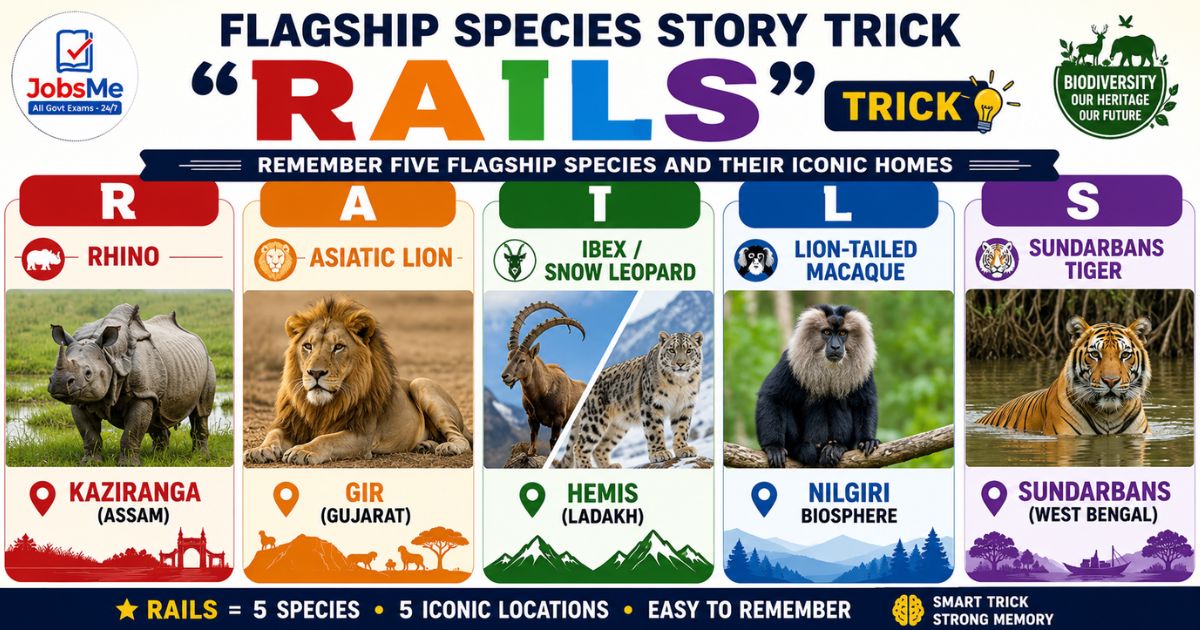
Remember five flagship species and their iconic homes with the acronym RAILS:
- Rhino → Kaziranga (Assam)
- Asiatic Lion → Gir (Gujarat)
- Ibex / Snow Leopard → Hemis (Ladakh)
- Lion-tailed Macaque / Silent Valley → Nilgiri Biosphere
- Sundarbans Tiger → Sundarbans (West Bengal)
7. UNESCO MAB Mnemonic — "Nilgiri Started, Panna Latest"
Out of 18 Biosphere Reserves, 12 are UNESCO-recognised. Remember the first and most recent as anchors:
- First UNESCO recognition (India): Nilgiri Biosphere Reserve (added to UNESCO list in 2000).
- Latest UNESCO recognition: Panna Biosphere Reserve (2020).
- Before Panna: Khangchendzonga Biosphere Reserve (2018).
"From Nilgiri to Panna — India's MAB journey of 20 years."
Additional Notes
Frequently Confused Facts
- Wildlife Sanctuary vs National Park: Both are notified under the Wildlife Protection Act, 1972, but a Sanctuary protects specific species with some human activity allowed, while a National Park protects the entire ecosystem with no human activity permitted.
- Biosphere Reserve vs National Park: A Biosphere Reserve is the larger umbrella that may contain one or more National Parks and Sanctuaries within its Core and Buffer zones. The BR is for sustainable development; the NP is for strict preservation.
- Wildlife Protection Act vs UNESCO MAB: NPs and WLSs are notified under domestic law (Wildlife Protection Act, 1972), whereas Biosphere Reserves are notified by the Government of India and may then be nominated for international recognition under UNESCO's Man and Biosphere (MAB) Programme.
- Keoladeo: It is a National Park, NOT a Wildlife Sanctuary — it was upgraded from Bharatpur Bird Sanctuary to Keoladeo National Park in 1981 and is a UNESCO World Heritage Site.
- Project Tiger vs Tiger Reserve: Project Tiger was launched in 1973 from Jim Corbett; a Tiger Reserve is a Wildlife Sanctuary or National Park additionally declared under Project Tiger; India has around 55 Tiger Reserves.
- Conservation Reserve vs Community Reserve: Conservation Reserves are on government-owned land; Community Reserves are on private/community-owned land — both were added by the 2002 amendment to the WPA, 1972.
- Hailey vs Jim Corbett: Both refer to the same park. It was named Hailey National Park in 1936 and renamed Jim Corbett National Park in 1957.
Repeating PYQ Patterns
- UPSC Prelims: Frequently asks which biosphere reserve includes which National Parks (e.g., Nilgiri BR includes Mudumalai, Bandipur, Mukurthi, Nagarhole, Silent Valley), and which sites are UNESCO-recognised.
- SSC CGL / CHSL: Direct questions on the number of National Parks (107), Wildlife Sanctuaries (573), and Biosphere Reserves (18), and the first/largest/smallest of each.
- IBPS PO / SBI Clerk: Match-the-following questions pairing flagship species with their protected areas (e.g., Asiatic Lion → Gir, Hangul → Dachigam, One-Horned Rhinoceros → Kaziranga).
- RRB NTPC: Questions on India's first National Park, the year Project Tiger was launched, and the Wildlife Protection Act year (1972).
- State PCS: State-specific questions on the National Parks and Sanctuaries within the state.
For more environment-related Static GK and topic-wise revision, visit the Static GK section and test yourself with the Static GK Quiz on Jobsme.in.
Quick Insight
The topic of protected areas has direct current-affairs relevance. New National Parks like Raimona (Assam) have been notified in recent years; the Panna Biosphere Reserve joined the UNESCO World Network of Biosphere Reserves in 2020; and discussions on Tiger Reserves, Rhino conservation in Kaziranga, and the Great Indian Bustard in the Desert NP often appear in newspapers. Aspirants should also follow updates on the National Wildlife Database Centre (NWDC) of the Wildlife Institute of India (WII) and the periodic All-India Tiger Estimation reports. Knowing the legal framework — Wildlife (Protection) Act, 1972 and its 2002 amendment introducing Conservation and Community Reserves — adds depth to answers in UPSC Mains and Essay papers.
One-Liners for Quick Revision
- Wildlife (Protection) Act → Enacted in 1972 → Governs National Parks, Wildlife Sanctuaries, Conservation Reserves, and Community Reserves.
- National Board for Wildlife (NBWL) → Apex advisory body for wildlife conservation in India → Chaired by the Prime Minister.
- National Park (NP) → IUCN Category II → No human activity allowed → 107 in India (2025-26).
- Wildlife Sanctuary (WLS) → IUCN Category IV → Limited human activity allowed → 573 in India (2025-26).
- Biosphere Reserve (BR) → IUCN Category V → Under UNESCO MAB Programme → 18 in India, 12 UNESCO-recognised.
- Three Zones of BR → Core (no activity) → Buffer (limited) → Transition / Manipulation (sustainable use).
- UNESCO MAB Programme → Launched in 1971 → Promotes conservation with sustainable development.
- First National Park of India → Hailey National Park (1936) → Now Jim Corbett National Park, Uttarakhand.
- First Biosphere Reserve of India → Nilgiri (1986) → Tamil Nadu, Kerala, Karnataka.
- Largest National Park → Hemis NP (Ladakh) → ~4,400 sq km → Snow Leopard habitat.
- Smallest National Park → South Button Island NP (Andaman & Nicobar) → ~5 sq km.
- Largest Biosphere Reserve → Gulf of Kachchh (Gujarat).
- Smallest Biosphere Reserve → Dibru-Saikhowa (Assam).
- Kaziranga National Park → Assam → One-Horned Rhinoceros → UNESCO World Heritage Site.
- Gir National Park → Gujarat → Only home of the Asiatic Lion.
- Sundarbans National Park → West Bengal → Royal Bengal Tiger → Largest mangrove forest → UNESCO WHS.
- Ranthambore NP → Rajasthan → Famous for tigers.
- Kanha NP → Madhya Pradesh → Inspiration for "The Jungle Book"; Barasingha habitat.
- Bandhavgarh NP → Madhya Pradesh → Highest tiger density in India.
- Nanda Devi NP & Valley of Flowers NP → Uttarakhand → UNESCO World Heritage Sites.
- Periyar NP → Kerala → Elephants and boat safaris on Periyar Lake.
- Manas NP → Assam → UNESCO WHS, Tiger Reserve, Biosphere Reserve.
- Keoladeo NP → Rajasthan → Bird sanctuary (Bharatpur) → UNESCO WHS.
- Dachigam NP → Jammu & Kashmir → Only home of the Hangul (Kashmir Stag).
- Namdapha NP → Arunachal Pradesh → Hosts all four big cats — Tiger, Leopard, Snow Leopard, Clouded Leopard.
- Desert NP → Rajasthan → Great Indian Bustard.
- Khangchendzonga NP → Sikkim → World's third-highest peak; UNESCO Mixed WHS.
- Silent Valley NP → Kerala → Part of Nilgiri BR; saved by the 1980s eco-movement.
- Simlipal NP → Odisha → Tiger Reserve and Biosphere Reserve.
- Raimona NP → Assam → Among India's newest National Parks.
- Papikonda NP → Andhra Pradesh → Eastern Ghats.
- Dibru-Saikhowa NP → Assam → Famous for feral horses; also a Biosphere Reserve.
- Pin Valley NP → Himachal Pradesh → Cold desert; Snow Leopard habitat.
- Bharatpur Bird Sanctuary → Rajasthan → Migratory birds → Later renamed Keoladeo National Park.
- Periyar WLS → Kerala → Elephants; Tiger Reserve.
- Mudumalai WLS → Tamil Nadu → Part of Nilgiri BR.
- Sariska WLS → Rajasthan → Tiger relocation success story.
- Chinnar WLS → Kerala → Grizzled Giant Squirrel.
- Pakke WLS → Arunachal Pradesh → Famous for Hornbills.
- Chilika WLS → Odisha → Largest brackish-water coastal lagoon in India; Irrawaddy dolphins.
- Indian Bustard WLS → Maharashtra → Great Indian Bustard.
- Nagarjunsagar-Srisailam WLS → Andhra Pradesh → One of India's largest Tiger Reserves.
- Palamau WLS → Jharkhand → Among the first nine Tiger Reserves (1973).
- National Chambal Sanctuary → MP/Rajasthan/UP → Gharial and Gangetic Dolphin.
- Nilgiri BR (1986) → First BR of India → UNESCO-listed (2000).
- Nanda Devi BR (1988) → Uttarakhand → UNESCO-listed (2004).
- Nokrek BR (1988) → Meghalaya → UNESCO-listed (2009) → Red Panda.
- Manas BR (1989) → Assam → Wild Water Buffalo, Pygmy Hog.
- Sundarbans BR (1989) → West Bengal → UNESCO-listed (2001).
- Gulf of Mannar BR (1989) → Tamil Nadu → India's first marine BR → Dugong → UNESCO-listed (2001).
- Great Nicobar BR (1989) → A&N Islands → UNESCO-listed (2013).
- Similipal BR (1994) → Odisha → UNESCO-listed (2009).
- Dibru-Saikhowa BR (1997) → Assam → Smallest BR of India.
- Dihang-Dibang BR (1998) → Arunachal Pradesh → One of the largest.
- Pachmarhi BR (1999) → Madhya Pradesh → UNESCO-listed (2009).
- Khangchendzonga BR (2000) → Sikkim → UNESCO-listed (2018).
- Agasthyamala BR (2001) → Kerala/Tamil Nadu → UNESCO-listed (2016).
- Achanakmar-Amarkantak BR (2005) → MP/Chhattisgarh → Source of Narmada and Sone → UNESCO-listed (2012).
- Kachchh BR (2008) → Gujarat → Largest BR of India → Indian Wild Ass.
- Cold Desert BR (2009) → Himachal Pradesh → Snow Leopard, Himalayan Ibex.
- Seshachalam BR (2010) → Andhra Pradesh → Red Sanders → Tirupati region.
- Panna BR (2011) → Madhya Pradesh → UNESCO-listed (2020) → Latest UNESCO recognition.
- Conservation Reserve → Government land between protected areas → 115+ in India.
- Community Reserve → Community/private land → 220+ in India.
- Tiger Reserves in India → ~55 Tiger Reserves under Project Tiger (1973) → Began with 9 reserves.
- Project Tiger → Launched on 1 April 1973 → First at Jim Corbett National Park.
- Project Elephant → Launched in 1992 → Conservation of elephants and their habitats.
- Largest National Park in the World → Northeast Greenland National Park (~972,000 sq km).
- Bird Man of India → Salim Ali → Saved the Bharatpur and Silent Valley sanctuaries.
To stay updated on environment-related current affairs and biodiversity news, explore the Daily Current Affairs section and practice with the Daily Current Affairs Quiz on Jobsme.in. For the newest exam updates and recruitment notifications, you can also visit the Latest Government Job Notifications page.
Free quiz • No signup required
Put this topic into practice with Indian Cultural Institutions – Static GK MCQ Quiz. It is the quickest way to reinforce what you just learned.
Frequently Asked Questions
What is the main difference between a National Park, a Wildlife Sanctuary, and a Biosphere Reserve?
Under which Act are National Parks and Wildlife Sanctuaries declared in India?
How many National Parks, Wildlife Sanctuaries, and Biosphere Reserves are there in India?
Which is India's first National Park and when was it established?
Which is the first Biosphere Reserve of India?
What are the IUCN categories of National Parks, Wildlife Sanctuaries, and Biosphere Reserves?
What are the three zones of a Biosphere Reserve?
Which is the largest and smallest National Park in India?
Which is the largest and smallest Biosphere Reserve in India?
Why was the Gir National Park established and what is unique about it?

About the author