List of Common Diseases and Their Causative Agents – Static GK & General Awareness for Competitive Exams with Memory Tricks
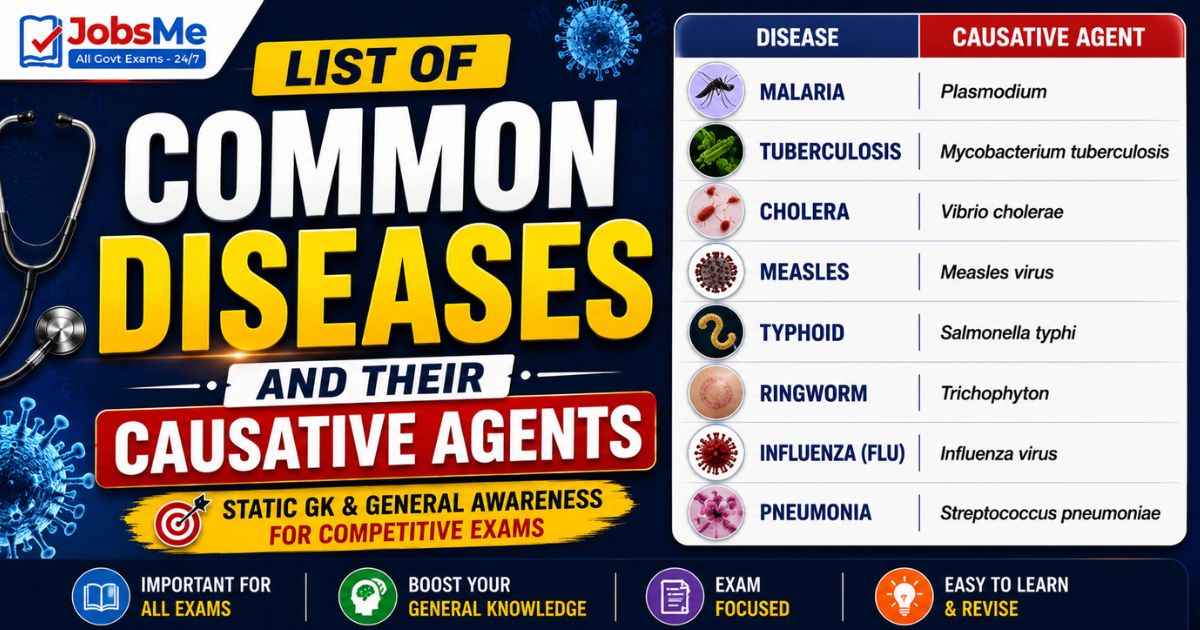
This article presents a complete list of common human diseases along with their causative agents, classifying them into bacterial, viral, fungal, protozoan, helminthic (worm), deficiency, and other categories. It covers important facts like the affected organ, mode of transmission, and causative organism for diseases such as Malaria, Tuberculosis, Typhoid, Cholera, AIDS, Ringworm, Scurvy, and Goitre, with memory tricks and one-liners for quick revision. All facts are arranged in exam-ready format to help UPSC, SSC, IBPS, RRB, PSU, Insurance, and State PCS aspirants score better in General Awareness and General Science sections.
Jump to section
- Introduction
- Core Concepts: Types of Disease-Causing Agents
- Diseases Caused by Bacteria
- Diseases Caused by Viruses
- Diseases Caused by Protozoa
- Diseases Caused by Fungi
- Diseases Caused by Worms (Helminths)
- Deficiency Diseases (Vitamins and Minerals)
- Memory Tricks and Mnemonics
- Additional Notes
- One-Liners for Quick Revision
Introduction
Questions on common diseases and the microorganisms that cause them form one of the most reliable scoring areas in the General Science and General Awareness sections of competitive exams. Diseases are broadly caused by pathogens — disease-causing microorganisms such as bacteria, viruses, fungi, protozoa, and helminths (worms) — while another important group of deficiency diseases is caused by the lack of essential vitamins and minerals in the diet. Knowing which organism causes which disease, the affected organ, and the mode of transmission helps aspirants answer matching and direct questions with confidence.
Questions on common diseases appear regularly in UPSC Prelims, SSC CGL, IBPS PO, RRB NTPC, SBI Clerk, State PCS, and various Insurance and Defence exams. Examiners typically ask which pathogen causes a given disease, which organ a disease affects, which disease is caused by a deficiency of a particular vitamin, or which diseases are transmitted by mosquitoes. This article brings together every important disease in a structured, exam-ready format. To explore other related Static GK topics, you can refer to the Static GK section on Jobsme.in.
The topic of diseases is also closely linked to current affairs themes such as disease outbreaks, vaccination drives, World Health Days, eradication programmes (like polio and smallpox), and global health alerts — making it doubly important for aspirants preparing for UPSC Mains and descriptive papers as well as objective tests.
Core Concepts: Types of Disease-Causing Agents
Diseases are classified based on the agent that causes them. Communicable (infectious) diseases spread from one person to another through pathogens, while non-communicable diseases like deficiency disorders do not spread. Understanding the category of each disease makes it far easier to remember and recall in the exam hall.
Categories of Diseases
- Bacterial Diseases: Caused by single-celled bacteria. Example: Tuberculosis, Typhoid, Cholera, Tetanus, Leprosy. Most are treated with antibiotics.
- Viral Diseases: Caused by viruses, which can only multiply inside living host cells. Example: Common cold, Influenza, AIDS, Polio, Measles, COVID-19. Treated with vaccines and antivirals, not antibiotics.
- Fungal Diseases (Mycoses): Caused by fungi that grow in damp, moist areas. Example: Ringworm, Athlete's foot, Candidiasis.
- Protozoan Diseases: Caused by single-celled protozoa, often spread by vectors. Example: Malaria, Amoebiasis (Amoebic dysentery), Kala-azar, Sleeping sickness.
- Helminthic (Worm) Diseases: Caused by parasitic worms. Example: Filariasis (Elephantiasis), Ascariasis (roundworm), Tapeworm infection, Pinworm.
- Deficiency Diseases: Caused by the lack of vitamins, minerals, or proteins. Example: Scurvy, Rickets, Beriberi, Goitre, Anaemia.
Diseases Caused by Bacteria
The following table lists the most exam-relevant bacterial diseases, the organ they affect, and key features. Bacterial diseases are among the most frequently asked in SSC, RRB, and Banking Awareness papers.
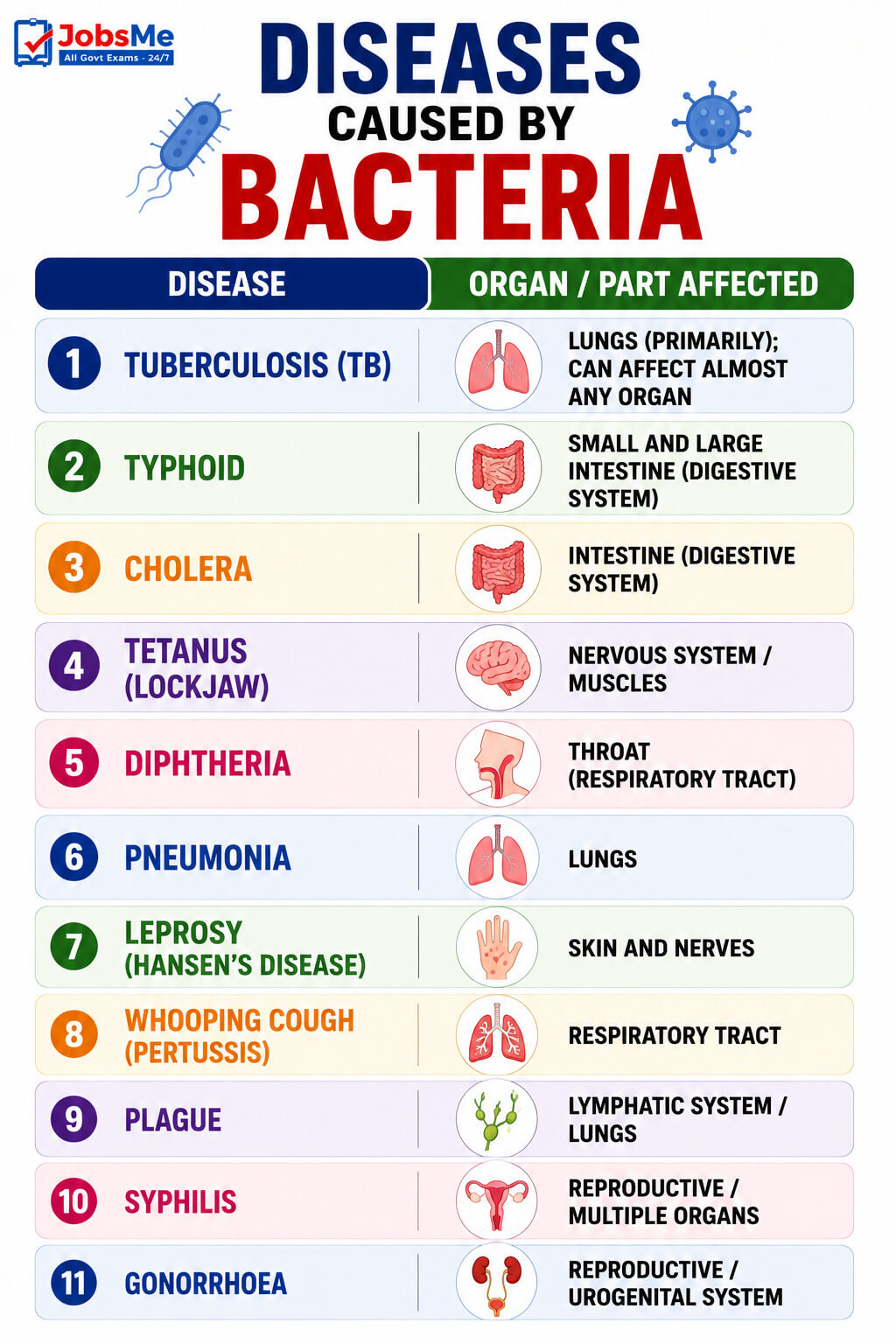
| Disease | Organ / Part Affected | Key Features / Transmission |
|---|---|---|
| Tuberculosis (TB) | Lungs (primarily); can affect almost any organ | Caused by the bacterium Mycobacterium tuberculosis; spreads through droplet infection (air); World TB Day is observed on 24 March. |
| Typhoid | Small and large intestine (digestive system) | Caused by Salmonella typhi; spread through contaminated food and water; causes prolonged high fever. |
| Cholera | Intestine (digestive system) | Caused by Vibrio cholerae; spread through contaminated water and food; causes severe diarrhoea and dehydration. |
| Tetanus (Lockjaw) | Nervous system / muscles | Caused by Clostridium tetani; enters through wounds and rusty objects; causes muscle stiffness and lockjaw. |
| Diphtheria | Throat (respiratory tract) | Caused by Corynebacterium diphtheriae; spreads through droplet infection; prevented by the DPT vaccine. |
| Pneumonia | Lungs | Caused by Streptococcus pneumoniae; causes inflammation of the lungs and breathing difficulty. |
| Leprosy (Hansen's Disease) | Skin and nerves | Caused by Mycobacterium leprae; a chronic disease affecting skin, nerves, and eyes; first bacterium discovered to cause disease in humans. |
| Whooping Cough (Pertussis) | Respiratory tract | Caused by Bordetella pertussis; spreads through droplet infection; prevented by the DPT vaccine. |
| Plague | Lymphatic system / lungs | Caused by Yersinia pestis; transmitted by the bite of infected rat fleas; bubonic plague affects lymph nodes. |
| Syphilis | Reproductive / multiple organs | Caused by Treponema pallidum; a sexually transmitted disease. |
| Gonorrhoea | Reproductive / urogenital system | Caused by Neisseria gonorrhoeae; a sexually transmitted bacterial disease. |
Diseases Caused by Viruses
Viral diseases are a high-yield area, as exams often test whether students can correctly identify a disease as viral rather than bacterial. The table below lists the key viral diseases with their affected organs.
| Disease | Organ / Part Affected | Key Features / Transmission |
|---|---|---|
| AIDS | Immune system (white blood cells) | Caused by the Human Immunodeficiency Virus (HIV); spreads through blood, sexual contact, and infected needles; World AIDS Day is 1 December. |
| Common Cold | Respiratory tract (nose, throat) | Caused by Rhinoviruses; spreads through droplet infection; most common viral infection in humans. |
| Influenza (Flu) | Respiratory tract | Caused by the Influenza virus; spreads through air; causes fever, cough, and body ache. |
| Polio (Poliomyelitis) | Nervous system / spinal cord | Caused by the Poliovirus; spreads through contaminated water; prevented by the OPV vaccine; can cause paralysis. |
| Smallpox | Skin / whole body | Caused by the Variola virus; the first disease to be globally eradicated (declared by WHO in 1980). |
| Chickenpox | Skin / whole body | Caused by the Varicella-zoster virus; spreads through air and contact; causes itchy blisters. |
| Measles | Skin / respiratory tract | Caused by the Measles (Rubeola) virus; spreads through droplet infection; prevented by the MMR vaccine. |
| Mumps | Salivary (parotid) glands | Caused by the Mumps virus; causes swelling of the salivary glands; prevented by the MMR vaccine. |
| Hepatitis | Liver | Caused by Hepatitis viruses (A, B, C, D, E); causes inflammation of the liver and jaundice; World Hepatitis Day is 28 July. |
| Rabies (Hydrophobia) | Nervous system / brain | Caused by the Rabies virus; transmitted through the bite of infected dogs and other animals; almost always fatal once symptoms appear. |
| Dengue | Blood (platelets) | Caused by the Dengue virus; transmitted by the Aedes aegypti mosquito; lowers platelet count. |
| Chikungunya | Joints / blood | Caused by the Chikungunya virus; transmitted by the Aedes mosquito; causes severe joint pain and fever. |
| COVID-19 | Respiratory tract / lungs | Caused by the SARS-CoV-2 coronavirus; spreads through respiratory droplets; declared a pandemic by WHO in March 2020. |
Diseases Caused by Protozoa
Protozoan diseases are frequently asked, especially the famous example of Malaria. Most protozoan diseases spread through vectors like mosquitoes and sandflies.
| Disease | Causative Protozoan | Key Features / Transmission |
|---|---|---|
| Malaria | Plasmodium (P. vivax, P. falciparum, etc.) | Transmitted by the bite of the female Anopheles mosquito; parasite first develops in liver cells, then infects red blood cells; World Malaria Day is 25 April. |
| Amoebiasis (Amoebic Dysentery) | Entamoeba histolytica | Affects the intestine; spreads through contaminated food and water; causes dysentery with blood and mucus. |
| Kala-azar (Visceral Leishmaniasis) | Leishmania donovani | Transmitted by the bite of the sandfly; affects internal organs like the spleen and liver. |
| Sleeping Sickness (African Trypanosomiasis) | Trypanosoma | Transmitted by the tsetse fly; affects the nervous system, causing disturbed sleep cycles. |
| Giardiasis | Giardia lamblia | Affects the small intestine; spreads through contaminated water; causes diarrhoea. |
Diseases Caused by Fungi
Diseases caused by fungi are called mycoses. They usually affect the skin and grow in warm, moist conditions.
| Disease | Part Affected | Key Features |
|---|---|---|
| Ringworm | Skin, scalp, nails | Caused by fungi such as Trichophyton; causes circular, itchy red patches on the skin. |
| Athlete's Foot | Skin between toes (feet) | Caused by the ringworm fungus Epidermophyton floccosum; common in people who keep feet damp. |
| Candidiasis | Mouth, skin, genital area | Caused by the yeast Candida albicans; a common fungal infection in moist body areas. |
| Madura Foot (Mycetoma) | Foot | Caused by the fungus Madurella mycetomi; causes swelling and deformity of the foot. |
Diseases Caused by Worms (Helminths)
Worm infections are caused by parasitic helminths that usually live in the intestine or other body tissues.
| Disease | Causative Worm | Key Features |
|---|---|---|
| Filariasis (Elephantiasis) | Wuchereria bancrofti (filarial worm) | Transmitted by the Culex mosquito; affects the lymphatic system, causing extreme swelling of limbs. |
| Ascariasis | Ascaris lumbricoides (roundworm) | Affects the small intestine; spreads through contaminated food and soil. |
| Tapeworm Infection | Taenia (tapeworm) | Intestinal parasite; spreads through undercooked, infected pork or beef. |
| Pinworm (Enterobiasis) | Enterobius vermicularis | A small, thin, white roundworm; affects the intestine, common in children. |
Deficiency Diseases (Vitamins and Minerals)
Deficiency diseases are non-communicable and are caused by the lack of essential nutrients. This is one of the most repeated topics in SSC, Banking, and Railways exams.
| Disease | Deficiency Of | Key Features |
|---|---|---|
| Night Blindness | Vitamin A (Retinol) | Difficulty seeing in dim light; severe deficiency can lead to complete blindness. |
| Beriberi | Vitamin B1 (Thiamine) | Affects the nervous and cardiovascular systems; two types — wet (heart) and dry (nerves). |
| Pellagra | Vitamin B3 (Niacin) | Causes dermatitis, diarrhoea, and dementia (the "3 Ds"). |
| Scurvy | Vitamin C (Ascorbic Acid) | Causes bleeding and swollen gums, loss of teeth, and poor wound healing. |
| Rickets | Vitamin D (in children) | Causes soft, weak, and bent bones; bowed legs in children. |
| Osteomalacia | Vitamin D (in adults) | Softening and weakening of bones in adults. |
| Anaemia | Iron (and Vitamin B12 / Folic Acid) | Reduces haemoglobin and oxygen-carrying capacity of blood; causes weakness and pale skin. |
| Goitre | Iodine | Causes swelling of the thyroid gland in the neck; iodised salt helps prevent it. |
| Kwashiorkor | Protein | A protein-deficiency disease in children, causing a swollen belly and stunted growth. |
| Marasmus | Protein and Calories (energy) | Severe wasting of muscles and body fat in young children. |
Memory Tricks and Mnemonics
Trick 1: Vector-Borne Diseases — "MD-CF"
Remember which insect spreads which disease using this grouping:
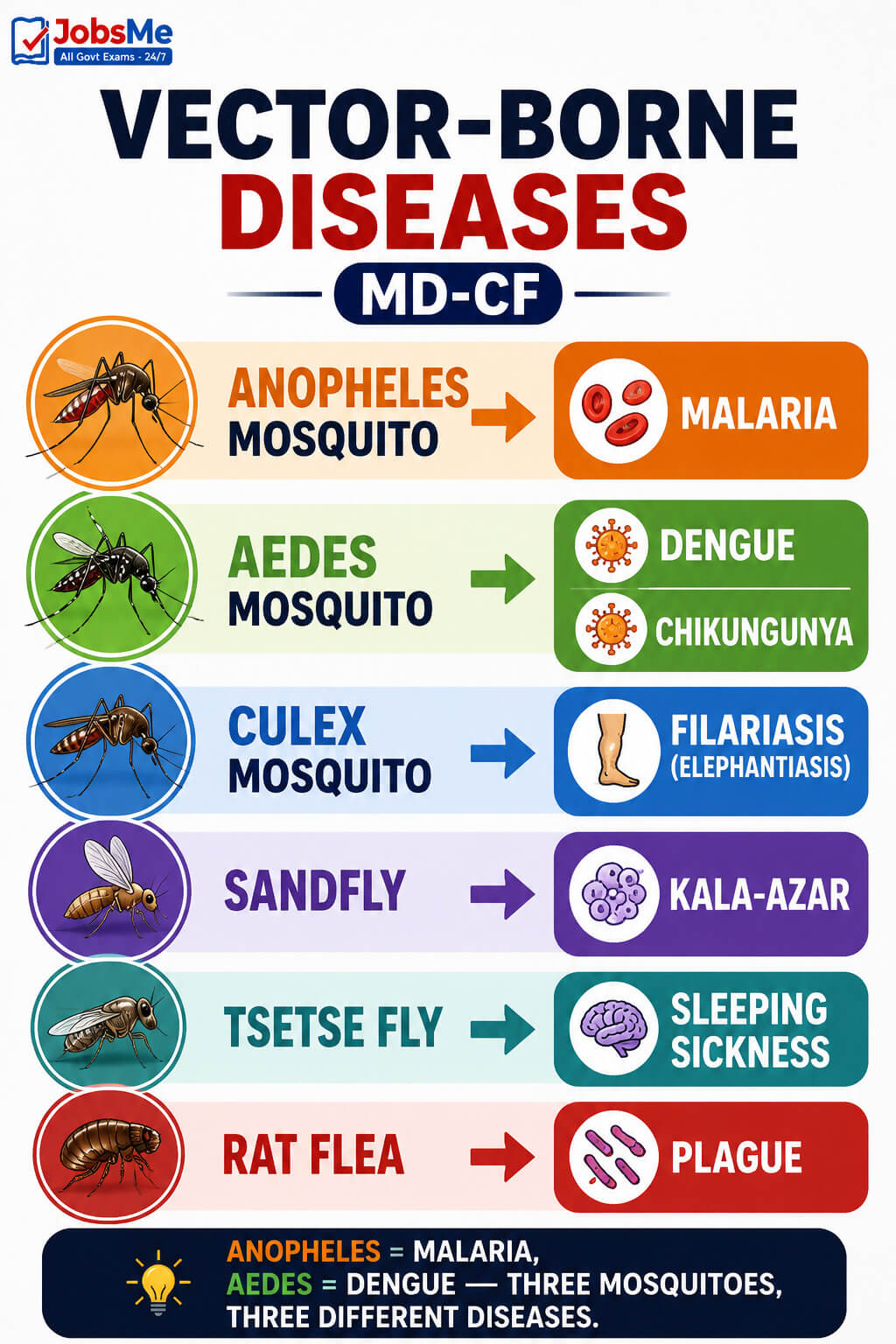
- Anopheles Mosquito → Malaria.
- Aedes Mosquito → Dengue and Chikungunya.
- Culex Mosquito → Filariasis (Elephantiasis).
- Sandfly → Kala-azar.
- Tsetse Fly → Sleeping Sickness.
- Rat Flea → Plague.
"Anopheles = Malaria, Aedes = Dengue — three mosquitoes, three different diseases."
Trick 2: Bacterial vs Viral — "Antibiotics for Bacteria only"
Remember that antibiotics work on bacteria, not viruses. If a disease is treated with a vaccine and not antibiotics, it is likely viral (Polio, Measles, AIDS).
- Bacterial: TB, Typhoid, Cholera, Tetanus, Leprosy.
- Viral: AIDS, Polio, Smallpox, Measles, Hepatitis, Rabies.
Trick 3: Vitamin Deficiency — "A-Night, B1-Beri, C-Scurvy, D-Rickets"
- A → Night blindness.
- B1 → Beriberi.
- B3 → Pellagra.
- C → Scurvy.
- D → Rickets (children) / Osteomalacia (adults).
- K → Non-clotting of blood (haemorrhage).
"A-B-C-D in order: Night, Beri, Scurvy, Rickets."
Trick 4: Mineral Deficiency — "I for I"
- Iodine → Goitre (the "I" sound links Iodine and the throat swelling).
- Iron → Anaemia.
- Calcium → Weak bones / Osteoporosis.
Trick 5: Protozoan Diseases — "MAKS"
The four most-asked protozoan diseases can be remembered as "MAKS":
- M → Malaria (Plasmodium).
- A → Amoebiasis (Entamoeba histolytica).
- K → Kala-azar (Leishmania).
- S → Sleeping Sickness (Trypanosoma).
Trick 6: Organ-Affecting Diseases — "Disease to Organ"
- Lungs → Tuberculosis, Pneumonia.
- Liver → Hepatitis (and malaria's first stage).
- Intestine → Typhoid, Cholera, Amoebiasis.
- Brain / Nervous system → Rabies, Polio, Tetanus.
- Skin → Ringworm, Chickenpox, Measles, Leprosy.
Trick 7: Fungal Diseases — "Skin and Damp"
Fungal infections (mycoses) almost always involve skin in damp areas. Remember Ringworm, Athlete's foot, and Candidiasis as the trio of skin fungal diseases.
Additional Notes
Frequently Confused Facts
- Malaria vs Dengue: Malaria is caused by the protozoan Plasmodium and spread by the Anopheles mosquito; Dengue is a viral disease spread by the Aedes mosquito.
- Ringworm: Despite the name, ringworm is a fungal disease, not a worm infection.
- Rickets vs Osteomalacia: Both are caused by Vitamin D deficiency — Rickets occurs in children, while Osteomalacia occurs in adults.
- Goitre vs Anaemia: Goitre is caused by Iodine deficiency; Anaemia is caused by Iron deficiency.
- Typhoid vs Cholera: Both affect the intestine and spread through contaminated water — Typhoid is caused by Salmonella typhi, while Cholera is caused by Vibrio cholerae.
- Kwashiorkor vs Marasmus: Kwashiorkor is due to protein deficiency (swollen belly); Marasmus is due to deficiency of both protein and calories (extreme wasting).
- AIDS vs HIV: HIV is the virus; AIDS is the advanced condition caused by HIV infection.
- Leprosy vs Tuberculosis: Both are caused by Mycobacterium bacteria — leprosy by M. leprae (affects skin and nerves), TB by M. tuberculosis (affects lungs).
Repeating PYQ Patterns
Certain disease facts are asked repeatedly in competitive exams. Malaria (Plasmodium, Anopheles mosquito), Tuberculosis (lungs), Typhoid (intestine), AIDS (HIV), Polio (viral), Ringworm (fungal), Scurvy (Vitamin C), Rickets (Vitamin D), Goitre (Iodine), and Beriberi (Vitamin B1) appear most often in UPSC Prelims, SSC CGL, and RRB NTPC papers. Banking exams (IBPS PO, SBI Clerk) frequently ask matching questions linking diseases with their causative agents or affected organs. UPSC has historically asked conceptual questions about viruses — for example, that viruses lack enzymes for energy generation and can be seen only under an electron microscope. You can practise these question types in the Static GK Quiz on Jobsme.in.
Quick Insight
Disease awareness is constantly in the news through World Health Days, vaccination campaigns, and outbreak alerts — making this static topic overlap with current affairs. India's success in eradicating polio and the global eradication of smallpox are landmark public-health achievements often referenced in exams. For the latest health-related current affairs and exam updates, keep checking the Daily Current Affairs page and the Latest Government Job Notifications on Jobsme.in.
One-Liners for Quick Revision
- Tuberculosis → caused by Mycobacterium tuberculosis (bacteria) → affects the lungs; World TB Day on 24 March.
- Typhoid → caused by Salmonella typhi (bacteria) → affects the intestine; spreads through contaminated food and water.
- Cholera → caused by Vibrio cholerae (bacteria) → affects the intestine; causes severe dehydration.
- Tetanus → caused by Clostridium tetani (bacteria) → affects the nervous system; enters through wounds.
- Diphtheria → caused by Corynebacterium diphtheriae (bacteria) → affects the throat; prevented by DPT vaccine.
- Pneumonia → caused by Streptococcus pneumoniae (bacteria) → affects the lungs.
- Leprosy → caused by Mycobacterium leprae (bacteria) → affects skin and nerves.
- Whooping Cough → caused by Bordetella pertussis (bacteria) → affects the respiratory tract.
- Plague → caused by Yersinia pestis (bacteria) → spread by rat fleas; affects lymph nodes and lungs.
- Syphilis → caused by Treponema pallidum (bacteria) → a sexually transmitted disease.
- Gonorrhoea → caused by Neisseria gonorrhoeae (bacteria) → a sexually transmitted disease.
- AIDS → caused by HIV (virus) → attacks the immune system; World AIDS Day on 1 December.
- Common Cold → caused by Rhinoviruses (virus) → affects the respiratory tract.
- Influenza → caused by Influenza virus → affects the respiratory tract.
- Polio → caused by Poliovirus → affects the nervous system; prevented by OPV.
- Smallpox → caused by Variola virus → first disease eradicated globally (WHO, 1980).
- Chickenpox → caused by Varicella-zoster virus → causes itchy skin blisters.
- Measles → caused by Measles virus → prevented by MMR vaccine.
- Mumps → caused by Mumps virus → swells the salivary glands; prevented by MMR vaccine.
- Hepatitis → caused by Hepatitis viruses → affects the liver; World Hepatitis Day on 28 July.
- Rabies → caused by Rabies virus → affects the brain; spread by infected animal bites.
- Dengue → caused by Dengue virus → spread by Aedes mosquito; lowers platelet count.
- Chikungunya → caused by Chikungunya virus → spread by Aedes mosquito; causes joint pain.
- COVID-19 → caused by SARS-CoV-2 (coronavirus) → affects the lungs; WHO pandemic declared in March 2020.
- Malaria → caused by Plasmodium (protozoa) → spread by female Anopheles mosquito; World Malaria Day on 25 April.
- Amoebiasis → caused by Entamoeba histolytica (protozoa) → affects the intestine.
- Kala-azar → caused by Leishmania donovani (protozoa) → spread by the sandfly.
- Sleeping Sickness → caused by Trypanosoma (protozoa) → spread by the tsetse fly.
- Giardiasis → caused by Giardia lamblia (protozoa) → affects the small intestine.
- Ringworm → caused by Trichophyton fungus → affects skin, scalp, and nails.
- Athlete's Foot → caused by Epidermophyton floccosum (fungus) → affects skin between the toes.
- Candidiasis → caused by Candida albicans (yeast/fungus) → affects mouth, skin, and genital area.
- Madura Foot → caused by Madurella mycetomi (fungus) → causes swelling of the foot.
- Filariasis (Elephantiasis) → caused by Wuchereria bancrofti (worm) → spread by Culex mosquito; affects lymphatic system.
- Ascariasis → caused by Ascaris lumbricoides (roundworm) → affects the small intestine.
- Tapeworm Infection → caused by Taenia (tapeworm) → spread by undercooked meat.
- Pinworm → caused by Enterobius vermicularis → affects the intestine, common in children.
- Night Blindness → deficiency of Vitamin A → difficulty seeing in dim light.
- Beriberi → deficiency of Vitamin B1 (Thiamine) → affects nerves and heart.
- Pellagra → deficiency of Vitamin B3 (Niacin) → causes dermatitis, diarrhoea, and dementia.
- Scurvy → deficiency of Vitamin C → causes bleeding gums and tooth loss.
- Rickets → deficiency of Vitamin D (children) → causes soft, bent bones.
- Osteomalacia → deficiency of Vitamin D (adults) → softening of bones.
- Anaemia → deficiency of Iron (and B12/folic acid) → reduces haemoglobin.
- Goitre → deficiency of Iodine → swells the thyroid gland in the neck.
- Kwashiorkor → deficiency of Protein → swollen belly in children.
- Marasmus → deficiency of Protein and calories → extreme muscle wasting in children.
For more Static GK topics like nutrition, vitamins, and the human body, explore the Static GK section on Jobsme.in. You can also test your knowledge with the Static GK Quiz and check out the latest exam updates at Daily Current Affairs.
Free quiz • No signup required
Put this topic into practice with Indian Cultural Institutions – Static GK MCQ Quiz. It is the quickest way to reinforce what you just learned.
Frequently Asked Questions
Which microorganisms are the main causes of human diseases?
Which mosquito causes malaria and which organ does it first affect?
Is ringworm caused by a worm?
Which disease is caused by Vitamin C deficiency?
What is the difference between rickets and osteomalacia?
Which disease is caused by iodine deficiency?
Is AIDS caused by a bacterium or a virus?
Which diseases are spread through contaminated water and food?
Which was the first disease to be eradicated globally?
What is the difference between kwashiorkor and marasmus?

About the author