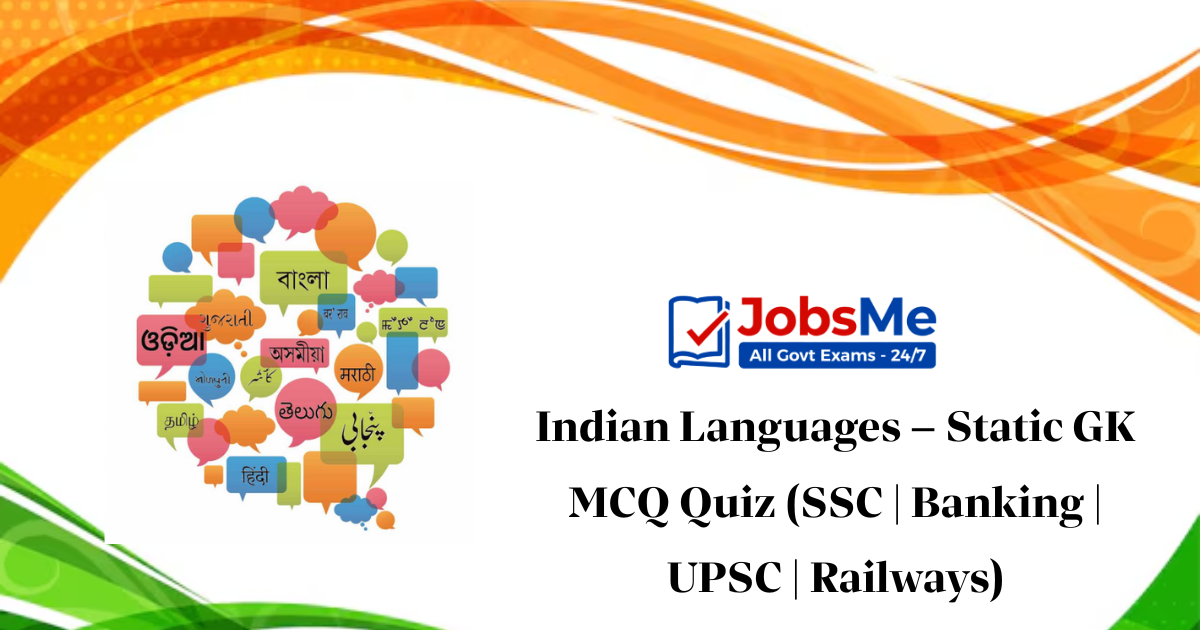
Indian Languages – Complete Static GK Notes for Government Exams
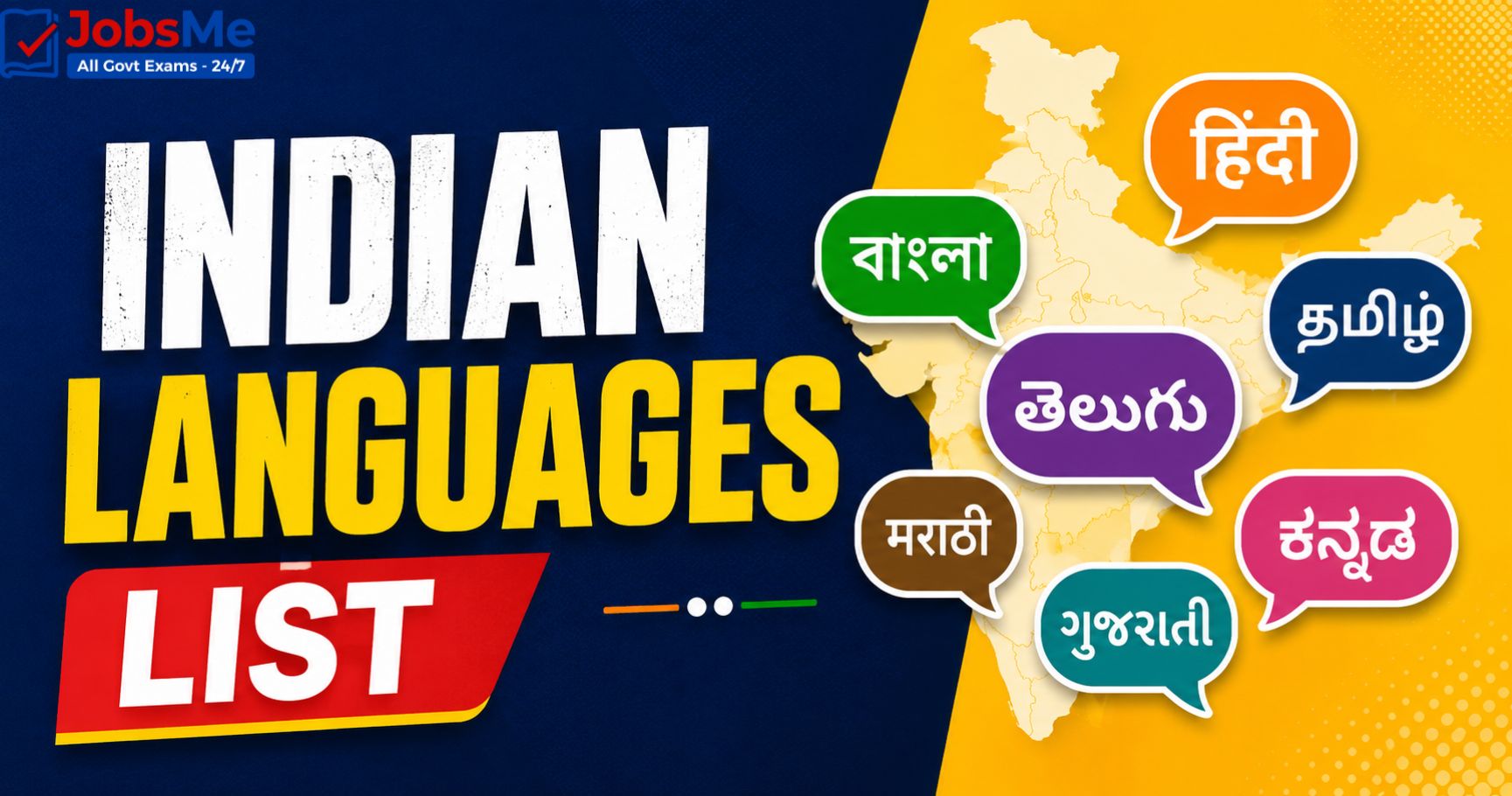
A complete guide to Indian languages for competitive exam aspirants. This article covers the 22 Scheduled Languages, state-wise official languages, language families, classical languages, writing systems, and memory tricks — everything you need to score well in the Static GK / General Awareness section of UPSC, SSC, IBPS, Railways, and other government exams.
Jump to section
- Introduction: Why Indian Languages Matter in Competitive Exams
- Constitutional Framework: National Language vs Official Language
- The 22 Scheduled Languages of India (Eighth Schedule)
- Language Families of India
- Classical Languages of India
- Official Languages: State-Wise List
- Language-Wise Distribution: Where Each Language is Spoken
- Writing Systems and Scripts of Indian Languages
- Tribal Languages of India
- Language Preservation Initiatives
- Mnemonic and Memory Tricks
- Additional Notes - Tricky Facts, PYQ Patterns & Commonly Confused Points
- One-Liners for Quick Revision
Introduction: Why Indian Languages Matter in Competitive Exams
India is one of the most linguistically diverse countries in the world. With over 121 languages and 270 mother tongues spoken across its 28 states and 8 Union Territories, language-related questions appear consistently in the General Awareness and Static GK sections of exams like UPSC Prelims, SSC CGL, IBPS PO/Clerk, RRB NTPC, State PCS, and Defence exams.
This article covers every important dimension — the constitutional framework, the 22 Scheduled Languages, state-wise official languages, language families, classical languages, writing systems, and quick-revision one-liners — so that you can approach this topic with full confidence on exam day.
You can also test yourself after reading this article with our Static GK Quiz, or explore other high-frequency topics like National Symbols of India and Dances of India.
---
Constitutional Framework: National Language vs Official Language
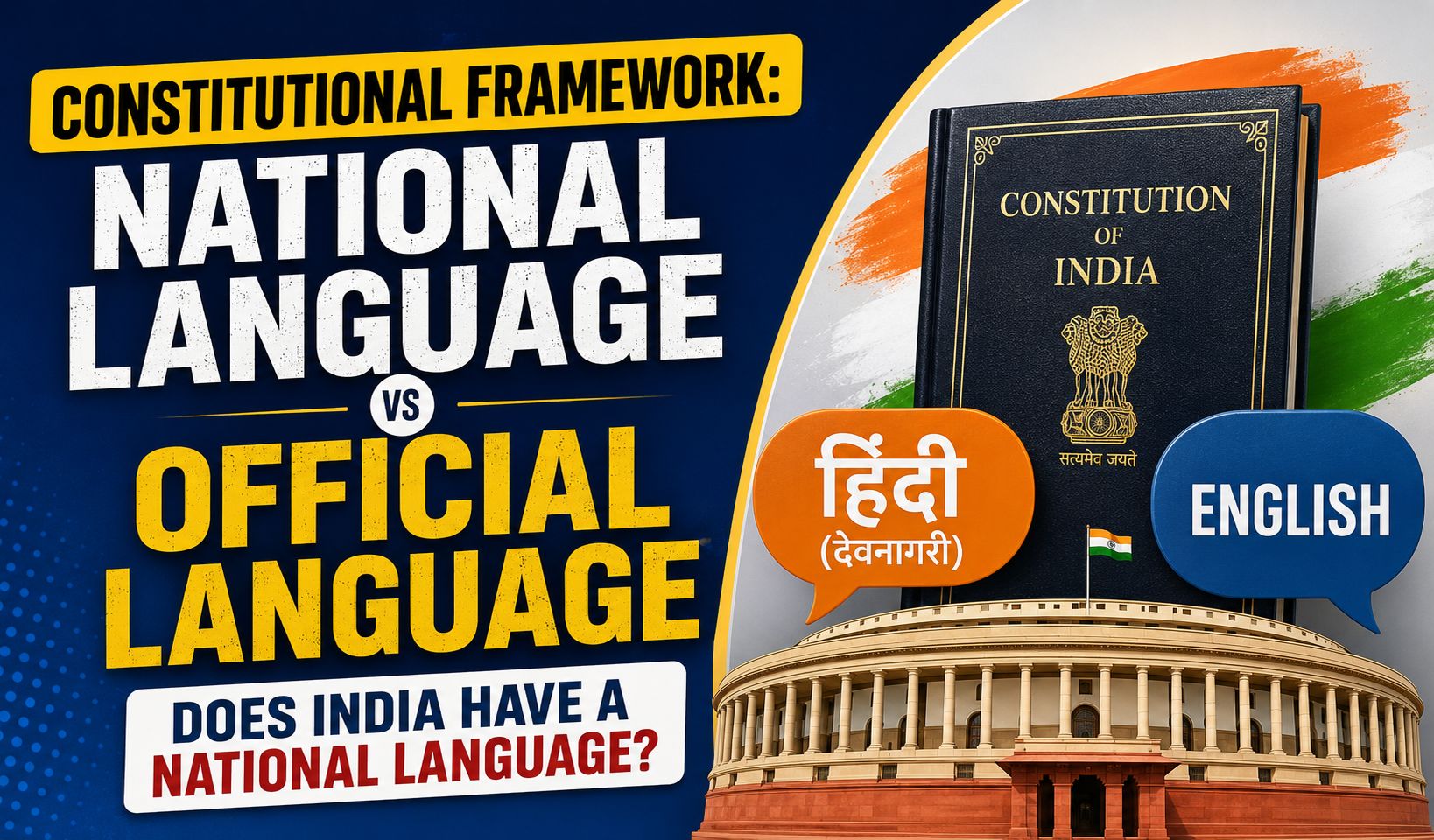
Does India Have a National Language?
This is one of the most frequently asked and most commonly confused facts in competitive exams. India does NOT have a national language. No language has been given the status of the national language in the Indian Constitution. This is a deliberate choice, given India's extraordinary linguistic diversity.
What the Constitution does provide is two official languages for Union Government purposes:
- Hindi (in Devanagari script) - as per Article 343 of the Constitution
- English - retained for official use through the Official Languages Act, 1963
All parliamentary proceedings, central government correspondence, and administrative work are conducted in Hindi or English.
Key Constitutional Articles on Language
| Article / Schedule | Provision |
|---|---|
| Article 343 | Hindi in Devanagari script is the official language of the Union |
| Article 344(1) | Constitution of the Official Language Commission |
| Article 345 | States may adopt any official language(s) by law |
| Article 351 | Directive to promote and develop Hindi |
| Part XVII (Articles 343-351) | Entire chapter dealing with official languages |
| Eighth Schedule | Lists the 22 Scheduled/Recognized Languages of India |
Exam Tip: The question "Which Article of the Constitution deals with the official language of the Union?" has appeared multiple times in SSC and IBPS exams. The answer is Article 343.
---
The 22 Scheduled Languages of India (Eighth Schedule)
The Eighth Schedule of the Indian Constitution lists the officially recognized scheduled languages of India. Originally, the Constitution listed 14 languages in 1950. Over time, through constitutional amendments, 8 more were added, bringing the total to 22.
Original 14 Languages (1950)
Assamese, Bengali, Gujarati, Hindi, Kannada, Kashmiri, Marathi, Malayalam, Odia, Punjabi, Sanskrit, Tamil, Telugu, and Urdu
Languages Added Later (8 additions)
| Language | Added by Amendment | Year |
|---|---|---|
| Sindhi | 21st Constitutional Amendment | 1967 |
| Konkani, Manipuri, Nepali | 71st Constitutional Amendment | 1992 |
| Bodo, Dogri, Maithili, Santhali | 92nd Constitutional Amendment | 2003 |
Complete List of 22 Scheduled Languages
| # | Language | Primary State(s) | Language Family |
|---|---|---|---|
| 1 | Assamese | Assam, Arunachal Pradesh | Indo-Aryan |
| 2 | Bengali | West Bengal, Tripura, Assam | Indo-Aryan |
| 3 | Bodo | Assam (Bodoland Territorial Region) | Tibeto-Burman |
| 4 | Dogri | Jammu & Kashmir, Himachal Pradesh | Indo-Aryan |
| 5 | Gujarati | Gujarat, Daman & Diu | Indo-Aryan |
| 6 | Hindi | North and Central India (10+ states) | Indo-Aryan |
| 7 | Kannada | Karnataka | Dravidian |
| 8 | Kashmiri | Jammu & Kashmir | Indo-Aryan |
| 9 | Konkani | Goa, coastal Karnataka, Kerala | Indo-Aryan |
| 10 | Maithili | Bihar, Jharkhand | Indo-Aryan |
| 11 | Malayalam | Kerala, Lakshadweep | Dravidian |
| 12 | Manipuri (Meitei) | Manipur | Tibeto-Burman (Sino-Tibetan) |
| 13 | Marathi | Maharashtra, Goa | Indo-Aryan |
| 14 | Nepali | Sikkim, West Bengal | Indo-Aryan |
| 15 | Odia (Oriya) | Odisha | Indo-Aryan |
| 16 | Punjabi | Punjab, Haryana, Delhi | Indo-Aryan |
| 17 | Sanskrit | Uttarakhand, Himachal Pradesh (2nd official) | Indo-Aryan (Classical) |
| 18 | Santali | Jharkhand, Odisha, West Bengal | Austroasiatic (Munda) |
| 19 | Sindhi | Gujarat, Rajasthan | Indo-Aryan |
| 20 | Tamil | Tamil Nadu, Puducherry | Dravidian |
| 21 | Telugu | Andhra Pradesh, Telangana | Dravidian |
| 22 | Urdu | J&K, UP, Bihar, Telangana, Delhi | Indo-Aryan |
Quick Fact: Hindi is spoken by approximately 40% of Indians, making it the most widely spoken language. Bengali is second. Together, Dravidian languages (Telugu, Tamil, Kannada, Malayalam) account for about 20% of India's population.
---
Language Families of India
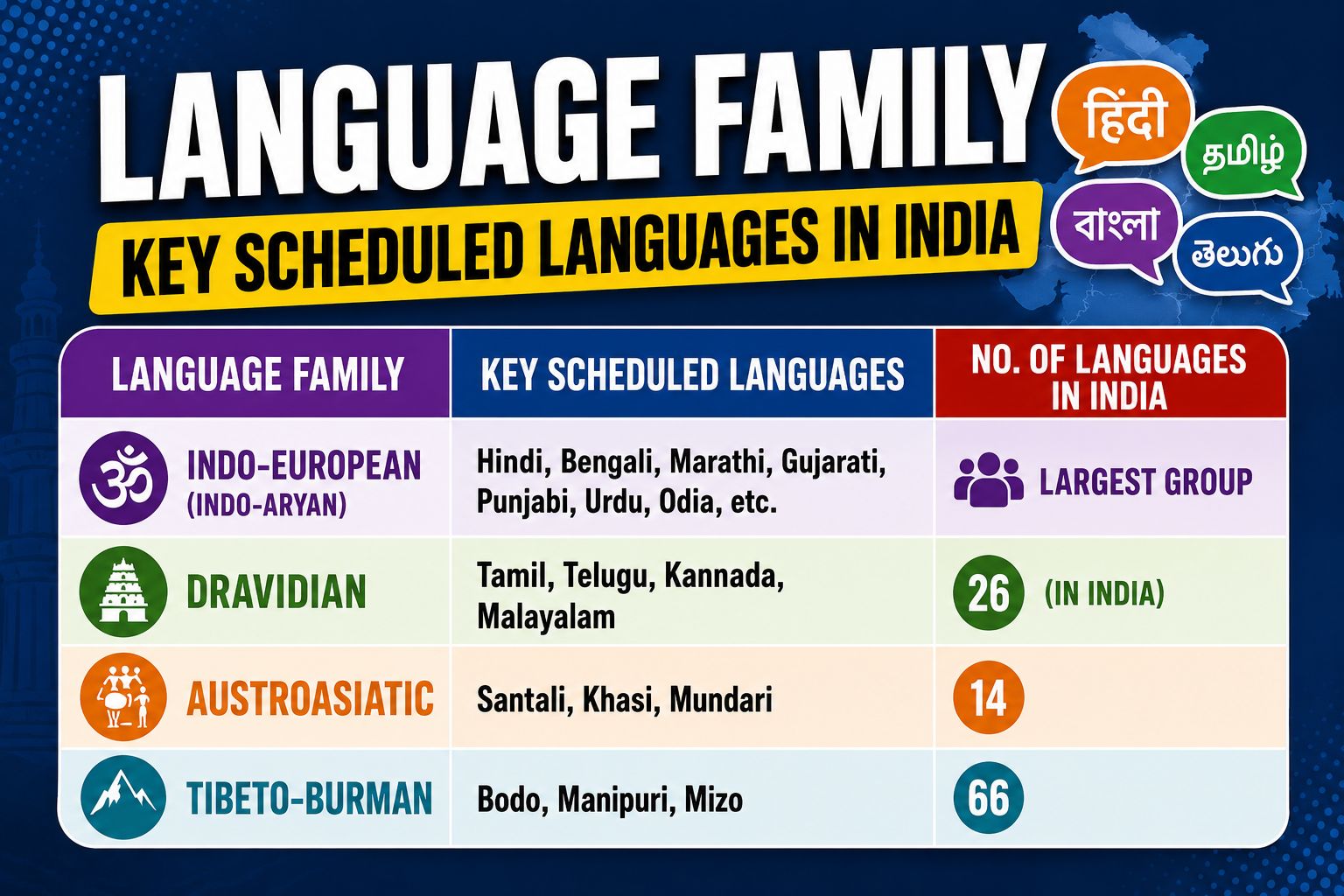
Indian languages are grouped into four major language families. This is a recurring topic in UPSC Prelims and SSC exams.
1. Indo-European (Indo-Aryan) Family
The largest family by number of speakers. Descended from Sanskrit via Prakrit and Apabhramsha.
- Sub-branch Indo-Aryan: Hindi, Bengali, Marathi, Gujarati, Punjabi, Odia, Assamese, Kashmiri, Maithili, Nepali, Konkani, Dogri, Sindhi, Sanskrit, Urdu
- Sub-branch Iranian: Afghani/Pashto (spoken by some communities in India)
- Sub-branch Germanic: English (the only Germanic language with official status in India)
2. Dravidian Family
Predominantly spoken in South India. Considered one of the world's oldest language families.
- Major four (96% of Dravidian speakers): Telugu, Tamil, Kannada, Malayalam
- There are 26 Dravidian languages in India in total; Brahui (spoken in Pakistan) is the only one outside India
- The antiquity of Dravidian languages is attributed largely to the rich grammatical tradition of Classical Tamil
3. Austroasiatic (Austric) Family
Spoken primarily by tribal communities in central and eastern India.
- Munda branch: Santali, Mundari, Ho, Kharia — mainly in Jharkhand, Odisha, Madhya Pradesh
- Mon-Khmer branch: Khasi (Meghalaya), Nicobarese (Andaman & Nicobar Islands)
- A total of 14 Austroasiatic languages are spoken in India
4. Tibeto-Burman (Sino-Tibetan) Family
Spoken mainly in the northeastern states and Himalayan regions.
- Includes: Bodo, Manipuri (Meitei), Mizo, Nagaland tribal languages
- A total of 66 Tibeto-Burman languages are spoken in India
- Manipuri belongs to the Kuki-Chin group of the Tibeto-Burman family
| Language Family | Key Scheduled Languages | No. of Languages in India |
|---|---|---|
| Indo-European (Indo-Aryan) | Hindi, Bengali, Marathi, Gujarati, Punjabi, Urdu, Odia, etc. | Largest group |
| Dravidian | Tamil, Telugu, Kannada, Malayalam | 26 (in India) |
| Austroasiatic | Santali, Khasi, Mundari | 14 |
| Tibeto-Burman | Bodo, Manipuri, Mizo | 66 |
---
Classical Languages of India
The Government of India grants "Classical Language" status to languages that meet specific criteria: a high antiquity of recorded history (over 1,500-2,000 years), a large body of ancient literature, and an original literary tradition independent of another speech community.
A language granted Classical status receives special government grants and two national awards for scholars of eminence in classical Indian languages.
List of Classical Languages of India
| Language | Year Declared Classical | Primary Region |
|---|---|---|
| Tamil | 2004 (First classical language) | Tamil Nadu, Puducherry |
| Sanskrit | 2005 | Pan-India (liturgical/literary) |
| Telugu | 2008 | Andhra Pradesh, Telangana |
| Kannada | 2008 | Karnataka |
| Malayalam | 2013 | Kerala |
| Odia | 2014 | Odisha |
| Marathi | 2024 | Maharashtra |
| Pali | 2024 | Buddhist literature, eastern India |
| Prakrit | 2024 | Jain literature, western India |
| Assamese | 2024 | Assam |
| Bengali | 2024 | West Bengal, Tripura |
Exam Tip: Tamil was the first language to be granted Classical status in India (2004). This is a very common exam question. Odia was the sixth classical language (UPSC Prelims 2015 PYQ). In 2024, five more languages were added to this list.
---
Official Languages: State-Wise List
Each state in India has the authority under the Constitution to declare its own official language(s). The following tables list all 28 states and 8 Union Territories with their official and second official languages.
Official Languages of All 28 States
| # | State | Official Language(s) | Second Official / Notified Languages |
|---|---|---|---|
| 1 | Andhra Pradesh | Telugu | English |
| 2 | Arunachal Pradesh | English | - |
| 3 | Assam | Assamese | Bengali, Bodo |
| 4 | Bihar | Hindi | Urdu |
| 5 | Chhattisgarh | Hindi | Chhattisgarhi |
| 6 | Goa | Konkani, English | Marathi |
| 7 | Gujarat | Gujarati | Hindi |
| 8 | Haryana | Hindi | English, Punjabi |
| 9 | Himachal Pradesh | Hindi | Sanskrit |
| 10 | Jharkhand | Hindi | Angika, Bengali, Bhojpuri, Ho, Kharia, Khortha, Kurmali, Kurukh, Magahi, Maithili, Mundari, Nagpuri, Odia, Santali, Urdu |
| 11 | Karnataka | Kannada | English |
| 12 | Kerala | Malayalam | English |
| 13 | Madhya Pradesh | Hindi | - |
| 14 | Maharashtra | Marathi | - |
| 15 | Manipur | Manipuri (Meitei) | English |
| 16 | Meghalaya | English | Khasi, Garo |
| 17 | Mizoram | Mizo | English, Hindi |
| 18 | Nagaland | English | - |
| 19 | Odisha | Odia | - |
| 20 | Punjab | Punjabi | - |
| 21 | Rajasthan | Hindi | - |
| 22 | Sikkim | English, Nepali, Sikkimese, Lepcha | Gurung, Limbu, Magar, Mukhia, Newari, Rai, Sherpa, Tamang |
| 23 | Tamil Nadu | Tamil | English |
| 24 | Telangana | Telugu | Urdu |
| 25 | Tripura | Bengali, English, Kokborok | - |
| 26 | Uttar Pradesh | Hindi | Urdu |
| 27 | Uttarakhand | Hindi | Sanskrit |
| 28 | West Bengal | Bengali, English | Nepali, Urdu, Hindi, Odia, Santali, Rajbanshi, Kurmali, Punjabi, Kamtapuri, Kurukh, Telugu |
Official Languages of Union Territories
| # | Union Territory | Official Language(s) | Second Official Language(s) |
|---|---|---|---|
| 1 | Andaman & Nicobar Islands | Hindi, English | - |
| 2 | Chandigarh | English | - |
| 3 | Dadra & Nagar Haveli and Daman & Diu | Gujarati, Konkani, Marathi, Hindi | - |
| 4 | Delhi (NCT) | Hindi, English | Urdu, Punjabi |
| 5 | Jammu & Kashmir | Kashmiri, Dogri, Hindi, Urdu, English | - |
| 6 | Ladakh | Hindi, English | - |
| 7 | Lakshadweep | Malayalam | English |
| 8 | Puducherry | Tamil, French, English | Telugu, Malayalam |
Special Note — Puducherry: Puducherry is the only Union Territory that retains French as an official language — a colonial legacy. This is a very commonly asked question in SSC and UPSC exams.
---
Language-Wise Distribution: Where Each Language is Spoken
| Language | States / UTs Where Officially Recognized / Widely Spoken |
|---|---|
| Hindi | UP, Bihar, Rajasthan, Haryana, MP, Chhattisgarh, Uttarakhand, HP, Delhi, Jharkhand, Ladakh, Andaman & Nicobar |
| Bengali | West Bengal, Assam, Tripura, Andaman Islands, Jharkhand |
| Telugu | Andhra Pradesh, Telangana, Tamil Nadu, Karnataka, Puducherry, Chhattisgarh |
| Marathi | Maharashtra, Goa, Daman & Diu, Dadra & Nagar Haveli |
| Tamil | Tamil Nadu, Puducherry |
| Urdu | J&K, Telangana, Delhi, Bihar, Uttar Pradesh |
| Gujarati | Gujarat, Daman & Diu, Dadra & Nagar Haveli |
| Kannada | Karnataka |
| Malayalam | Kerala, Karnataka, Tamil Nadu, Lakshadweep |
| Odia | Odisha |
| Punjabi | Punjab, Haryana, HP, Delhi, Rajasthan |
| Assamese | Assam, Arunachal Pradesh |
| Maithili | Bihar, Jharkhand |
| Konkani | Goa, coastal Karnataka, Kerala, Daman & Diu |
| Nepali | Sikkim, West Bengal, northeastern states |
| Santali | Jharkhand, Assam, Odisha, Chhattisgarh, Bihar, Tripura, West Bengal |
| Kashmiri | Jammu & Kashmir |
| Dogri | J&K, Himachal Pradesh, Punjab |
| Manipuri | Manipur, Assam, Mizoram, Tripura |
| Bodo | Assam (Bodoland Territorial Region) |
| Sanskrit | Himachal Pradesh, Uttarakhand (second official) |
| Sindhi | Gujarat, Rajasthan (diaspora-based, no dedicated state) |
Note on Sindhi: Sindhi is the only Scheduled Language that does not have a dedicated state where it is the primary official language. Its speakers are distributed across Gujarat, Rajasthan, and urban centers.
---
Writing Systems and Scripts of Indian Languages
India's linguistic diversity extends to its writing systems. Understanding which language uses which script is important for exam purposes.
Historical Scripts
- Indus Valley Script: Undeciphered; over 2,000 inscribed seals found; symbols range from 6 to 26 per inscription
- Brahmi Script (8th Century BCE): A syllabic alphabet; ancestor of most Indian scripts and several Southeast Asian scripts (Burmese, Thai, Tibetan)
- Kharosthi Script (3rd Century BCE): Used in north Pakistan and east Afghanistan for Gandhari Prakrit; written right to left
Scripts of the 22 Scheduled Languages
| Language | Script |
|---|---|
| Hindi, Sanskrit, Maithili, Nepali, Dogri, Konkani (partial) | Devanagari |
| Bengali, Assamese | Bengali (Eastern Nagari) |
| Punjabi | Gurmukhi |
| Gujarati | Gujarati (Saraphi) |
| Odia | Odia |
| Tamil | Tamil |
| Telugu | Telugu |
| Kannada | Kannada |
| Malayalam | Malayalam (Arya Ezhuttu) |
| Urdu, Kashmiri, Sindhi | Perso-Arabic (Nastaliq) |
| Manipuri (Meitei) | Meitei Mayek (also uses Bengali script) |
| Santali | Ol Chiki |
| Bodo | Devanagari |
Special Facts for Exams:
- Santali uses the Ol Chiki script, created by Pandit Raghunath Murmu in 1925 — it is the only Scheduled Language with a purpose-built modern script
- Urdu and Kashmiri are written in Perso-Arabic script and read right to left
- Malayalam's alphabet is known as 'Arya Ezhuttu' (introduced in the 17th century)
- Gujarati script resembles Devanagari but without the horizontal top bar
- Konkani uses multiple scripts — Devanagari, Roman, Kannada, and Malayalam depending on region
---
Tribal Languages of India
India is also home to a vast array of tribal languages, most of which are unscheduled and spoken by indigenous communities in forested and hilly regions.
- The People's Linguistic Survey of India has identified 780 languages in India; 50 have become extinct in the last five decades
- As per UNESCO, any language spoken by fewer than 10,000 people is potentially endangered
- India has approximately 197 languages in various stages of endangerment
- Census 2011 counts only languages with more than 10,000 speakers, making actual numbers difficult to pin down
Tribal Languages with Their Own Script (7 Total)
| Language | Script Name |
|---|---|
| Santali | Ol Chiki |
| Saora | Sorang Sompeng |
| Ho | Warang Chiti |
| Kui | Kui Script |
| Oraon (Kurukh) | Tolong Siki |
| Mundari | Bani Hisir |
| Bhumij | Bhumij Anl |
Major tribal communities and their associated languages include: Garo (Meghalaya), Chakma (Tripura/Mizoram), Naga (Nagaland — includes Ao, Konyak, Angami, Sema, Lotha), Gond (MP/Chhattisgarh), Mizo (Mizoram), Santali (Jharkhand), Khasi (Meghalaya), Oraon/Kurukh (Jharkhand).
UPSC PYQ 2021 — "Halbi, Ho, and Kui": These are tribal languages (Answer: d). Halbi is spoken in Chhattisgarh/Odisha; Ho is spoken in Jharkhand; Kui is spoken in Odisha.
For a broader study of tribal communities, see our article on Major Tribes of India.
---
Language Preservation Initiatives
The following government initiatives on language preservation are important from the UPSC and State PCS perspective:
- Central Institute of Indian Languages (CIIL): Established in 1969 at Mysuru; helps implement the language policy of the Government of India and coordinates development of Indian languages
- Scheme for Protection and Preservation of Endangered Languages (SPPEL): Implemented by CIIL to document and preserve languages spoken by fewer than 10,000 people
- UGC Schemes: Two schemes — "Funding Support to State Universities for Indigenous and Endangered Languages Study and Research" and "Establishment of Centres for Endangered Languages"
- Official Languages Act, 1963: Governs use of Hindi and English in Parliament, courts, central government, and inter-state communication
---
Mnemonic and Memory Tricks

Trick 1 - Remember the 22 Scheduled Languages (Alphabetical Groups)
Break the 22 languages into groups of 5-6 and use the first letters:
Group A — "AB GHK KM" → Assamese, Bengali, Gujarati, Hindi, Kannada, Kashmiri, Konkani, Maithili
Group B — "MaMaNeMO" → Malayalam, Manipuri, Marathi, Nepali, Odia
Group C — "PSSS TT U" → Punjabi, Sanskrit, Santali, Sindhi, Tamil, Telugu, Urdu
Outliers added later: B.D.S.M. → Bodo, Dogri, Santhali, Maithili (added by the 92nd Amendment, 2003)
Trick 2 - Classical Languages: "TS TKM O + MPPAB"
- Tamil (2004 — first ever), Sanskrit (2005), Telugu (2008), Kannada (2008), Malayalam (2013), Odia (2014)
- Then the 2024 batch: Marathi, Pali, Prakrit, Assamese, Bengali
- Sentence: "Talented Students Talk Kindly, Making Others Marvel — Plus Perfectly Articulate Bengalis"
Trick 3 - Dravidian Four (South India's Big Four)
Remember: "Take The Karnataka Malayalam Route" → Tamil, Telugu, Kannada, Malayalam
These four languages account for 96.16% of all Dravidian language speakers in India.
Trick 4 - Scripts and Their Languages
- Perso-Arabic / Right to Left: Urdu, Kashmiri, Sindhi — "UKS writes Right"
- Ol Chiki: Only for Santali — think "Old Chiki Santali" (Santali's special script)
- Gurmukhi: Only Punjabi — "Guru's script for Punjabi"
Trick 5 - Special/Unique Facts
- Sindhi = No home state → "Sindhi is stateless" (no dedicated state)
- Puducherry = French → French colony → French stays in Puducherry
- Arunachal Pradesh, Nagaland, Meghalaya = English official language → These 3 northeastern states have English (not a regional language) as their primary official language
- Sikkim = 4 official languages → Most official languages among all states (English, Nepali, Sikkimese, Lepcha)
Vivid Memory Aid - The "Language House of India"
Imagine India as a large house with four rooms, one for each language family:
- North Wing (Indo-Aryan): The largest room, always crowded with Hindi, Bengali, Marathi, Gujarati, Punjabi, and more — these are the "mainstream" residents
- South Wing (Dravidian): A smaller but ancient room with 4 primary residents (Tamil, Telugu, Kannada, Malayalam) who have been there the longest
- East Attic (Tibeto-Burman): 66 languages crowded in the northeast corner — Bodo, Manipuri, Mizo
- Basement (Austroasiatic): 14 tribal languages including Santali and Khasi, spoken by forest communities
---
Additional Notes - Tricky Facts, PYQ Patterns & Commonly Confused Points
Frequently Confused Facts
- National Language vs Official Language: India has NO national language. Hindi and English are official languages. This distinction is asked in virtually every exam.
- Odia vs Oriya: The official spelling is now Odia (renamed from Oriya). It is an Indo-Aryan language (not Dravidian).
- Konkani — multiple scripts: Unlike most languages, Konkani uses Devanagari, Roman, Kannada, and Malayalam scripts depending on the region. It was added to the Eighth Schedule in 1992.
- Sanskrit as Second Official Language: Sanskrit is the second official language of Uttarakhand and Himachal Pradesh — not a first official language of any state, but has the highest spiritual/educational significance.
- Meitei/Manipuri: The language is officially called Meitei or Manipuri interchangeably in constitutional and exam contexts.
- Bodo vs Bodo people: Bodo (the Tibeto-Burman language) has official status in Assam's Bodoland Territorial Region — not the whole state.
Frequently Asked PYQ Patterns
- Which was the first language to be declared Classical? → Tamil (2004)
- Which language was added to Classical status in 2014? → Odia (UPSC Prelims 2015)
- Article 343 relates to? → Official language of the Union (Hindi in Devanagari)
- The Eighth Schedule of the Constitution lists? → 22 Scheduled Languages
- Which Constitutional Amendment added Bodo, Dogri, Maithili, and Santhali? → 92nd Amendment, 2003
- Halbi, Ho, and Kui are? → Tribal Languages (UPSC 2021)
- Which UT uses French as an official language? → Puducherry
- Which is the only Scheduled Language without a dedicated state? → Sindhi
- How many languages are spoken in India per 2011 Census? → 122 languages, 234 mother tongues (with 10,000+ speakers)
- Which language family does Santali belong to? → Austroasiatic (Munda branch)
Quick Insights
- The People's Linguistic Survey of India found 780 languages; 50 have gone extinct in the past 50 years
- In the 1971 Census, the government stopped counting languages with fewer than 10,000 speakers — this makes actual count difficult
- Hindi is spoken as a first language by approximately 40% of India's population, but widely used as a second language in South and Northeast India
- India's linguistic diversity is protected by Articles 343-351 (Part XVII) of the Constitution
- The Central Institute of Indian Languages (CIIL) was established in 1969 at Mysuru, Karnataka
---
One-Liners for Quick Revision
- India has no national language; Hindi and English are the two official languages of the Union.
- The Eighth Schedule of the Constitution lists 22 Scheduled Languages.
- The original 1950 Constitution had 14 scheduled languages.
- The 92nd Constitutional Amendment (2003) added Bodo, Dogri, Maithili, and Santhali.
- Tamil was declared the first Classical Language in 2004.
- Odia became the 6th Classical Language in 2014.
- In 2024, five more Classical Languages were added: Marathi, Pali, Prakrit, Assamese, Bengali.
- India's languages belong to four families: Indo-European, Dravidian, Austroasiatic, Tibeto-Burman.
- The four major Dravidian languages (Tamil, Telugu, Kannada, Malayalam) account for 96.16% of Dravidian speakers.
- Santali is the only Scheduled Language using the Ol Chiki script.
- Sindhi is the only Scheduled Language with no dedicated state.
- Puducherry is the only UT that has French as an official language.
- Sanskrit is the second official language of Uttarakhand and Himachal Pradesh.
- Urdu, Kashmiri, Sindhi use the Perso-Arabic script.
- Punjabi uses the Gurmukhi script.
- India has approximately 197 endangered languages as per UNESCO standards.
- The Central Institute of Indian Languages (CIIL) was established in 1969 in Mysuru.
- Article 343 designates Hindi in Devanagari as the official language of the Union.
- The Official Languages Act was passed in 1963.
- Arunachal Pradesh, Nagaland, and Meghalaya have English as their primary official language.
- Sikkim has the most official languages among states — English, Nepali, Sikkimese, and Lepcha.
- As per Census 2011, India has 122 languages and 234 mother tongues with over 10,000 speakers each.
- The People's Linguistic Survey of India identified 780 languages, of which 50 have become extinct.
- Manipuri belongs to the Kuki-Chin group of the Tibeto-Burman family.
- Bodo is a Tibeto-Burman language recognized in the Bodoland Territorial Region of Assam.
For more comprehensive exam-oriented Static GK, explore our full Static GK section or practice directly with our Static GK quizzes. Topics like Indian Fairs and Festivals, Indian Music, and Indian Paintings are closely related and frequently tested alongside languages. You can also check our Daily Current Affairs for any recent language-related policy updates.
Free quiz • No signup required
Put this topic into practice with Indian Cultural Institutions – Static GK MCQ Quiz. It is the quickest way to reinforce what you just learned.
Frequently Asked Questions
Does India have a national language?
How many scheduled languages does India have?
Which was the first Classical Language of India?
Which Constitutional Amendment added Bodo, Dogri, Maithili, and Santhali to the Eighth Schedule?
What are the four main language families of India?
Which language is spoken in the most states of India?
Which is the only Scheduled Language without a dedicated state?
Which Union Territory uses French as an official language?
What is the Ol Chiki script and which language uses it?
How many languages are considered endangered in India?

About the author