Indian Music – Static GK for Government Exams
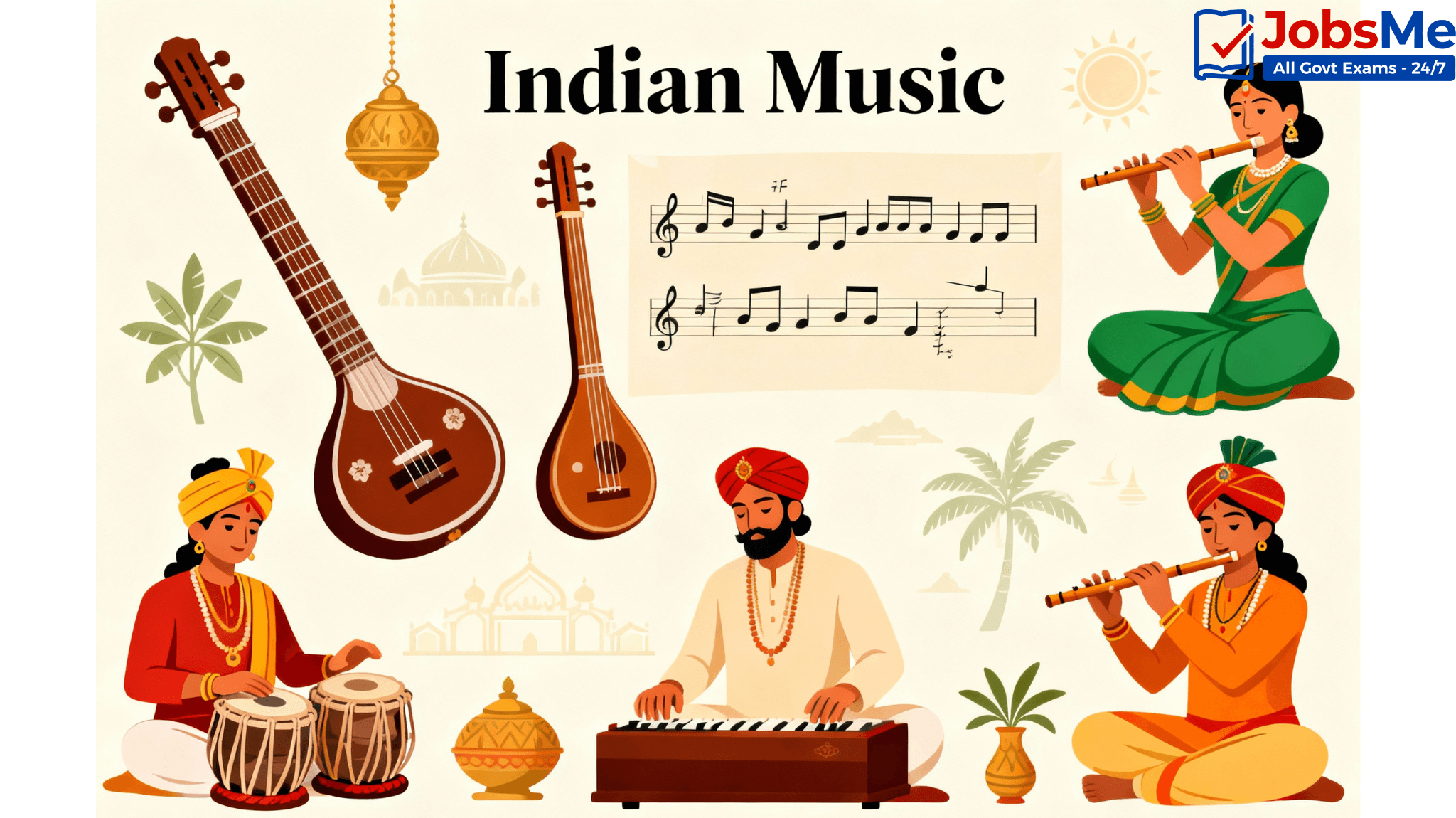
Indian Music is a vital Static GK topic covering Classical and Folk traditions of India. It is frequently asked in UPSC, SSC, Banking, Railways, Defence, and State exams. Understanding its forms, differences, and regional styles helps aspirants score easy marks in General Awareness sections.
Jump to section
1. Introduction
Indian Music represents the cultural, spiritual, and regional diversity of India. It is broadly classified into Classical Music and Folk Music. Questions from Indian music are commonly asked in:
- UPSC (Prelims & Mains – Art & Culture)
- SSC (CGL, CHSL, MTS)
- Banking Exams (IBPS, SBI, RBI)
- Railways (RRB NTPC, Group D)
- Defence Exams (CDS, AFCAT)
- State PSC Exams
This topic is considered high-scoring as most questions are factual and memory-based.
2. Explanation
🎼 Classical Music of India
Indian Classical Music has evolved from ancient texts like Bharata’s Natyashastra and is divided into two main traditions.
A. Hindustani Classical Music (North India)
Origin & Influence
- Originated in North India
- Influenced by Persian, Mughal, Arab, and Afghan cultures
Key Features
- High scope for improvisation
- Strong emphasis on Raga and Tala
- Development of Gharana system
Main Instruments
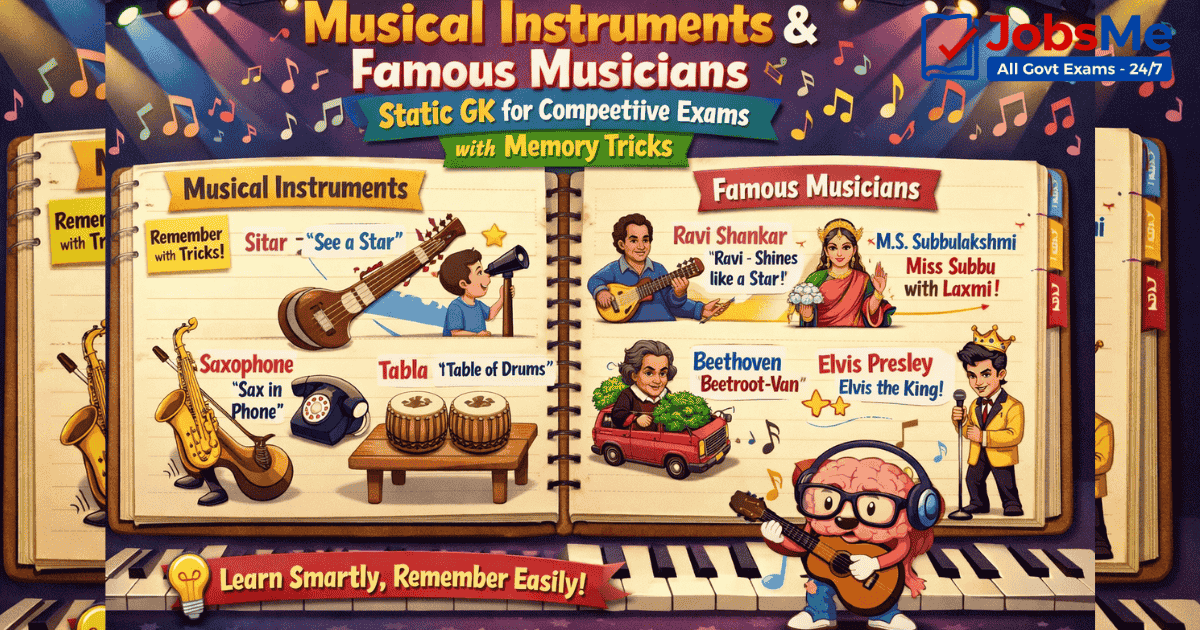
- Sitar
- Tabla
- Sarod
- Santoor
- Shehnai
Important Gharanas
- Gwalior (Oldest Khayal Gharana)
- Kirana (Slow tempo ragas)
- Jaipur-Atrauli
- Patiala (Rhythm-focused)
- Agra
- Banaras
- Rampur
Major Hindustani Vocal Forms
| Form | Description |
|---|---|
| Dhrupad | Oldest form, devotional |
| Khayal | Most popular, improvisational |
| Thumri | Romantic & expressive |
| Tappa | Fast and ornamental |
| Tarana | Uses syllables like “tanana” |
Famous Musicians
- Pandit Bhimsen Joshi
- Pandit Ravi Shankar
- Ustad Zakir Hussain
- Ustad Bismillah Khan
B. Carnatic Classical Music (South India)
Origin & Nature
- Originated in South India
- Largely free from foreign influence
- Based on devotional compositions (Kritis)
Key Features
- Limited improvisation
- Strong focus on vocal music
- Systematic and composition-driven
Main Instruments
- Veena
- Mridangam
- Ghatam
- Violin
- Flute
Founders & Masters
- Purandara Dasa – Father of Carnatic Music
Trinity of Carnatic Music
- Tyagaraja
- Muthuswami Dikshitar
- Syama Sastri
Important Carnatic Musical Forms
| Form | Description |
|---|---|
| Kriti | Main composition |
| Varnam | Foundation learning piece |
| Keertanam | Devotional songs |
| Tillana | Fast rhythmic composition |
🎶 Difference Between Hindustani and Carnatic Music
| Feature | Hindustani | Carnatic |
|---|---|---|
| Region | North India | South India |
| Influence | Persian, Mughal | Indigenous |
| Improvisation | High | Limited |
| Style | Multiple Gharanas | One system |
| Vocal Focus | Equal with instruments | Vocal-dominated |
| Ragas | 6 main ragas | 72 Melakarta ragas |
| Time Theory | Followed | Not strictly followed |
| Main Form | Khayal | Kriti |
🪕 Folk Music of India
Folk music reflects the everyday life, traditions, festivals, and emotions of people across regions. It is usually performed during harvests, marriages, religious rituals, and local festivals.
State-wise Major Folk Music Forms
| State/Region | Folk Music |
|---|---|
| Assam | Bihu |
| Bihar | Sohar, Bidesia, Chhath Geet |
| Gujarat | Garba, Dandiya Raas |
| Maharashtra | Lavani, Powada |
| Punjab | Bhangra, Giddha |
| Rajasthan | Manganiyar, Langas |
| West Bengal | Baul, Bhawaiya |
| Tamil Nadu | Naatupura Paadal |
| Karnataka | Janapada Geete |
| Kerala | Oppana, Theyyam |
| Odisha | Dalkhai |
| Andhra/Telangana | Burrakatha, Bonalu Songs |
| Kashmir | Sufiana Kalam |
3. Important Points / Features
- Indian Classical Music rests on Swara, Raga, and Tala
- Amir Khusrau developed Khayal, Tarana & Qawwali
- Dhrupad is the oldest form of Indian classical music
- Carnatic music is more systematic and composition-based
- Folk music varies from state to state and reflects local culture
4. Additional Notes
- Gharana system refers to musical lineage or school
- Pandavani of Chhattisgarh narrates stories from Mahabharata
- Baul singers of Bengal are known for mystic philosophy
- Folk music questions are often asked in match-the-following format
📌 One-Liner Revision Points
- Two main classical traditions: Hindustani & Carnatic
- Father of Carnatic Music: Purandara Dasa
- Carnatic Trinity: Tyagaraja, Dikshitar, Syama Sastri
- Oldest classical form: Dhrupad
- Father of Qawwali: Amir Khusrau
- Folk of Assam: Bihu
- Folk of Punjab: Bhangra
- Folk of Maharashtra: Lavani
- Main Hindustani form: Khayal
- Carnatic music emphasizes vocal compositions
Free quiz • No signup required
Put this topic into practice with Indian Cultural Institutions – Static GK MCQ Quiz. It is the quickest way to reinforce what you just learned.
Frequently Asked Questions
How many types of Indian classical music are there?
Who is known as the Father of Carnatic Music?
Which is the oldest form of Indian classical music?
Which classical music system follows the Gharana tradition?
Name the Trinity of Carnatic Music.
Which folk music is associated with Assam?
Which instrument is central to Carnatic rhythm?

About the author